

Circular Connector Cables for Industrial Use: Types, Benefits, and Selection Guide
Time:Mar 16,2026
Source:
Circular connectors cables for industrial use play a critical role in keeping modern factories, machines, and automation systems running safely and reliably. This article explains what they are, why they matter, and how to choose the right solution for your industrial application.
What are circular connector cables?
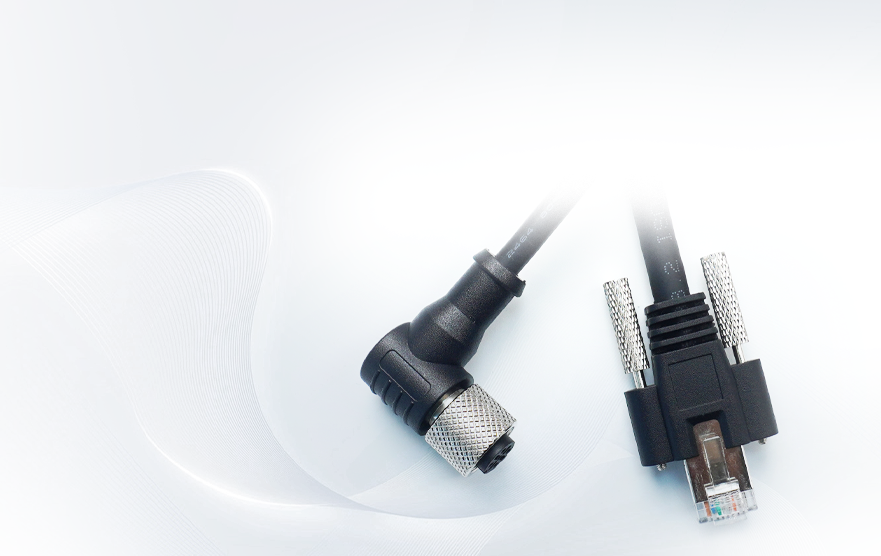
Circular connector cables combine a round (cylindrical) connector with a matching industrial-grade cable to transmit power, signals, and data between devices. The contacts are embedded in insulating material and surrounded by a metal or composite shell to maintain alignment and protect the connection in harsh environments.
These assemblies typically feature multi-pin layouts, male and female mating halves, and mechanical locking mechanisms such as threaded, bayonet, or push‑pull couplings to prevent accidental disconnection. Their cylindrical geometry offers a high strength‑to‑weight ratio, which improves resistance to impact, vibration, and mechanical stress.
Why industrial applications rely on circular connectors
Industrial environments involve vibration, shock, temperature fluctuations, dust, moisture, oils, and electromagnetic interference, so connectivity must be extremely robust. Circular connector cables are engineered to withstand these conditions while maintaining stable power, signal, and data transmission for automation, motion control, sensing, and networking.
Key advantages for industrial use include:
- Rugged mechanical design: Metal or reinforced composite shells, strain relief, and robust couplings resist impact, shock, and frequent mating cycles.
- Environmental sealing: IP‑rated designs (often IP67 or higher) protect against dust and water ingress, including washdown and outdoor applications.
- EMI/RFI shielding: Many circular connectors integrate shielding to reduce electromagnetic interference, supporting reliable data and mixed‑signal performance.
- Secure locking systems: Threaded, bayonet, and push‑pull mechanisms keep connections locked under vibration or movement.
- Flexibility in power, signal, and data: The same form factor can be configured for low‑voltage signals, high‑current power, Ethernet, and fieldbus networks.
Common types and sizes for industry
In industrial automation, M‑style circular connectors (M5, M8, M12, M16, M23, 7/8") dominate sensor, actuator, and network connections. The “M” value refers to the metric thread diameter on the coupling nut or receptacle, which also indicates the physical size and current‑handling capability.
Typical industrial circular connector families
M12 connectors are especially popular because they support data, signal, and power variants with coding schemes that prevent mismating. For example, A‑coding is typical for sensors, D‑coding for Ethernet, and S‑coding for power, so technicians can quickly identify and connect the right cables in the field.
Typical industrial applications
Circular connector cables appear across many industrial and mission‑critical markets wherever reliable connectivity is essential. They are widely used in:
- Factory automation: PLC I/O, sensor networks, actuators, conveyor systems, and robotic cells.
- Process control: Field instrumentation, valves, pressure and temperature sensors, and distributed control systems.
- Drives and motion: Servo motors, encoders, and variable‑frequency drives requiring secure power and feedback connections.
- Harsh and outdoor equipment: Mining, construction machinery, agricultural equipment, and transportation systems exposed to weather and vibration.
- Medical, aerospace, and defense: Equipment demanding high reliability, repeatable mating, and resistance to contamination or mechanical stress.
In many of these use cases, pre‑terminated circular connection cables simplify installation between controllers, HMIs, drives, and field devices, reducing wiring errors and commissioning time.
How to choose circular connector cables for industrial projects
Selecting the right circular connector cable for industrial use requires balancing electrical, mechanical, and environmental requirements. The following checklist helps you specify a suitable solution that improves uptime and safety.
Define function: power, signal, data, or mixed
- Determine voltage, current, and whether you are carrying analog signals, digital I/O, fieldbus, or Ethernet traffic.
- Match the connector family (e.g., M12 D‑coded for Ethernet or S‑coded for power) and cable construction (twisted pairs, shielding) to the application.
Check environmental and IP requirements
- Identify exposure to dust, water, chemicals, oil, and cleaning processes to choose an appropriate IP rating (such as IP67 or higher) and housing material.
- Consider temperature range, UV resistance, and flexibility needs, especially for moving cable carriers or robotic applications.
Evaluate mechanical and installation factors
- Confirm connector size, pin count, and coding, and ensure compatibility with existing field devices and panels.
- Decide on straight vs. right‑angle connectors, overmolded vs. field‑attachable versions, and cable length to fit your layout and service strategy.
Consider shielding and EMC performance
- For high‑speed data or noisy environments, select shielded connectors and cables designed to limit EMI/RFI and maintain signal integrity.
- Ensure proper grounding and strain relief to avoid performance issues over time.
Look at standards, certifications, and vendor support
- Check compliance with relevant industrial, safety, or regional standards in your industry.
- Choose vendors that offer complete portfolios (connectors, pre‑made cables, and accessories) and strong technical documentation to streamline design and maintenance.
By carefully specifying circular connector cables around these factors, industrial users can build more reliable systems, reduce downtime, and simplify maintenance across the entire lifecycle of their equipment.

Apply Here For A Custom Made Solution

Shenzhen Torvenics Electronic Co.,Ltd.
615 Block A, No.11 Tangkeng Road,Henggang Longgang Dist,Shenzhen China