

M16 Connector Cable: Complete Guide to Selection, Uses & Installation
Time:Nov 26,2025
Source:
If you’re working on industrial projects, automation systems, or outdoor electronic setups, you’ve likely encountered the need for reliable connectivity. The M16 connector cable stands out as a trusted solution for harsh environments and high-performance applications—but how do you choose the right one, and what makes it so versatile?
What Is an M16 Connector Cable?
First, let’s break down the basics. M16 connector cables are named for their 16mm threaded coupling, designed to create a secure, sealed connection that resists dust, water, and vibration. This rugged design makes them ideal for industries like manufacturing, robotics, automotive, and renewable energy, where equipment operates in challenging conditions.
Unlike standard cables, M16 variants often feature IP67 or higher ingress protection, ensuring durability even in wet or dusty settings. Their core design prioritizes stability, making them a go-to for applications where loose connections or environmental damage could disrupt operations.
Key Factors for Choosing an M16 Connector Cable
When selecting an M16 connector cable, several factors matter to ensure compatibility and performance. Below are the most critical considerations:
Cable Material
Cable material dictates flexibility, resistance, and lifespan:
PVC: Cost-effective for general indoor or mild outdoor use.
PUR (Polyurethane): Superior flexibility, oil resistance, and abrasion resistance—perfect for dynamic applications like robotic arms or moving machinery.
TPE: Balances flexibility and durability, suitable for moderate harsh conditions.
Conductor Count & Gauge
Conductor count ranges from 2 to 12+ cores. Match the number to your power and signal needs:
Fewer cores (2-4) work for basic power transmission.
More cores (6-12+) support complex signal transfer for sensors or control systems.
Gauge (wire thickness) affects current capacity—thicker gauges handle higher power loads.
Connector Type & Configuration
Ensure alignment with your equipment:
Gender: Male/female connectors (check compatibility with existing ports).
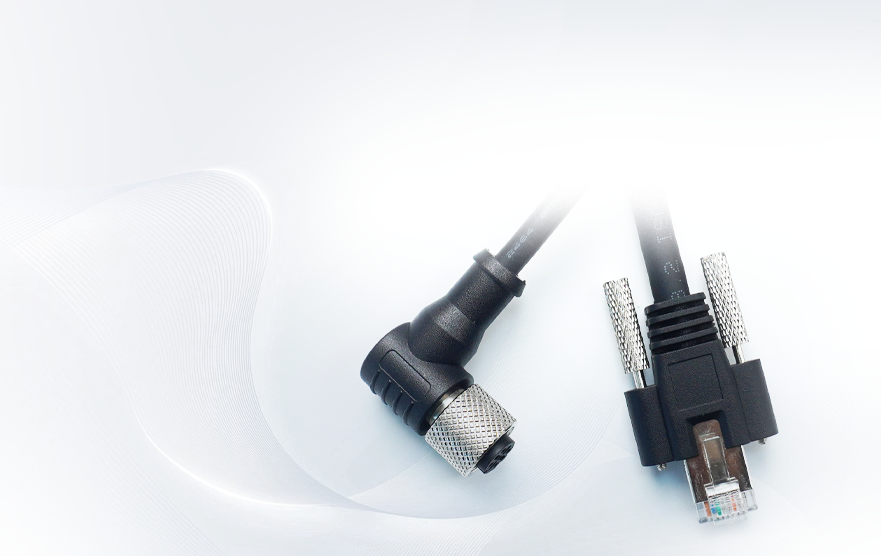
Orientation: Straight or right-angle designs (ideal for tight spaces).
Coding: A-coded, D-coded, or other variants (prevents misconnection).
Ingress Protection (IP Rating)
IP67 is standard for M16 cables, but higher ratings (e.g., IP68) are available for extreme environments (submersion, heavy dust). Choose based on your application’s conditions.
Step-by-Step M16 Connector Cable Installation Guide
Installation of M16 connector cables is straightforward with a few best practices to ensure a secure, long-lasting connection:
Prepare the Cable
Strip the outer jacket to the manufacturer-recommended length (avoid damaging internal conductors).
Trim exposed conductors to the correct length for the connector pins.
Assemble the Connector
Insert conductors into the appropriate pin slots (follow the pinout diagram for your cable/equipment).
Crimp or solder pins (depending on the connector type) to ensure solid electrical contact.
Secure the Coupling
Hand-tighten the M16 threaded coupling onto the equipment port.
Use a torque wrench to tighten to the manufacturer’s specified level (over-tightening can crack the housing; under-tightening compromises the seal).
Reinforce for Harsh Environments
For outdoor or wet locations, add a cable gland to prevent water ingress at the cable entry point.
Route the cable to minimize stress on the connector joint (avoid sharp bends or pulling).
Test the Connection
Verify continuity and signal/power transmission before putting the system into use.
Top Applications of M16 Connector Cables
One of the biggest advantages of M16 connector cables is their adaptability. They excel in a range of high-demand settings:
Industrial Automation
Used with sensors, actuators, and PLCs (Programmable Logic Controllers) in production lines—resisting vibration and dust.
Robotics
Ideal for robotic arms and moving components, thanks to PUR’s flexibility and abrasion resistance.
Automotive & Transportation
Used in commercial vehicles, agricultural machinery, and EV charging systems (withstand temperature fluctuations and moisture).
Renewable Energy
Connects solar panels, wind turbine components, and battery storage systems—operating reliably in outdoor conditions.
Marine & Offshore
With IP68 ratings, some M16 cables are suitable for marine applications, resisting saltwater corrosion.
Tips for Ensuring M16 Connector Cable Reliability
To maximize performance and lifespan, keep these tips in mind:
Choose Certified Products: Look for cables meeting IEC 61076-2-101 standards to ensure compatibility and quality.
Avoid Overlooking Environmental Factors: Consider temperature ranges (-40°C to 85°C for most M16 cables) and chemical exposure (oil, chemicals) when selecting materials.
Regular Inspections: Check for wear, corrosion, or loose connections quarterly—replace damaged cables promptly to prevent downtime.
Don’t Compromise on Quality: Subpar cables can cause signal interference, power loss, or premature failure—invest in reputable brands.
Final Thoughts on M16 Connector Cables
The M16 connector cable is a robust, versatile solution for demanding connectivity needs. Its rugged design, wide range of configurations, and compatibility with industrial equipment make it a staple in modern engineering projects.
By focusing on material selection, proper installation, and regular maintenance, you can leverage the M16 connector cable’s durability to keep your systems running smoothly—whether you’re working on a factory floor, a renewable energy site, or a robotic setup.
For more insights on industrial connectivity solutions, explore our related guides or reach out to our team for personalized recommendations.

Apply Here For A Custom Made Solution

Shenzhen Torvenics Electronic Co.,Ltd.
615 Block A, No.11 Tangkeng Road,Henggang Longgang Dist,Shenzhen China