

M16 Connector Cable: Features, Types & Industrial Applications Guide
Time:Dec 03,2025
Source:
If you’re navigating the world of industrial connectivity, you’ve likely come across M16 connector cables—but what exactly are they, and why are they a staple in automation, telecommunications, and harsh environment setups? In this guide, we’ll break down everything you need to know about M16 connector cables, from their core design to key features, types, and real-world uses. Whether you’re an engineer, technician, or procurement professional, this article will help you understand why M16 connector cables are trusted for reliable power, signal, and data transmission.

What Is an M16 Connector Cable?
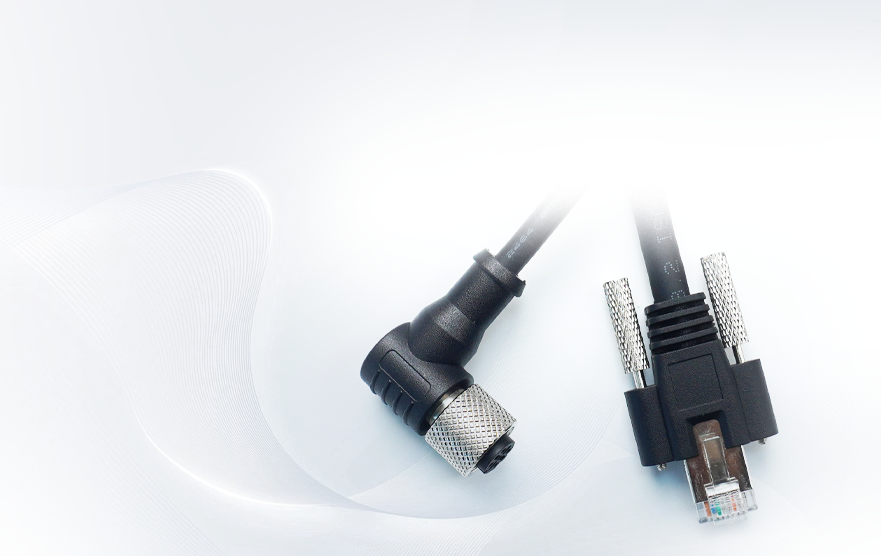
At its core, an M16 connector cable is a specialized assembly consisting of an M16 circular connector (defined by its 16mm metric thread diameter) paired with a cable tailored for industrial use. The M16 connector itself is a screw-locking circular connector designed to deliver secure, vibration-resistant connections—critical for environments where loose connections could lead to system failures or safety hazards.
M16 connector cables adhere to international standards like IEC 61076-2-106-2012 and AISG (for telecommunications), ensuring compatibility across brands and applications. Unlike smaller M-series connectors (M8 or M12), M16 connector cables are built for heavier-duty use, supporting higher current loads, more pins, and enhanced environmental protection—making them ideal for demanding industrial, outdoor, and mission-critical setups.
Key Features of M16 Connector Cables
What sets M16 connector cables apart from other industrial cables? Here are their standout characteristics:
Robust Waterproof & Dustproof Protection
Most M16 connector cables boast IP65, IP67, or even IP68 ingress protection ratings. This means they’re dust-tight and resistant to water jets (IP65), temporary submersion (IP67, up to 1 meter for 30 minutes), or continuous submersion (IP68)—perfect for outdoor applications like 5G base stations, antenna receivers, or industrial machinery exposed to rain, dust, or chemicals.
Secure Screw-Locking Mechanism
The 16mm metric thread on M16 connectors creates a tight, vibration-stable connection. Unlike push-fit connectors, the screw-lock design ensures the cable stays attached even in high-vibration environments (e.g., robotics, heavy machinery, or conveyor systems), eliminating accidental disconnections.
Versatile Pin Configurations
M16 connector cables come in a wide range of pin counts, from 2-pin to 24-pin (with popular options including 4-pin, 5-pin, 6-pin, 8-pin, and 12-pin). This flexibility allows them to handle single power lines, multiple signals, or a mix of power and data—making them suitable for everything from simple sensor connections to complex 4G/5G communication links.
Durable Materials for Harsh Conditions
- Connector Shell: Assembly-style M16 connectors use nickel-plated brass (corrosion-resistant, strong), while molded versions feature PA66 plastic (UV-resistant, hydrolysis-resistant, oil-resistant).
- Contacts: Gold-plated copper contacts ensure low contact impedance (≤5mΩ), excellent conductivity, and resistance to oxidation—critical for long-term reliability.
- Cable Options: Cables are available in PVC (general industrial use) or PUR (harsh environments, with superior oil, temperature, and corrosion resistance).
Electromagnetic Compatibility (EMC)
Shielded M16 connector cables feature 360° full shielding, using metal shielding layers to block electromagnetic interference (EMI) and radio-frequency interference (RFI). This is essential for data and signal transmission in industrial settings, where motors, generators, or other equipment can cause interference that corrupts data.
Wide Operating Range
M16 connector cables perform reliably in temperatures ranging from -25℃ to +80℃, making them suitable for both cold outdoor environments and heated industrial facilities. They also support cable diameters of 4–8mm (PG7: 4–6mm; PG9: 6–8mm) to ensure a snug, waterproof fit.
Common Types of M16 Connector Cables
M16 connector cables are available in several configurations to match specific installation needs:
Solder Type Assembly Cables
- Wiring Termination: Soldering (economical, easy to operate, no special tools required).
- Best For: General industrial applications, indoor sensors, or low-vibration setups.
- Note: Less vibration-resistant than crimped options; requires professional soldering to avoid damage.
Crimp Type Assembly Cables
- Wiring Termination: Crimping (uses pressure to create an airtight seal between contacts and wires).
- Best For: Harsh environments, outdoor applications (e.g., 5G AISG), or high-vibration machinery.
- Advantages: Fast installation, consistent connections, resistance to moisture, sand, and dust.
Molded M16 Cables
- Design: Overmolded connector (integrated cable and connector for maximum durability).
- Options: Straight or right-angled (for tight spaces), shielded or unshielded, male-to-male or male-to-female.
- Customization: Cable length, pinout, and material (PVC/PUR) can be tailored to specific needs.
PCB Mount & Bulkhead Cables
- PCB Mount: Soldered directly to printed circuit boards (DIP type), ideal for embedded systems.
- Bulkhead Mount: Front-mount, back-mount, or square-mount options for panels (panel hole size: 18mm), suitable for control enclosures and equipment panels.
IP40 Cable Mount Cables
- Protection: IP40 rating (dust-protected, not waterproof).
- Best For: Indoor use, field installation (user-installable cables), or non-harsh environments (e.g., office sensors, light industrial equipment).
Applications of M16 Connector Cables
M16 connector cables are versatile and used across industries where reliability, durability, and performance matter:
- Wireless Telecommunications: 4G/5G base stations, remote ESC antennas (RET), tower top amplifiers (TMA), and biasers (compliant with AISG C485 standard).
- Industrial Automation: Robotics, conveyors, process control systems, actuators, and multi-sensor arrays.
- Instrumentation & Measurement: Pressure sensors, torque sensors, motor speed sensors, and electronic test equipment.
- Automotive & Transportation: Heavy-duty vehicles, commercial transportation, and on-board sensors.
- Military & Aerospace: Mission-critical systems requiring rugged, vibration-resistant connections.
- Outdoor Equipment: Streetlights, landscape lighting, and outdoor sensors (IP67/IP68-rated options).
- Medical Devices: Diagnostic equipment and monitoring systems (reliable, secure connections for sensitive data).
M16 Connector Cables vs. M8/M12: How to Choose?
M16 connector cables are part of the M-series family (alongside M8 and M12), but they’re designed for heavier-duty use. Here’s a breakdown to help you decide:
- M8 Connector Cables: Smallest (8mm thread), 3–8 pins, low voltage (≤50VAC/60VDC), 3A current. Best for tight spaces, small sensors, or low-power devices.
- M12 Connector Cables: Mid-sized (12mm thread), 3–17 pins, 4–10A current, supports Ethernet. Ideal for general automation, fieldbuses, or 24V sensors.
- M16 Connector Cables: Largest (16mm thread), 2–24 pins, up to 250V/10A+, IP67/IP68 protection. Perfect for heavy machinery, 4G/5G telecom, power-signal hybrid links, or harsh environments.
Choose M16 connector cables if you need higher current/power handling, more pins for complex setups, or enhanced durability in extreme conditions.
Installation & Maintenance Tips for M16 Connector Cables
To ensure optimal performance and longevity, follow these best practices:
Installation
Match Cable Diameter: Use cables with the correct OD (4–6mm for PG7, 6–8mm for PG9) to maintain waterproofing. A cable that’s too large won’t fit; one that’s too small compromises sealing.
Proper Termination: For crimped cables, use manufacturer-recommended tools to ensure airtight connections. For soldered cables, avoid overheating the connector (excessive heat can damage insulation).
Secure the Gland Nut: Tighten the cable gland nut firmly to provide strain relief and maintain the IP rating—don’t overtighten, as this can damage the cable or seal.
Align Pins Correctly: Ensure male/female pins match the pinout (check the manufacturer’s diagram) to avoid wiring mistakes or equipment damage.
Maintenance
Regular Inspections: Check for cracks in the connector shell, dry/cracked O-rings, or damaged cables. Replace worn parts immediately to preserve waterproofing.
Keep Clean: Wipe dust, dirt, or debris from threads and contacts—grit can hinder connection or cause wear.
Torque Checks: Periodically tighten the screw-lock mechanism (vibration can loosen it over time) to maintain a secure fit.
Limit Mating Cycles: M16 connectors are rated for 500 mating cycles. Avoid frequent plugging/unplugging to prevent increased contact resistance.
Final Thoughts
M16 connector cables are a reliable, versatile solution for industrial connectivity—combining robust design, environmental resistance, and flexibility to handle power, signal, and data needs. Whether you’re setting up 5G base stations, industrial robots, or outdoor sensors, M16 connector cables deliver the stability and durability required for mission-critical applications.
By understanding their features, types, and installation best practices, you can select the right M16 connector cable for your project and ensure long-lasting, trouble-free performance. For customized solutions (e.g., specific pinouts, cable lengths, or materials), consult a trusted industrial connector supplier to match your exact requirements.

Apply Here For A Custom Made Solution

Shenzhen Torvenics Electronic Co.,Ltd.
615 Block A, No.11 Tangkeng Road,Henggang Longgang Dist,Shenzhen China