

How to Ensure Connector Cable Performance & Reliability
Time:Oct 15,2026
Source:
In industrial automation, machine vision, robotics, and test systems, connector cables are expected to do more than simply connect two devices. They must maintain stable signal transmission, withstand mechanical movement, resist moisture and contamination, and continue working reliably over long operating periods.

For engineers and purchasing teams, the key questions are often practical: Can the cable support high-speed data? Is it suitable for high-density wiring? Does shielding prevent electromagnetic interference? Can it withstand water, oil, vibration, and repeated movement? And how are connector cables tested before deployment?
This guide explains the main performance factors to consider when evaluating industrial connector cables.
High-Speed Performance: More Than Just Cable Bandwidth
High-speed Industrial Vision cable applications place demanding requirements on both the cable and connector interface. Machine vision cameras may transmit large amounts of image data, while industrial Ethernet and other communication systems require consistent signal integrity.
A suitable high-speed cable should control factors such as attenuation, impedance consistency, crosstalk, and electromagnetic interference. Connector design is equally important because poor termination or an unstable contact can compromise an otherwise capable cable.
For shorter, high-speed connections, cable construction and connector matching should be evaluated together rather than selecting components independently. In moving vision systems, flexibility and bend performance also need to be considered because repeated movement can gradually affect electrical performance.
High-Density Cabling for Space-Constrained Systems
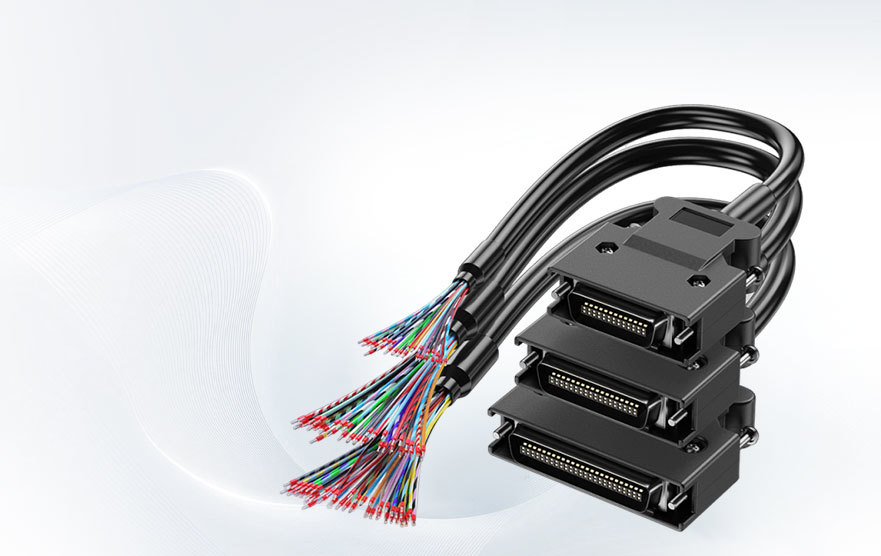
Modern automation equipment increasingly places more sensors, cameras, actuators, and communication devices into smaller spaces. This makes high-density Industrial Vision cable and compact connector systems increasingly important.
A high-density cable solution should provide the required electrical performance without creating unnecessary bulk. Smaller connector formats such as M5 and M8 can be useful where installation space is limited, while M12 and M16 solutions may be selected when the application requires different pin counts, mechanical robustness, or power and signal combinations.
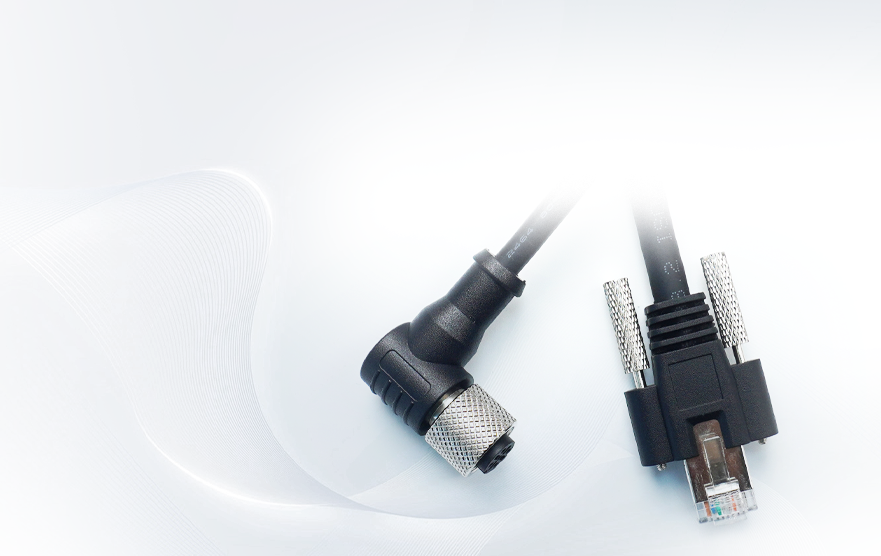
Torven's Automation Technology Sensor and Data Cable product line covers M5, M8, and M12 connector cables for sensors and actuators, with multiple connector configurations and cable assembly options. The product range supports applications where compact wiring and reliable industrial connections are important.
Need a compact connector cable for a dense sensor or automation system? Explore Torven's M-series cable solutions and discuss your required connector size, pin configuration, cable length, and application environment with the engineering team.

Shielding for Stable Signal Transmission
Shielding becomes especially important when connector cables operate close to motors, drives, switching power supplies, servo systems, or other sources of electromagnetic interference.
A Shielded Industrial Vision cable can use appropriate shielding structures to reduce the influence of external electromagnetic noise and help maintain signal integrity. However, shielding should not be considered in isolation.
The complete connection should be evaluated, including:
- Shield coverage and construction
- Connector shielding and termination
- Grounding strategy
- Cable routing
- Operating frequency and data rate
- Distance between noise sources and signal cables
For high-speed applications, simply adding a shield does not automatically guarantee reliable communication. Cable construction, connector quality, impedance control, and installation all contribute to overall performance.
Waterproof and Environmental Protection
Industrial cables are often exposed to dust, water, coolant, oil, humidity, and temperature changes. A Waterproof Industrial Vision cable therefore needs more than a waterproof-looking connector.
The connector, cable jacket, molding, sealing structure, and mating interface must work together to maintain environmental protection.
IP ratings are useful when comparing protection against dust and water, but engineers should also consider the actual operating environment. For example, a cable installed inside a dry control cabinet has very different requirements from one installed on a moving machine exposed to coolant or washdown conditions.
Torven' M-series connector cable portfolio includes protection levels ranging from IP40 to IP68, depending on the specific product configuration.
For applications involving oil or coolant, such as machine tools and moving industrial equipment, cable jacket material and mechanical construction should also be checked. An M16 connector cable used in an oil-exposed environment, for example, should be selected according to the actual chemical and mechanical conditions rather than connector size alone.
How Are Connector Cables Tested?
Connector cable testing is an important part of reliability control because many failures are not immediately visible during installation.
Depending on the application, testing may include:
Electrical testing: Continuity, contact resistance, insulation resistance, and dielectric withstand testing help verify basic electrical integrity.
High-speed performance testing: For high-speed data cables, signal integrity, attenuation, crosstalk, and transmission performance may need to be evaluated against the intended communication requirements.
Mechanical testing: Connector retention, mating and unmating cycles, bending, flexing, and cable movement tests help evaluate long-term mechanical reliability.
Environmental testing: Waterproof or outdoor applications may require IP-related testing, while industrial applications may also require evaluation against temperature, humidity, vibration, oil, or other environmental conditions.
For example, M5 connector cable testing can include continuity, contact resistance, insulation resistance, dielectric withstand, mechanical endurance, bending, and IP protection evaluation depending on the application.
M12 connector cable testing similarly helps identify issues such as poor contact, wiring faults, damaged pins, or compromised environmental protection before they result in system downtime.
Choosing a Reliable Connector Cable
When comparing connector cable suppliers, do not evaluate products only by connector type or price. A better approach is to match the cable construction to the complete application.
Check these factors before purchasing:
- Data rate and transmission distance — Confirm that the cable supports the required communication performance.
- Connector size and pin count — Select M5, M8, M12, M16, or another interface according to space and electrical requirements.
- Shielding requirements — Consider EMI conditions and the complete grounding and termination structure.
- Environmental protection — Check IP requirements, moisture exposure, temperature, oil, coolant, and chemicals.
- Mechanical movement — Specify bending, flexing, vibration, or drag-chain requirements when applicable.
- Testing requirements — Confirm which electrical, mechanical, environmental, and performance tests are performed.
- Customization — For OEM applications, cable length, connector orientation, pin assignment, jacket material, and other specifications may need to be customized.
For machine vision applications, Torven' Industrial Vision Cable product line includes dedicated industrial camera power/trigger cables and industrial camera Ethernet cables, providing solutions for camera power, triggering, and high-speed data connections.
Looking for a high-speed, shielded, waterproof, or application-specific connector cable? Contact Torven to discuss your camera, sensor, automation, or industrial equipment requirements and develop a cable assembly matched to your system.

Apply Here For A Custom Made Solution

Shenzhen Torvenics Electronic Co.,Ltd.
615 Block A, No.11 Tangkeng Road,Henggang Longgang Dist,Shenzhen China