

M8 Connector Cable Specification: Key Details for Reliable Industrial Connections
Time:Jan 27,2026
Source:
If you’re navigating industrial automation, robotics, or medical equipment projects, choosing the right M8 connector cable starts with mastering its specifications. The wrong cable specs can lead to signal interference, connection failures, or shortened lifespan—costing time and money. This guide breaks down critical M8 connector cable specifications to help you select a durable, high-performance solution that fits your application.
What Are M8 Connector Cables?
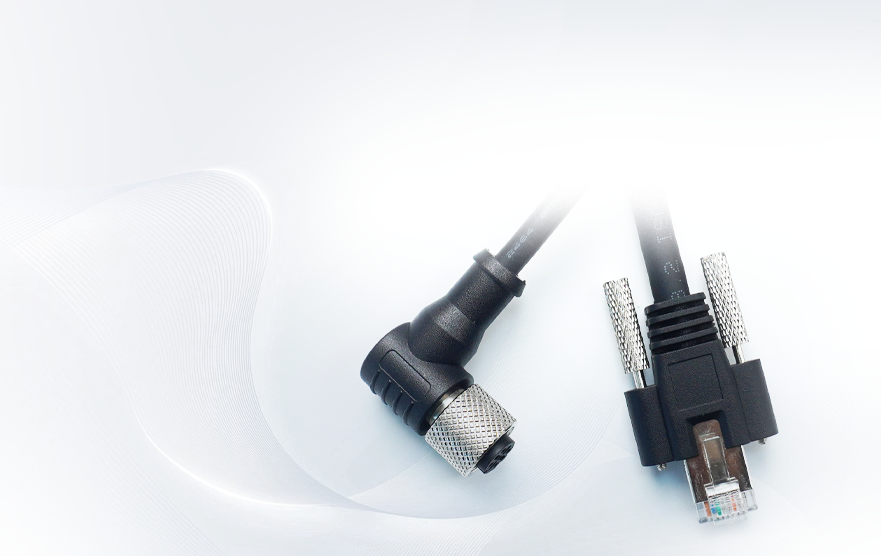
M8 connector cables are integral components paired with M8 metric circular connectors (featuring an 8mm locking thread). Designed for tight spaces and harsh industrial environments, they enable secure power and signal transmission between sensors, actuators, PLCs, and other critical devices. Compliant with standards like IEC 61076-2-104 and UL 2238, these cables prioritize reliability, versatility, and durability.
Critical M8 Connector Cable Specifications to Consider
Electrical Specifications
- Voltage & Current Ratings: M8 cables align with their connector’s pin count: 3-pin, 4-pin, 5-pin, and 6-pin variants support 60V, while 8-pin cables are rated for 30V. Current capacity ranges from 1.5A (8-pin) to 4A (3/4/5-pin), so match this to your device’s power demands.
- Wire Gauge: Common gauges are 22 AWG, 24 AWG, and 26 AWG. Thicker gauges (22 AWG) handle higher currents, while 26 AWG suits space-constrained low-power setups.
- Shielding: Shielded cables block electromagnetic interference (EMI), critical for medical equipment (e.g., ECG machines) and industrial automation where signal integrity is non-negotiable.
Mechanical Specifications
- Cable Type & Termination: Options include screw-joint, solder, and crimp termination. Moulded-on terminations enhance water and dust resistance. Mounting styles (cable, panel, PCB) depend on your setup—cable-mount is ideal for direct device connections.
- Bending Performance: Flexible cables with high bending cycles suit dynamic applications like robotic joints. Fixed installations require a minimum bending radius of 5x the cable diameter, while moving setups need 10x.
- Mating Cycles: Look for cables paired with connectors that withstand 500+ mating cycles (100+ for specialized models) to ensure long-term usability without degradation.
Environmental Specifications
- Protection Rating: IP67 and IP68 ratings are standard. IP67 offers dust tightness and temporary immersion protection, while IP68 provides superior water/dust resistance for extreme conditions.
- Temperature Range: Most M8 cables operate from -25°C to +100°C.
- Material: Sheath materials like PUR (polyurethane) offer flexibility, chemical resistance, and durability—perfect for harsh industrial or agricultural settings. Contact materials (brass/bronze with gold plating) ensure corrosion resistance and low contact resistance.
Additional Key Specs
- Cable Length: Standard lengths are 2m and 5m, with custom lengths available.
- Coding: A-coded, B-coded, or D-coded cables prevent mismating, ensuring compatibility with your M8 connectors.
Why These Specifications Matter for Your Application
Choosing the right specs directly impacts performance:
- Industrial Automation: Opt for shielded, IP67-rated cables with 3/4-pin configurations (60V/4A) to connect sensors and actuators reliably.
- Medical Equipment: Prioritize EMI-shielded, low-voltage (30V) cables with IP67 protection to avoid signal interference in devices like blood pressure monitors.
- Robotics: Select flexible, high-bending-cycle cables (2 million+) to withstand constant movement in robot joints.
- Automotive: Use durable PUR-sheathed cables with IP67 rating for onboard electronics and lighting, resisting vibration and temperature fluctuations.
How to Choose the Right M8 Connector Cable
- Analyze Your Environment: Assess temperature, moisture, chemicals, and EMI to select IP rating, shielding, and material.
- Match Electrical Needs: Confirm voltage, current, and wire gauge with your devices—don’t undersize for high-power applications.
- Consider Installation: Choose termination type (moulded, solder) and length based on mounting (cable/panel) and distance requirements.
- Prioritize Compliance: Ensure adherence to IEC 61076-2-104 and UL standards for safety and compatibility.
Final Thoughts
Mastering M8 connector cable specifications eliminates guesswork and ensures reliable, long-lasting connections. Whether you’re upgrading industrial machinery or designing medical devices, aligning specs with your application’s electrical, mechanical, and environmental needs is key.
Ready to find the perfect M8 connector cable? Explore our range of compliant, high-performance solutions or contact our team for customized recommendations tailored to your project.

Apply Here For A Custom Made Solution

Shenzhen Torvenics Electronic Co.,Ltd.
615 Block A, No.11 Tangkeng Road,Henggang Longgang Dist,Shenzhen China