

Push Pull Circular Connector Cable Assembly for Reliable Testing
Time:Jun 09,2026
Source:
Push Pull Circular Connector Cable Assembly for Reliable Testing and Harsh Environments
As automation, medical electronics, and smart devices shrink in size while growing in complexity, engineers are under pressure to build systems that are compact, robust, and easy to service. For signal and low‑power interconnects, a push pull circular connector cable assembly is often the most efficient way to balance fast mating, vibration resistance, and long‑term reliability in the field. Torven has spent more than a decade focused on high‑precision connectors and cable assemblies, and we design and manufacture push‑pull circular connector cable assembly solutions that plug directly into demanding industrial, medical, and test and measurement environments.
We do not treat the connector and cable as two separate components. Instead, we engineer the complete assembly – from contact plating and shell geometry to cable jacket and strain relief – so that it behaves like a single system. This system‑level thinking is what allows our assemblies to maintain stable signal integrity, consistent insulation resistance, and secure locking performance over millions of mating and unmating cycles in real‑world equipment.
Product focus: Torven push pull circular connector cable assemblies
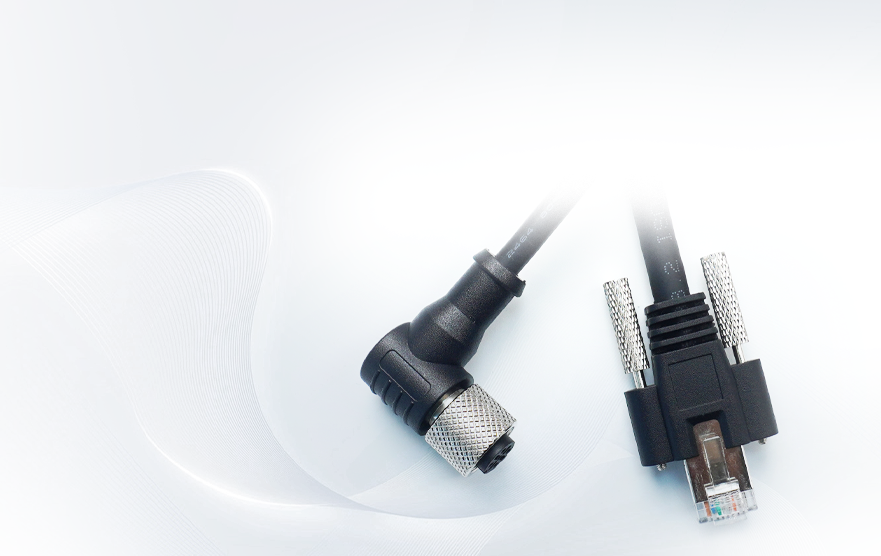
Torven’s push pull circular connector cable assemblies cover multiple miniature and compact interface families used in cameras, test modules, and industrial controllers. Our portfolio includes self‑locking medical‑style push pull connectors, Weipu‑compatible push pull interfaces, and M‑series circular connectors such as M5, M8, M12, M16, and M23 when a threaded or bayonet style is preferred. To explore how these circular connector systems are deployed in harsh automation environments, you can refer to our detailed overview of industrial circular waterproof connector solutions.
On the cable side, we can build single‑ended or double‑ended assemblies using PVC, PUR or TPE jackets depending on whether the priority is flexibility, drag‑chain endurance or chemical resistance. Our internal conductors are optimized for both power and data, with options from just a few cores for compact sensor pigtails to multi‑core cables for combined power, control, and auxiliary signals. With in‑house tooling and over 14 years of connector and cable assembly experience, we support custom overmolds, angled plugs, and panel‑mount receptacles that help OEMs optimize space in crowded housings.

What we test on each push pull circular connector cable assembly
Because these assemblies are typically used in safety‑critical applications such as medical equipment, test instruments and automation controllers, Torven applies a comprehensive validation and production test program.
Key test items include:
Contact resistance and continuity to confirm low loss paths from plug to plug under rated current.
Insulation resistance and dielectric withstand voltage between contacts and between contacts and shell.
Mechanical locking and unmating force for the push‑pull latch to verify that connectors will not disconnect under vibration.
Cable flexing and torsion tests, especially for assemblies used in robotic arms or drag chains, to verify jacket, conductor, and shield integrity.
Environmental tests such as ingress protection verification (up to IP67 or IP68 depending on design) and temperature cycling.
These tests help catch early failure modes such as intermittent contacts, cracked solder joints, or jacket damage before the assemblies ever reach your production line.
Typical failure modes and how a Torven assembly prevents them
In the field, poorly designed circular connector assemblies often fail in predictable ways. Common fault symptoms include intermittent signals when an operator touches or moves the cable, overheating at the connector interface, moisture ingress causing corrosion, and connector backshells that loosen over time.
Torven addresses these issues at the design stage:
We match the cable outer diameter, strain relief structure, and overmold design so that bending stress is transferred gradually and does not concentrate at the rear of the connector.
For shielded assemblies, we design 360‑degree shield termination and controlled grounding points to avoid EMC‑related failures.
We qualify our designs for specific IP ratings (IP67 or IP68 for many M‑series connectors) and ensure that gaskets, O‑rings, and housing materials maintain sealing after repeated mating cycles.
For push‑pull locking, we control the spring and latch geometry so that the connector clicks positively into place but still allows fast one‑handed operation during maintenance.
By treating these failure mechanisms as “design inputs” instead of after‑the‑fact problems, we can deliver assemblies that maintain stable performance in harsh conditions.
Industry standards and reference frameworks
Our push pull circular connector cable assemblies are engineered to align with relevant IEC and industry standards for circular connectors and industrial communication. For M‑series interfaces such as M5, M8 and M12, our designs are based on the IEC 61076 connector family, which defines dimensions, coding, and performance classes for circular connectors in industrial environments. For RF and high‑speed data variants used within the same systems, we also design to maintain characteristic impedance across the interface in line with RF coaxial connector practice as described in IEC and IEEE communication standards.
On the application side, many of the systems that use our assemblies implement protocols such as CAN bus, Ethernet, EtherCAT, PROFINET and PoE, which reference IEEE 802.3 for physical layer specifications. Torven cable assemblies are built and tested so that, when mated with suitable equipment, they can support reliable operation of these protocols without compromising signal integrity.

Application scenarios for push pull circular connector cable assemblies
Torven push pull circular connector cable assembly solutions are widely used in test and measurement equipment, industrial cameras and vision systems, medical devices, and industrial control panels. For compact measurement devices that rely on miniature circular interfaces, our dedicated M5 connector cable for test and measurement shows how M‑series connectors scale down to very small form factors in real industrial projects.:
Test and measurement equipment such as oscilloscopes, analyzers, and modular data acquisition systems, where fast and reliable cabling is essential for frequent reconfiguration.
Industrial cameras and vision systems, where a push‑pull or M‑series interface connects the camera to controllers in production lines or robotics cells.
Medical devices and accessories that require high mating cycle life, secure locking, and easy cleaning, including imaging systems and patient monitoring equipment.
Industrial control panels, PLCs, and sensor networks where compact connectors save space yet must survive vibration and dust in the field.
In these scenarios, the combination of compact form factor, robust locking and customized cable options helps OEMs simplify wiring, accelerate installation, and improve serviceability.
How to choose the right push pull circular connector cable assembly
When our customers design a new device or retrofit an existing system, we recommend the following practical steps to select the right assembly:
Define electrical and mechanical requirements Start with voltage, current, signal type (analog, digital, RF, high‑speed data), number of contacts, and mating cycles. This will determine contact design, plating, and connector series. For example, M5 and compact push‑pull connectors are well suited for signal‑level power and data in small devices, while M12 or M23 handle higher currents.
Evaluate environmental and safety requirements Clarify IP rating (IP40, IP67, IP68), operating temperature range, chemical exposure and mechanical movement. In drag chain or robotic applications, a highly flexible PUR cable is often the safest choice.
Map interface compatibility Consider the equipment ports: do you require a push‑pull plug to a panel‑mount receptacle, or push‑pull to D‑Tap/Anton/V‑mount power connector for cameras? Torven can adapt the second end of the cable to match your existing ecosystem.
Confirm compliance and validation Verify that the proposed assembly meets your internal guidelines and any relevant IEC/IEEE or UL requirements. Torven provides technical data sheets and can support customer‑specific test plans, including burn‑in, flex and environmental testing.
Prototype, then standardize We recommend starting with pilot batches to validate installation, strain relief behavior, and EMC performance in your own system. Once validated, Torven can lock the design and move to serial production with consistent quality control.
Why work with Torven for push pull circular connector cable assembly
Torven is a global technology business focused on enabling wireless communication and smart systems through precision connectors and cable assemblies. We combine R&D, design and in‑house manufacturing to deliver push pull circular connector cable assembly solutions customized to your electrical, mechanical, and environmental requirements.
With experience across industrial automation, medical equipment, transportation, vision systems, and RF communication, we understand how interconnect choices affect system performance over the entire lifecycle. By partnering with Torven early in your design, you can convert interconnect reliability into a competitive advantage for your equipment line.
EV India 2026: Meet Torven in Greater Noida
Torven will participate in EV India 2026, India’s flagship electric mobility exhibition, hosted at the India Expo Centre in Greater Noida from September 1–3, 2026.
At the show, we will present our latest ranges of industrial circular waterproof connectors and tailored cable assemblies designed for EV power distribution, control signals, and charging interfaces, with a focus on long‑term reliability in demanding on‑board and outdoor charging environments.
EV India 2026 covers the full EV value chain, including passenger cars, two‑wheelers, commercial vehicles, battery systems, and powertrain technologies. Entry for trade visitors is complimentary; however, advance online registration is mandatory. You can secure your visitor badge here: EV India Expo visitor registration.
Our booth numbers are EVINDIA-0000179666 and EVINDIA-0000179655. We look forward to meeting you on site.


Apply Here For A Custom Made Solution

Shenzhen Torvenics Electronic Co.,Ltd.
615 Block A, No.11 Tangkeng Road,Henggang Longgang Dist,Shenzhen China