

D-sub Connector Crimp: Testing, Standards and Applications
Time:Jun 03,2026
Source:
D-sub Connector Crimp Solutions for Reliable Industrial Cable Assemblies
At Torven, we design and manufacture D-sub connector crimp solutions that combine robust connectors with high-quality cable assemblies for demanding industrial environments. Our goal is to help engineers build reliable interfaces for automation, motion control and vision systems while staying aligned with international standards and best practices.
In this article, we focus on D-sub crimp connectors as a complete solution: the product hardware, the test items, the application scenarios, the relevant IEC/IEEE standards and a practical “how to” guide for selection and installation. We also explain typical fault symptoms that customers encounter and how our engineering team at Torven supports root-cause analysis and corrective actions.
D-sub Connector Crimp Product Overview
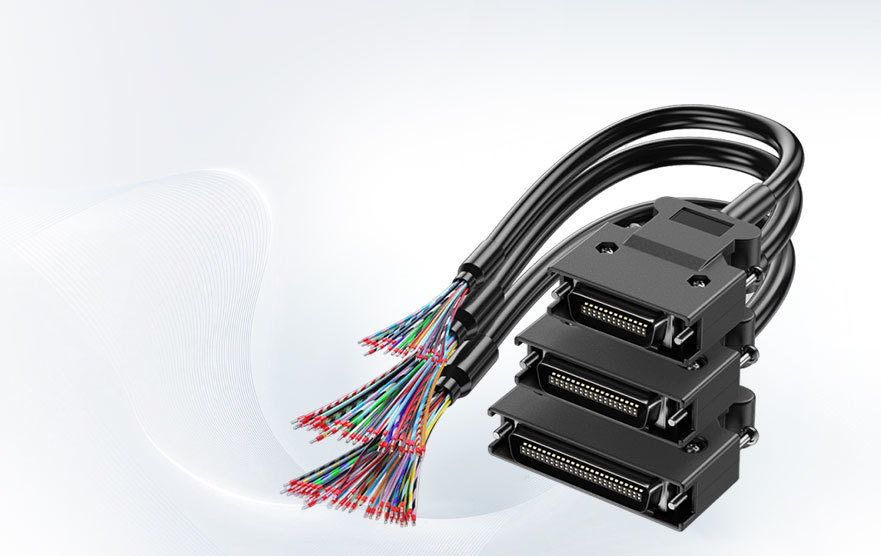
Torven D-subminiature connectors are available in standard shell sizes and pin counts such as 9, 15, 25 and 37 positions, which cover most industrial control and communication needs. These connectors can be supplied as standalone parts or integrated into complete cable assemblies with D-sub at one or both ends.
We offer termination options including crimp contacts, solder cup and PCB mount styles, so customers can build both board-level and cable-level interfaces using the same D-sub footprint. For crimped cable assemblies, our D-sub plugs and receptacles are combined with industrial-grade cables and backshells to deliver mechanical robustness, EMI protection and strain relief.
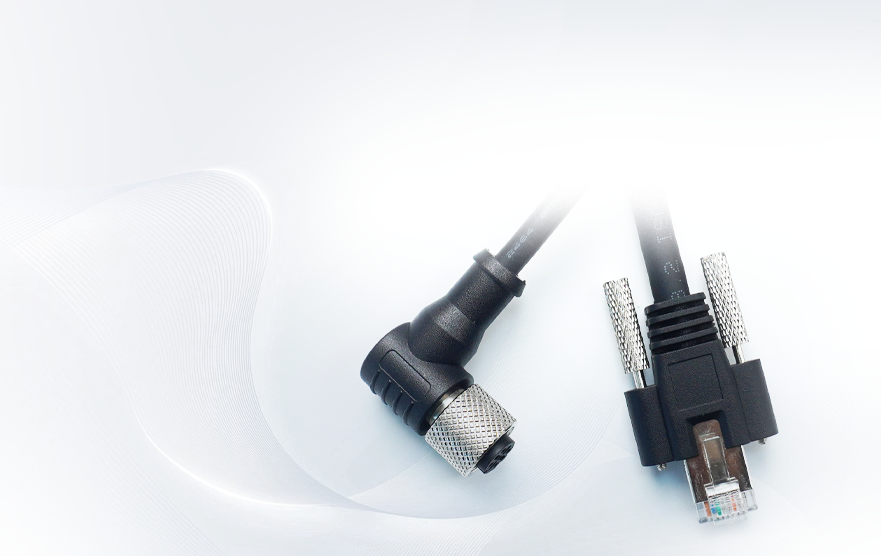
To complement rectangular interfaces, many customers also use our circular connector solutions available on the Circular Connectors Cables page.
Test Objects: What We Validate
When we talk about “test objects” for D-sub connector crimp solutions, we consider the entire signal path rather than just one component. A typical Torven test object includes:
- The D-sub connector (plug or receptacle) with crimp contacts, shell and hardware.
- The cable assembly, including conductors, shielding, jacket and strain relief.
- The mating interface, such as a panel-mounted D-sub connector, an industrial controller or a field device.
By testing the assembled harness instead of isolated parts, we can evaluate real-world performance under bending, vibration and repeated mating cycles. This approach helps ensure that a Torven D-sub crimp solution behaves consistently once installed in the customer’s equipment.

Test Items for D-sub Crimp Connectors and Cable Assemblies
To support industrial users, Torven aligns its test strategy with widely adopted connector and cable standards where applicable, and we use test items that reflect field conditions. Typical test items for D-sub connector crimp solutions include:
- Contact resistance and continuity We verify that each crimped contact maintains low and stable contact resistance across the entire harness. Continuity tests help detect open circuits, intermittent connections or incorrectly terminated conductors.
- Dielectric strength and insulation resistance D-sub assemblies are tested for adequate creepage and clearance, ensuring that insulation can withstand the intended operating voltage with safety margins. Insulation resistance measurements help detect contamination or moisture ingress within the backshell or cable.
- Mechanical retention and crimp pull-out Crimp contacts are evaluated for pull-out strength to confirm that the conductor cannot be easily extracted under tensile load. This is critical for installations with frequent cable movement or accidental pulling.
- Mating durability and vibration We test mating and unmating cycles to ensure that the D-sub connector maintains stable electrical performance and mechanical integrity over its service life. In typical industrial applications, connectors are also exposed to vibration profiles representative of control cabinets, machine frames or mobile equipment.
- Environmental and thermal performance Depending on the application, cable assemblies may be tested for temperature cycling, humidity and exposure to oils or other contaminants. These evaluations help ensure that D-sub crimp harnesses remain functional in realistic factory conditions.
Application Scenarios for Torven D-sub Crimp Harnesses
Torven D-sub connector crimp solutions are used alongside our M5/M8/M12 circular connectors, RF coaxial connectors and SCSI connectors to build complete industrial wiring systems. Some typical application scenarios include:
- Industrial automation controllers D-sub connectors provide compact I/O interfaces between programmable logic controllers (PLCs) and field wiring, often in combination with circular sensor/actuator connectors on the machine side.
- Servo and motion control systems In servo applications, D-sub harnesses can carry encoder feedback, low-voltage control signals and diagnostic lines while power connections are handled by circular connectors or dedicated power cables.
- Machine vision and industrial data links D-sub and MDR-style interfaces are often used in camera link and control paths, working together with Torven industrial vision cables and camera power cables.
Because we produce both connectors and cable assemblies, Torven can supply D-sub crimp harnesses tailored to specific mechanical layouts, cable routing constraints and environmental requirements.

Typical Fault Symptoms in D-sub Crimp Installations
Even when high-quality components are used, improper installation or incorrect product selection can lead to system issues. Below are some typical fault symptoms associated with D-sub connector crimp harnesses in the field:
- Intermittent signals or data errors Users may see intermittent communication, CRC errors or sporadic device resets, often linked to loose contacts, insufficient strain relief or improper shielding.
- Unstable or noisy analog signals In control systems, analog signals can become noisy if the cable or connectors are not properly grounded or if shielding is interrupted at the backshell.
- Mechanical damage at the cable entry Repeated bending without adequate strain relief can cause broken conductors near the connector entry point, leading to open circuits or intermittent faults.
- Connector damage due to wrong mating Forcing mismatched connectors or overtightening hardware can deform shells and damage contacts, resulting in poor mating and increased contact resistance.
When customers encounter such symptoms, Torven’s engineering team helps analyze the harness design, test results and installation conditions to identify the root cause.
Relevant IEC/IEEE Standards for D-sub Connectors and Cable Assemblies
D-sub connectors themselves are widely used and covered in international standards and connector families that define mechanical dimensions, performance and test methods. While specific numbering can vary and depends on application, industrial users commonly refer to:
- IEC connector and cable standards IEC standards provide general requirements and test methods for electrical connectors, cables and assemblies used in industrial environments. These documents define aspects such as insulation, mechanical durability and environmental testing.
- IEEE-based communication standards Many industrial communication protocols, including those for serial and data networks, build on IEEE-defined signaling and interface requirements, which can be implemented using D-sub connector interfaces.
At Torven, we use these international references as guidance when defining our internal design targets and test plans for D-sub connector crimp solutions. Our engineering team can support customers who need to align their wiring systems with specific IEC/IEEE requirements for their projects.
How to Select the Right D-sub Connector Crimp Solution
Choosing the correct D-sub crimp connector and cable assembly is critical for long-term system reliability. When working with Torven, we recommend the following selection steps:
- Define the signal types and pin count Start by listing all signals that must pass through the connector: digital I/O, serial data, analog signals or low-voltage power. Then choose an appropriate pin count such as 9, 15, 25 or 37 positions based on your current needs and future expansion.
- Specify cable construction and environment Determine conductor size, shielding, jacket material and temperature range according to your application environment (control cabinet, machine frame, drag chain, etc.). Torven can recommend cable constructions based on our experience with automation, vision and servo systems.
- Select the termination style and backshell For field harnesses, crimp contacts combined with appropriate backshells offer robust performance in vibration-prone environments. For board connections, PCB mount D-sub connectors provide a compact interface to controllers and modules.
- Plan grounding and shielding strategy Decide whether the shield should be terminated at one or both ends, how it will be connected to the backshell and how grounding ties into the system. Proper planning reduces noise and improves EMC performance.
- Consider compatibility with other connectors Many Torven customers use mixed harnesses where one side uses D-sub and the other side uses M5/M8/M12 circular connectors, SCSI connectors or RF connectors. Our team can help ensure that all components work together as a coherent wiring system.
How to Install and Maintain Torven D-sub Crimp Assemblies
Proper installation is as important as product selection. When working with Torven D-sub crimp connectors and cable assemblies, we recommend the following practical guidelines:
- Use suitable crimp tools and procedures Crimp contacts should be terminated using tools that match the contact type and wire gauge, following the manufacturer’s recommended crimp height and inspection criteria. Torven can provide guidance on tool selection for our D-sub connector families.
- Route and support cables carefully Avoid sharp bends near the connector entry and provide strain relief where cables exit enclosures or move with machine axes. For high-flex applications, we recommend verifying minimum bend radius and routing practices during machine design.
- Tighten hardware to appropriate torque Screw-locks and panel-mount hardware should be tightened firmly but not excessively, ensuring secure retention without damaging threads or shells. Periodic inspection can catch loose hardware before it leads to intermittent connections.
- Protect connectors from contamination Where dust, oil or moisture are present, use backshells, gaskets and covers as appropriate for the enclosure rating. Regular cleaning and visual inspections help ensure long-term performance of D-sub crimp interfaces.
- Document wiring and test results Clear labeling of connectors, pin assignments and test results simplifies future maintenance and troubleshooting. Torven can assist with documentation templates for complex harnesses.
Why Choose Torven for D-sub Connector Crimp Projects
As a connector and cable assembly manufacturer with more than a decade of experience in international markets, Torven focuses on high-precision solutions for industrial automation, machine vision and related applications. Our portfolio spans D-sub connectors and cable assemblies, M-series circular connector cables, RF coaxial connectors and specialized camera and servo cables.
You can learn more about our company, capabilities and quality approach on the About Torven page.
By working directly with Torven, customers gain a single point of contact for designing, testing and delivering D-sub connector crimp solutions that align with their equipment requirements and applicable IEC/IEEE standards. Our engineering team supports every stage—from concept and sample validation to volume production—helping you reduce integration risk and improve system reliability.
If you are planning a new project or upgrading existing wiring with D-sub connector crimp solutions, our technical team is ready to review your drawings and requirements and propose a tailored Torven configuration.
Invitation to Meet Torven at EV India 2026 Expo
We cordially invite professionals from the electric vehicle, charging infrastructure, and related components industries to visit Torven’s booth at EV India 2026, Noida’s largest electric motor vehicle exhibition.
Event Details:
- Dates: 01–03 September 2026
- Hours: 10:00 AM – 6:00 PM daily
- Venue: India Expo Centre, Knowledge Park II, Greater Noida, Uttar Pradesh
This comprehensive expo brings together the entire EV value chain, featuring electric cars, scooters, motorcycles, buses, trucks, rickshaws, cargo vehicles, batteries, charging stations, and powertrain components. Torven will present its full range of industrial circular waterproof connector assemblies and tailored cable solutions designed to enhance the durability and performance of EV systems in demanding operating conditions.
Visitor entry is complimentary, but pre-registration is mandatory. Secure your visitor pass now through the official registration link: EV India Expo visitor registration.
We look forward to discussing your specific requirements and exploring partnership opportunities with you at the show.
Our booth numbers are EVINDIA-0000179666 and EVINDIA-0000179655. We look forward to meeting you on site.


Apply Here For A Custom Made Solution

Shenzhen Torvenics Electronic Co.,Ltd.
615 Block A, No.11 Tangkeng Road,Henggang Longgang Dist,Shenzhen China