

High Speed M5 Connector Cable Production for Compact Systems
Time:Jul 01,2026
Source:
Introduction: Why High Speed M5 Connector Cable Production Matters
M5 connector cables were originally designed for compact, low‑voltage sensor connections. Today, they are increasingly used in applications where signals are faster, data rates are higher, and mechanical space is tighter than ever. As a result, high speed M5 connector cable production has become a critical capability for manufacturers who serve modern automation, test equipment, and embedded systems.
If a miniature cable assembly is not produced with the right materials, terminations, and quality controls, high‑speed signals can suffer from noise, distortion, or intermittent faults. Torven focuses on high speed M5 connector cable production that combines miniature mechanical design with stable, predictable electrical performance, giving OEMs a reliable foundation for their compact systems.
What Makes an M5 Connector Cable “High Speed”?
Not every M5 connector cable is intended for high‑speed use. High speed M5 connector cables differ from basic low‑speed cords in several essential ways:
- They are designed to carry faster digital signals or timing pulses over short distances without severe distortion or delay.
- Their internal conductor layout and insulation geometry are controlled more carefully to support consistent impedance and lower crosstalk.
- Shielding or twisted‑pair structures may be used to protect signals from electromagnetic interference created by nearby drives, motors, or switching elements.
- The cable length and routing are chosen with signal integrity in mind, rather than purely mechanical convenience.
In other words, “high speed” is not only about the connector itself— it reflects the entire cable assembly’s ability to support higher‑frequency components in a compact environment.
Typical Applications for High Speed M5 Connector Cables
High speed M5 connector cable production is usually driven by applications where small devices and fast signals meet:
- Compact sensors with fast outputs
Some modern sensors use fast digital interfaces or deliver precise timing pulses that must be carried cleanly to controllers. - Embedded modules and micro‑controllers
In tight enclosures, short M5 cables may link boards or modules that exchange high‑speed data or clock signals. - Test and measurement equipment
Fixtures and instruments for high‑speed or high‑precision testing often use miniature connectors to reach confined measurement points, while still transporting fast signals. - Miniature automation nodes
Small I/O modules or distributed nodes may use M5 connectors to communicate rapidly with a local controller in a space‑constrained machine.
These applications demand both compact mechanical interfaces and consistent signal performance, pushing manufacturers to refine how M5 cables are produced.

Key Electrical Design Considerations
Before launching high speed M5 connector cable production, designers must clarify electrical requirements. Important considerations include:
- Signal type and edge rate
Is the cable carrying simple on/off signals, fast digital pulses, or higher‑frequency clock lines? Faster edges require better control of impedance and noise. - Voltage level
Even if voltage is low, high‑speed signals can be sensitive to small variations and reflections caused by poor terminations. - Bandwidth and length
Higher bandwidth or longer cable length increases the importance of well‑matched cable structures and connectors. - EMC environment
In noisy industrial or test environments, shielding or twisted pairs may be necessary to keep signals clean.
Torven’s engineering team works with customers to map these electrical requirements into realistic cable designs that can be produced reliably.
Mechanical Design Requirements for High Speed M5 Assemblies
Electrical performance cannot be separated from mechanical design. High speed M5 connector cable production also has to consider:
- Connector geometry
Straight or right‑angle M5 connectors must fit into tight spaces, but also maintain stable contact geometry so signal paths remain consistent. - Cable outer diameter
Smaller diameters help routing but must still allow enough room for conductors, insulation, and any shielding. - Strain relief and overmolding
The interface between connector and cable needs robust strain relief, so bending or pulling does not disturb terminations or distort the cable structure.
Torven designs M5 assemblies with suitable backshells and overmolds to secure both electrical and mechanical integrity in small footprints.

Torven’s High Speed M5 Connector Cable Production Workflow
To produce high speed M5 connector cables consistently, Torven follows a controlled workflow that covers material selection, assembly, and testing.
1.Material and Component Selection
Torven selects:
- M5 connectors with precise contacts, high‑quality plating, and housings that support IP‑rated sealing where needed.
- Cables whose conductor sizes, insulation, and shielding suit the voltage, current, and data rate targets.
- Jacket materials that match the environment—such as PVC for general use or more robust compounds for motion or exposure.
This ensures the assembly starts with components that are suitable both electrically and mechanically.
2.Pre‑Processing and Preparation
Before connector termination:
- Conductors are cut and stripped under controlled conditions to minimize variation in exposed lengths.
- Shield and drain wires are prepared in ways that preserve symmetry and avoid unnecessary impedance disturbances.
- If twisted pairs or specific conductor grouping is required, they are arranged correctly at this stage.
Consistency in pre‑processing sets the stage for predictable high‑speed behavior.
3.Termination and Overmolding
Torven uses suitable termination methods for M5 high speed cables:
- Crimping or soldering is performed according to documented processes to keep contact resistance low and stable.
- Overmolds are applied around the connector‑cable transition to secure the joint, protect against contamination, and provide strain relief.
- Geometry of overmolds is designed not to pinch or distort the cable in ways that could affect signal paths.
This combination of termination and overmolding helps keep each cable electrically and mechanically consistent.
4.Testing and Quality Assurance
High speed M5 connector cable production demands more than a simple continuity check. Torven’s quality routines may include:
- Continuity and insulation resistance tests to ensure basic integrity.
- Targeted signal or impedance checks at representative frequencies when the application requires it.
- Mechanical inspections of connector mating, overmold condition, and strain relief effectiveness.
These measures ensure that the high‑speed design goals are not lost during volume production.
Customization Options for High Speed M5 Cable Projects
Each project has unique constraints, so Torven allows room for customization within its high speed M5 connector cable production:
- Pin configuration: Different pin counts and arrangements to support specific power and signal combinations.
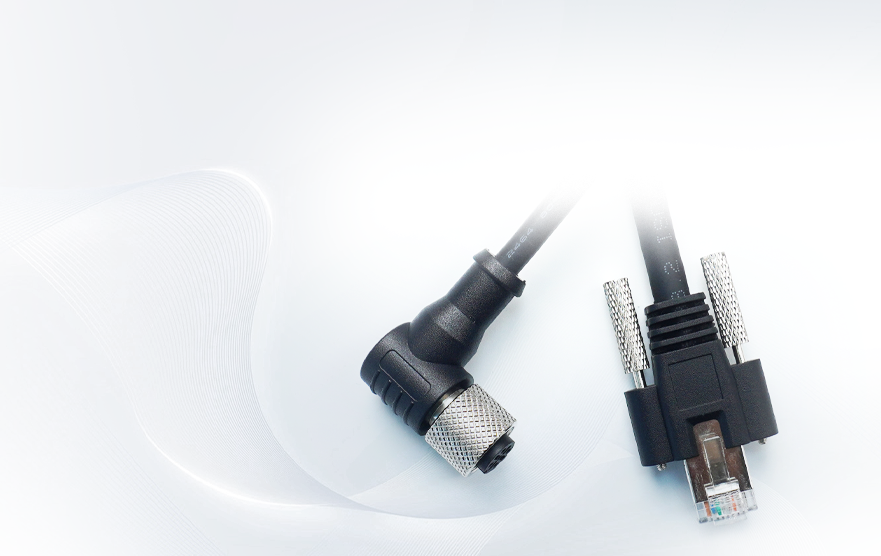
- Connector styles: Straight, right‑angle, male and female options to fit sensors, boards, or modules.
- Cable types and jackets: Variants that balance flexibility, durability, and electrical performance.
- Lengths and labeling: Custom lengths matched to actual routing, with labels or markings that simplify installation and service.
This customization helps OEMs and integrators match cable assemblies to their designs rather than forcing the design around generic parts.
Integration with Broader Connectivity Strategies
High speed M5 connector cable production is rarely isolated. In many systems:
- M5 cables link miniature sensors or modules close to the sensing points.
- Larger connectors like M8, M12, or M16 carry aggregated signals and power to controllers or hubs.
- RF and industrial vision cables handle specialized high‑frequency or high‑data‑rate links elsewhere in the system.
Torven’s ability to provide multiple connector families and cable types allows designers to build cohesive connectivity architectures that use M5 for high‑speed links in tight spaces and other connectors for broader networks.
Benefits of Working with Torven for High Speed M5 Production
Choosing Torven for high speed M5 connector cable production offers several benefits:
- Experience with miniature connectors: Torven understands the mechanical and electrical subtleties of small circular interfaces.
- Controlled processes: Documented production workflows and testing routines reduce variability and improve reliability.
- Customization capacity: Torven can adapt pin counts, lengths, jackets, and connector styles to match project requirements.
- Portfolio depth: A broad family of cable and connector solutions supports future expansions or product variants without changing suppliers.
For companies designing compact, high‑speed systems, this combination reduces development risk and simplifies long‑term support.
Conclusion: Compact High‑Speed Connectivity, Produced Right
High speed M5 connector cable production is about more than simply making small cables; it is about integrating electrical performance, mechanical robustness, and manufacturing discipline into a miniature form factor. By defining signal requirements, choosing appropriate materials, and using controlled termination and testing processes, manufacturers can deliver M5 cables that support fast, reliable connections in tight spaces.
Torven’s approach to high speed M5 connector cable production gives OEMs and integrators a trusted source for miniature assemblies that do not compromise on performance. With the right design and production partner, you can build compact systems where even the smallest cables are ready for high‑speed demands.
Torven to Present EV Interconnect Solutions at EV India 2026
Torven will participate in EV India 2026 at the India Expo Centre, Greater Noida, from September 1–3, 2026, where we will meet EV industry professionals from across the value chain. During the show, we will present our newest industrial circular waterproof connectors and customized cable assemblies designed for EV power distribution, control signal transmission, and charging interfaces, with a strong focus on long‑term reliability in demanding on‑board and outdoor charging conditions.
As India’s premier electric mobility exhibition, EV India 2026 gathers stakeholders from passenger cars, two‑wheelers, commercial vehicles, battery systems, and powertrain technologies under one roof, creating an ideal platform for technical and sourcing. Trade visitors can enter the exhibition free of charge, but prior online registration is mandatory, and you can complete your visitor registration here: EV India Expo visitor registration.
Our booth numbers are EVINDIA-0000179666 and EVINDIA-0000179655, and we look forward to meeting you on site.


Apply Here For A Custom Made Solution

Shenzhen Torvenics Electronic Co.,Ltd.
615 Block A, No.11 Tangkeng Road,Henggang Longgang Dist,Shenzhen China