

How Do You Test an M12 Connector Cable for Reliable Industrial Connections?
Time:Sep 21,2026
Source:
When an M12 connector cable causes an intermittent signal or connection failure, the problem is not always visible. A cable can appear properly assembled while an incorrect pin connection, damaged contact, or unsuitable configuration affects the equipment.
So, how should you test an M12 connector cable before relying on it in an industrial application?
The answer depends on what the cable is doing. A sensor connection requires different checks from an industrial Ethernet connection, so we focus on the actual application rather than treating every M12 cable in the same way.
Where Should M12 Connector Cable Testing Begin?
Before carrying out electrical tests, we first need to understand the cable configuration and its intended application. This gives us a clear reference for judging whether the connection is working as expected.
- Check the connector coding and contact count.
- Confirm the male or female connector configuration.
- Check the cable length and connector orientation.
- Identify whether the cable is intended for sensors, actuators, industrial communication, or another application.
- Inspect the connector and cable assembly for visible damage.
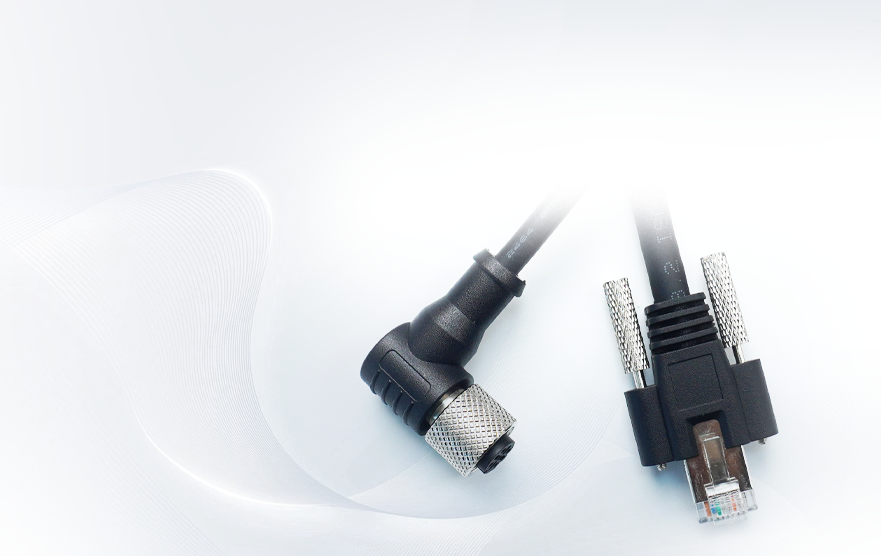
Our M12 connector cable solutions support industrial applications such as sensors, actuators, industrial communication, and automation equipment. Confirming these requirements first helps prevent an incorrect configuration from being mistaken for a cable fault.
How Can Continuity Testing Find M12 Cable Problems?
Once the physical condition has been checked, continuity testing provides a direct way to verify the electrical path through the cable. It is particularly useful when troubleshooting basic wiring problems.
Disconnect the cable from the equipment before testing. Then use a multimeter to check each conductor from one end to the corresponding contact at the other end.
The test should confirm the expected pin-to-pin connection according to the cable's wiring configuration.
A missing connection can indicate an open circuit or termination problem. An unexpected connection between contacts can indicate incorrect wiring or another electrical fault.
If the result changes when the cable is moved, the connector termination and cable assembly should be inspected again. An intermittent connection can be difficult to identify with only one static measurement.
What Can M12 Cable Testing Tell You About Connection Quality?
Continuity testing confirms that the expected electrical path is present, but it does not tell us everything about the cable's performance.
This distinction matters because an M12 cable can be used for very different types of signals. A simple sensor connection and a high-speed Ethernet connection should not be evaluated in exactly the same way.
For basic connections, we can focus on:
- Pin-to-pin continuity
- Correct wiring
- Contact condition
- Connection stability
Depending on the application, further electrical checks can include contact resistance, insulation resistance, dielectric strength, and shield continuity.
Our M12 connector cable testing guidance explains the difference between basic continuity checks and the additional testing considerations required for Ethernet applications.

Why Does the M12 Cable Application Change the Testing Method?
The application determines what the cable needs to deliver. Once we know whether the connection carries sensor signals, control signals, power, or data, we can select the appropriate testing approach.
For sensor and actuator connections, correct wiring and stable electrical contact are central concerns. The connector coding and contact arrangement must also correspond to the equipment.
For industrial communication, the testing requirements become more demanding because the cable must maintain the required signal performance during data transmission.
This is why we do not treat M12 connector cable testing as a single test. The right method depends on the role of the cable in the system.
How Does M12 Coding Affect Cable Testing?
M12 coding is directly related to connection compatibility, so it needs to be confirmed before testing.
Torven supports M12 configurations including A-coded, B-coded, D-coded, and X-coded options. Different coding configurations are used for different industrial connection requirements.
- A-coded connections are commonly used for sensors and actuators.
- B-coded configurations are used for specific industrial bus connections.
- D-coded configurations are associated with Ethernet applications.
- X-coded configurations are designed for high-speed Ethernet connections.
The contact arrangement also needs to match the equipment. Our M12 cable configurations include options with 3, 4, 5, and 8 contacts, depending on the required connection.
When troubleshooting an existing system, checking the coding and contact arrangement first can quickly rule out a configuration mismatch.
What Additional Testing Is Needed for M12 Ethernet Cables?
A continuity test can confirm that the conductors are connected, but it cannot confirm whether a high-speed Ethernet connection can transmit data as required.
For Ethernet applications, we need to consider signal-related performance such as:
- Insertion loss
- Return loss
- Crosstalk
- Signal integrity
This becomes increasingly important as transmission requirements increase. Our M12 solutions include X-coded configurations for high-speed Ethernet applications, where the complete cable assembly needs to support the intended transmission performance.
For this reason, an Ethernet M12 cable should be evaluated according to both its wiring and its transmission requirements.
How Should You Choose an M12 Connector Cable After Testing?
Once the testing requirements are clear, we can narrow down the appropriate cable configuration more efficiently. Instead of choosing only by connector appearance, we match the cable to the equipment and installation conditions.
The main points to confirm include:
- M12 coding
- Contact count
- Signal type
- Cable length
- Connector orientation
- Shielding requirements
- Operating environment
- Required connection performance
Our M12 connector cable cover different configurations for industrial connection requirements. Reviewing the available configurations alongside the equipment requirements makes it easier to identify a suitable cable.
The installation environment should also be considered. Vibration, moisture, temperature changes, repeated movement, and mechanical stress can affect the long-term performance of a cable assembly.
When Is a Custom M12 Connector Cable Worth Considering?
A standard configuration may not always fit the equipment layout or connection requirements. In these cases, customization can provide a more practical solution.
A custom M12 cable may be suitable when you need a specific:
- Cable length
- Connector combination
- Contact configuration
- Connector orientation
- Shielding arrangement
- Cable construction
We can use the equipment interface and application requirements to determine which configuration is appropriate rather than adapting the system around an unsuitable standard cable.
If you already know the connector coding, contact count, cable length, and application, you can contact Torven for an M12 connector cable solution and share those requirements with our team.
How Can You Keep M12 Cable Connections Reliable After Testing?
Testing should also support long-term maintenance. When an M12 connection begins to behave differently after installation, the same testing principles can help identify the source of the problem.
Check the connector mating condition, contact area, cable termination, and continuity when an intermittent connection appears.
For data connections, signal performance should also be considered if basic continuity remains normal but communication problems continue.
When replacing an M12 cable, match the original coding, contact arrangement, electrical requirements, and installation conditions instead of selecting a replacement based only on connector size or appearance.
How Can Torven Help With M12 Connector Cable Testing and Selection?
M12 connector cable testing is ultimately about confirming that the cable matches the requirements of the equipment and application.
For sensor and actuator connections, correct wiring, continuity, and stable contact are important starting points. For industrial Ethernet, signal integrity and transmission performance also need to be considered.
At Torven, we provide M12 connector cable configurations for industrial applications and can help match the cable structure to the connection requirements.
If you are comparing M12 cable configurations or need help identifying a suitable solution, explore Torven's connector and cable solutions and then discuss your specific requirements with our team.

Apply Here For A Custom Made Solution

Shenzhen Torvenics Electronic Co.,Ltd.
615 Block A, No.11 Tangkeng Road,Henggang Longgang Dist,Shenzhen China