

How Does an M5 Connector Cable Work for Sensor Applications?
Time:Sep 17,2026
Source:
When a sensor is installed in a compact machine, the connection cable needs to do more than carry electrical signals. It must also fit the available space, match the sensor interface, and maintain a secure connection during operation.
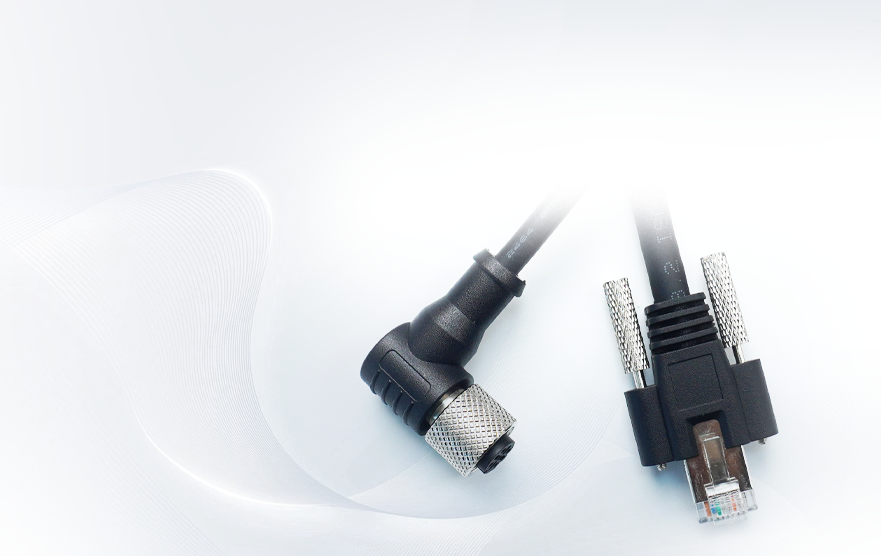
At Torven, we design our M5 connector cables for these requirements. With compact connectors and flexible configuration options, our M5 cable assemblies can connect sensors, actuators, controllers, and other industrial devices. We also support customized cable lengths and wiring configurations for different equipment designs.
How an M5 Connector Cable Works With a Sensor
The connection process is straightforward. Once the M5 connector is properly mated with the sensor, its contacts provide the electrical path between the sensor and the connected control or monitoring equipment.
The M5 connector mates with the corresponding sensor interface and keeps the connection mechanically secure. Its threaded structure is useful for sensor installations where vibration or movement may occur.
Our M5 connector cable is available with 2, 3, or 4 contacts. This allows us to match the cable configuration to different sensor wiring requirements while keeping the connection compact.
After connection, the cable provides the path between the sensor and the controller, actuator, or other equipment. The cable assembly therefore becomes an important part of the complete sensor connection.

M5 Connector Cable Options for Different Sensor Setups
Different sensors can require different connection configurations. We provide several options so the cable can be matched to the equipment rather than forcing a fixed configuration onto the application.
Male and Female Connector Options
We provide both male and female M5 connector configurations. Selecting the correct connector type ensures that the cable matches the sensor interface and mating connection.
A Coding for the Correct Mating Configuration
Our M5 connector cable uses A coding, providing a defined mating configuration for the corresponding connection. This is useful when several compact connections are installed within the same equipment.
PVC and PUR Cable Options
We provide PVC and PUR cable options, with cable color available according to project requirements. This gives us flexibility when matching the cable assembly to different equipment designs and installation conditions.
M5 Cable Construction for Sensor Installation
The connector and cable work together as one assembly. For that reason, we pay attention to the materials used for the housing, contacts, insulation, and molded section.
Nickel-Plated Brass Housing
The connector housing uses brass with nickel plating, providing a solid structure for industrial sensor and automation applications.
PA66 Insulation and Gold-Plated Contacts
The insulator uses PA66 with UL94 V-0 material. The contacts use copper with 2–3 μ" gold plating, while customized contact options are also available.
PVC or TPU Overmolding
The molding material can be PVC or TPU. Combined with the available cable options, this allows us to adapt the M5 cable assembly to different application requirements.
M5 Connector Cable Applications in Sensor Systems
The compact M5 format is particularly useful when sensors are installed close to other components or where wiring space is limited. We use these cable assemblies across several industrial applications.
Industrial Sensors and Actuators
M5 cable assemblies can connect sensors and actuators with controllers and other equipment in automation systems. The compact connection helps simplify wiring around small field devices.
Robotics and Motion Control
Robotic equipment often has limited space around sensors and moving components. A compact M5 connection helps keep the wiring arrangement organized while providing a secure connection.
Machine Vision and Inspection Equipment
Machine vision and inspection equipment can also require compact sensor connections. An M5 cable assembly provides a practical connection solution when installation space is restricted.
Our industrial sensor applications provide more information about where our connector and cable solutions can be applied.

Choosing the Right M5 Connector Cable
The correct cable configuration starts with the sensor interface and installation requirements. Before ordering, we recommend confirming the key specifications together.
- Check the Number of Contacts
First, confirm whether the sensor requires 2, 3, or 4 contacts. This determines the appropriate M5 cable configuration. - Match the Connector Gender
Check the sensor interface before selecting a male or female connector. Matching the two correctly helps avoid connection problems during installation. - Select the Cable Material
PVC and PUR cable options are available. The appropriate material can be selected according to the equipment design, cable routing, and application requirements. - Consider Shielding Requirements
We provide both shielded and non-shielded configurations. Where electrical interference may affect signal transmission, the appropriate shielding option should be considered during cable selection. - Confirm the Cable Length
Cable length should match the actual routing path. We support customized cable lengths, allowing the assembly to fit the sensor position without unnecessary cable loops or excessive tension.
A Simple Way to Specify Your M5 Cable
Once the sensor requirements are clear, specifying the cable becomes much easier. We recommend providing several basic details when requesting an M5 cable assembly.
- Sensor Connection
Provide the connector gender and required number of contacts. - Cable Requirements
Specify the required cable material, length, color, and shielding option. - Wiring Configuration
If the wiring is customized, provide the pin assignment, wiring diagram, or product drawing. This allows us to match the cable assembly accurately. - Application Conditions
Tell us how and where the cable will be installed. With this information, we can help identify a suitable configuration for the actual application.
Get an M5 Connector Cable for Your Sensor
Choosing an M5 connector cable is not simply about selecting a connector size. The connector type, contact count, cable construction, shielding, and length all need to work together with the sensor and equipment.
We provide multiple M5 configurations and customization options to help engineers build a connection around their actual application requirements. If you already have a sensor model, drawing, sample, or cable specification, you can contact our technical team to discuss the required M5 connector cable.
You can also explore our M5 connector cable range to find a configuration that fits your sensor application. With the right connector and cable assembly, we can help make sensor installation more compact, organized, and reliable.

Apply Here For A Custom Made Solution

Shenzhen Torvenics Electronic Co.,Ltd.
615 Block A, No.11 Tangkeng Road,Henggang Longgang Dist,Shenzhen China