

Industrial Vision Connection Cable for Reliable Machine Vision Links
Time:Jul 22,2026
Source:
What Industrial Vision Connection Cable Does in a Machine Vision System
An industrial vision system is more than just a camera and software. It includes cameras, frame grabbers or PCs, lenses, lights, triggers and sometimes motion controllers. The industrial vision connection cable is the physical backbone that ties all these elements together. It carries:
- High‑speed image data from cameras to processing units.
- Trigger and sync signals that coordinate cameras with conveyor belts or robot movements.
- Power supply for cameras, illuminators and sometimes small controllers.
- Control signals to adjust exposure, gain or lighting patterns on the fly.
Unlike office cables, industrial vision connection cables are designed to meet specific standards (GigE Vision, USB3 Vision, Camera Link, CoaXPress) and operate under continuous motion, EMI and mechanical stress.
Torven’s industrial vision cables are built with these demands in mind, providing stable image transmission and robust interfaces for real factory environments.
Core Components of an Industrial Vision Connection Cable
To understand and specify an industrial vision connection cable, it helps to break it down into its main components and roles.
Interface layer
Different vision interfaces require different cable types:
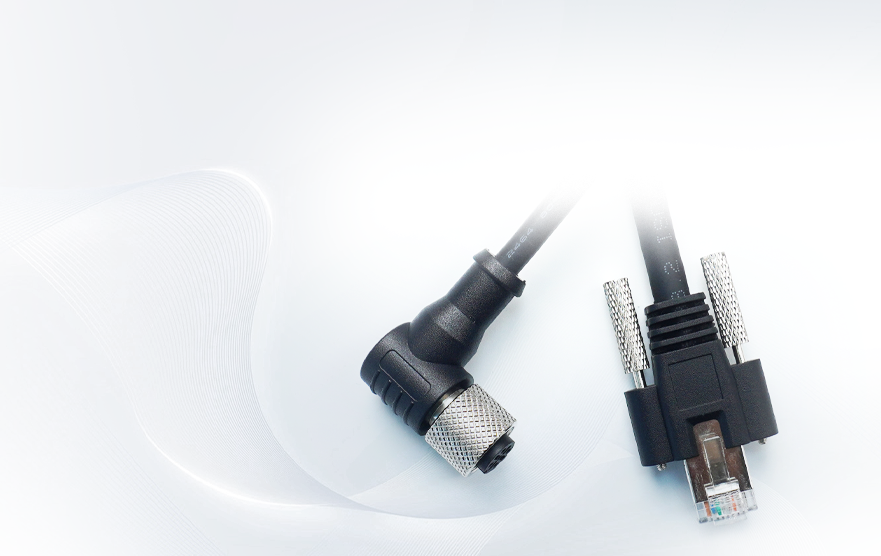
- GigE Vision: Ethernet cables, often Cat6/Cat6a, with locking RJ45 or M12 connectors.
- USB2/USB3 Vision: shielded USB cables with reinforced plugs and sometimes screw locks.
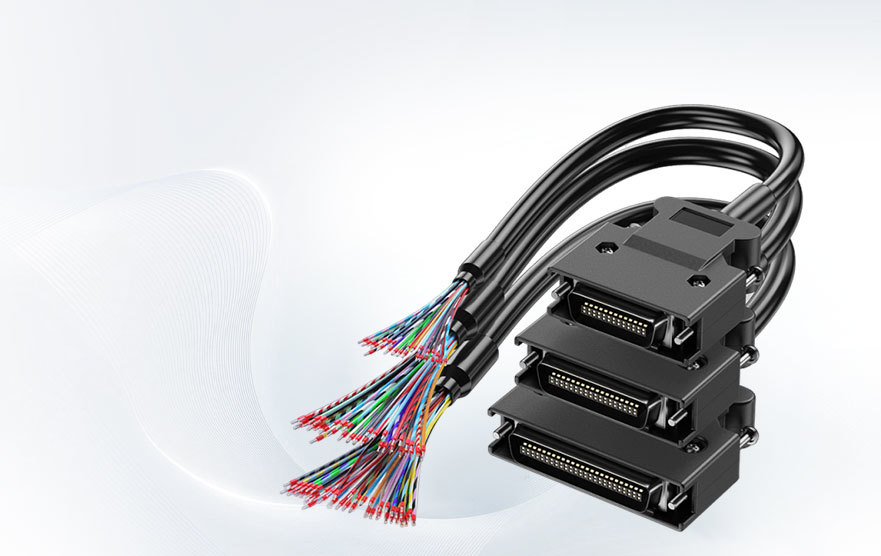
- Camera Link: multi‑pair shielded cables with MDR/SDR connectors.
- CoaXPress: coaxial cables with defined impedance and dedicated connectors.
Data and control conductors
Inside each cable, conductors are laid out to carry image data, control signals and sometimes auxiliary lines. Twisted pairs or coaxial cores are chosen to match the standard’s electrical requirements and limit skew and loss.
Power paths
Many industrial vision connection cables include power conductors to feed cameras or illuminators. This reduces the number of separate wires and simplifies harness design.
Mechanical structure and jacket
Jackets and internal fillers determine how flexible and durable the cable is. Industrial vision cables often use PUR or other robust materials to handle bending, torsion and contact with oil or coolant.
Connectors and locking mechanisms
Vision cables use locking RJ45, M12, Hirose or MDR connectors to keep connections stable under vibration. Torven offers industrial vision connection cables with these locking features as standard.
Each of these elements needs to be specified carefully, because they collectively determine whether your vision system can run continuously without data or power problems.

Typical Industrial Vision Connection Cable Paths in a System
Industrial vision connection cables appear in several distinct paths within a machine vision system. Thinking in terms of these paths helps you design and choose the right assemblies.
- Camera‑to‑processor connection
The main path carries image data from the camera to a frame grabber or PC. For example, a GigE camera connects to an industrial PC via a GigE Vision cable, or a Camera Link camera connects to a frame grabber via an MDR cable. This cable must support the required bandwidth, length and motion, while maintaining low error rates. - Camera power and trigger connection
Many cameras receive power and trigger/sync signals through dedicated cables or combined harnesses. Industrial vision connection cables here may use Hirose connectors, circular connectors or custom assemblies. Torven’s camera power trigger cables are designed for this role, providing stable power and clean trigger signals alongside the main data link. - Controller‑to‑lighting connection
Lighting controllers communicate with LED bars, strobes or ring lights via cables carrying power and control signals. Good connection cables ensure consistent light output and timing, which directly influences image quality. - System I/O and synchronization cables
Industrial vision systems often integrate with PLCs, motion controllers and safety systems. Cables that connect vision controllers to these external devices carry I/O and sync signals that must remain reliable in noisy electrical environments.
By mapping out these paths, you can see where you need standard industrial vision connection cables and where you may need custom assemblies tailored to your machine layout.
Key Design Considerations for Industrial Vision Connection Cables
When specifying or choosing industrial vision connection cables, consider several design aspects that affect performance and reliability.
- Bandwidth and distance
High‑resolution and high‑frame‑rate cameras generate large volumes of data. Ensure that cable construction supports the required bandwidth over your planned distance. GigE camera cables may reach tens of meters, while USB3 cables are often shorter and more sensitive to length. - Flexibility and motion
Decide whether cables will remain static or move in drag chains, robot arms or rotating fixtures. For continuous motion, choose high‑flex designs rated for torsion and bending cycles. Torven’s industrial vision cables include variants specifically designed for motion. - EMI and shielding
Industrial environments often include drives, inverters and switching power supplies. Shielded vision cables with appropriate grounding help maintain image integrity and prevent dropped frames or noise. Consider both overall cable shielding and pair‑level shielding in camera link designs. - Connector robustness and locking
Locking features like screw‑locked RJ45 or threaded connectors prevent accidental disconnection and help maintain stable electrical contact under vibration. Choose connector families that match both your camera and environmental demands. - Protection rating and jacket material
If cables run in wet or dusty areas, or are exposed to oil, select jackets and connector designs with suitable IP ratings and chemical resistance. Torven’s industrial vision connection cables cover protection ranges from basic IP40 up to IP68, depending on application needs.
These factors, taken together, determine whether your vision cables are an asset or a weak point in your system design.

Application Scenarios Where Industrial Vision Connection Cables Are Critical
Certain application scenarios highlight how important industrial vision connection cables really are.
- High‑speed inspection on fast conveyors
In packaging or electronics lines, cameras must capture sharp images of moving products. Long, flexible GigE or Camera Link cables connect cameras mounted above or beside conveyors to processing units. Robust cable design and locking connectors prevent interruptions in fast production environments. - Robot‑mounted cameras and 3D vision
Robot arms often carry cameras or 3D sensors at the end effector. Vision connection cables must handle constant motion, torsion and bending. High‑flex industrial vision cables from manufacturers like Torven are engineered specifically to survive these conditions while maintaining data integrity. - Multi‑camera systems in large machines
Some machines use several cameras in different positions to inspect parts from multiple angles. Each camera’s data and power connection runs through an integrated harness. Industrial vision connection cables here must coexist with servo cables, sensor lines and safety wiring without causing interference. - Outdoor or harsh‑environment imaging
Machine vision systems deployed outdoors or in wash‑down environments rely on cables that resist moisture, temperature swings and cleaning fluids. Industrial vision connection cables with robust jackets and IP‑rated connectors keep image links stable despite harsh conditions.
In all these cases, cables are more than just point‑to‑point wires—they are part of the system’s backbone.
How Torven Supports Industrial Vision Connection Cable Needs
Torven focuses on industrial vision and camera cabling as a core part of its product offering. For industrial vision connection cable, Torven:
- Provides GigE locking cables, Camera Link MDR/SDR cables, industrial camera Ethernet cables and camera power trigger cables for a wide range of camera interfaces.
- Designs cables for bandwidths from 1 Gbps up to tens of Gbps, supporting long‑distance transmission and high‑frame‑rate imaging.
- Uses high‑flex, shielded constructions with PUR jackets for cables in drag chains and robotic applications.
- Offers protection levels up to IP68 and supports UL, VDE and other certifications where needed.
- Can customise cable lengths, connector combinations and harness layouts to match OEM machine designs and multi‑camera systems.
By working with a supplier like Torven, machine builders and vision integrators can treat industrial vision connection cables as designed components rather than generic add‑ons, improving system reliability and simplifying installation.
Conclusion: Designing Strong Systems Around Industrial Vision Connection Cables
Industrial vision systems rely on stable, high‑quality connections between cameras, controllers, lights and external equipment. The industrial vision connection cable is the element that makes these links possible and keeps them reliable under real‑world conditions.
By understanding what these cables do, how they are constructed, which paths they occupy in a system, and which design choices matter most, you can specify connection cables that support your machine vision goals instead of limiting them. Brand partners like Torven, who specialise in industrial vision cabling and related harnesses, help turn these specifications into practical products that integrate smoothly into your machines and inspection lines.

Apply Here For A Custom Made Solution

Shenzhen Torvenics Electronic Co.,Ltd.
615 Block A, No.11 Tangkeng Road,Henggang Longgang Dist,Shenzhen China