

M5 Connector Cable Signal: Complete Guide to Compact, Reliable Links
Time:Jun 25,2026
Source:
Introduction: Why M5 Connector Cable Signal Performance Matters
As industrial automation and smart devices become smaller, signal performance inside tight spaces becomes a critical design factor. The M5 connector cable signal path now carries power, analog values, and digital data in applications where every millimeter counts. If the miniature cable and connector do not handle signals correctly, you can experience noise, dropouts, or complete system failure.
What Is an M5 Connector Cable?
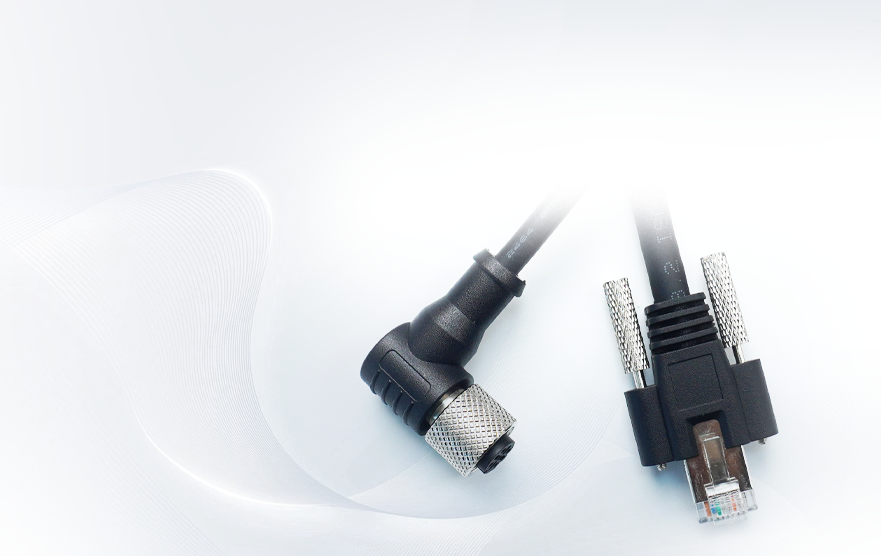
An M5 connector cable is a pre‑assembled circular cord set built around a 5 mm threaded connector defined by IEC 61076‑2‑105 for miniature applications. The “M5” designation refers to a 5 mm × 0.5 metric thread on the coupling nut, making it the smallest member of the popular M‑series sensor connector family.
Torven’ M5 connector cable products are specially developed for narrow operating spaces around miniature sensors and actuators. Typical characteristics include:
- Circular threaded interface with excellent vibration resistance
- 2–5 pins, enabling both low‑voltage power and signal transmission
- Molded PVC or PUR cables, plus board‑end sockets and PCB pin versions for highly integrated designs
This combination allows engineers to route M5 connector cable signals into places where larger connectors simply do not fit.

What Types of Signals Can an M5 Connector Cable Carry?
Although small, M5 connector cables can handle a surprising variety of signal types when properly specified.
1.Low‑voltage power
Typical standard designs handle about 1 A per pin at up to 60 V AC/DC for signal‑level power according to Torven’ guidance on M5 power solutions.
Custom versions can be engineered for higher current ratings when needed and within safety limits.
2.Analog sensor signals
Pressure, temperature, MEMS, and smart sensors use M5 connectors to send low‑level analog voltages or currents to controllers.
Stable contact resistance and good shielding are essential to avoid measurement drift and noise.
3.Digital I/O and communication
On/off signals, encoder pulses, or other low‑speed digital data can share the same M5 cable with power conductors in many compact devices.
4.Special test and measurement signals
In test and measurement equipment, M5 connector cable signal paths may carry precise reference or feedback signals between instruments and probes.
Key Parameters That Define M5 Signal Quality
To understand M5 connector cable signal performance, it helps to look at the key parameters that matter most:
- Conductor size and material
Copper alloy conductors with cross‑sections chosen for both current capacity and acceptable voltage drop. - Contact plating
Gold‑plated contacts reduce contact resistance and improve corrosion resistance, which is crucial for low‑level signals and frequent mating cycles. - Insulation resistance and dielectric strength
High insulation resistance (in the megaohm range) reduces leakage currents between contacts and between contacts and ground. - Shielding and cable construction
Where needed, shielded cables and proper drain wire terminations protect the M5 connector cable signal path from electromagnetic interference. - Mechanical stability
The threaded coupling, strain relief, and overmolding must maintain stable contact alignment even under vibration, bending, and temperature changes.
A well‑designed M5 cable from Torven balances all of these parameters to keep signal performance predictable and repeatable.

M5 Connector Cable Signal in Sensor Applications
Sensors are one of the most common use cases for M5 connector cable signal transmission. Miniature pressure sensors, temperature sensors, MEMS sensors, and smart micro‑sensors often can only accept M5‑sized connectors due to mechanical constraints.
- One or two pins deliver low‑voltage power to the sensor electronics.
- The remaining pins carry analog or digital outputs back to the controller.
- Sensor housings and mating cables must fit into tight spaces between machine parts, frames, or instruments.
Torven offers M5 connector cables and complementary board‑end sockets to simplify sensor integration, wherever space is constrained but reliable signal transmission is still mandatory.
M5 Connector Cable Signal in Test and Measurement Systems
Test and measurement systems often require compact, reliable connectors that do not dominate the front panel or probe head. M5 connector cable signal paths are used to link:
- Probes and detectors to amplifiers or measurement modules
- Remote sensors to handheld or rack‑mounted instruments
- Compact electronic heads to processing units where space and cable flexibility are important
Because these environments demand repeatable accuracy, Torven emphasizes mechanical robustness and signal integrity testing for its M5 cable assemblies used in test and measurement applications. This includes continuity checks, insulation tests, and application‑specific validation.
Industrial Automation and Compact Machinery: Why M5 Makes Sense
In modern automation and compact machinery, engineers want to deploy more sensors without enlarging cabinets or adding bulky connectors on machine surfaces. M5 connector cable signal links solve this by:
- Providing miniature sensor ports along machine frames
- Connecting to IO modules and controllers where panel space is limited
- Supporting hybrid power‑plus‑signal configurations for micro‑actuators or smart sensors
Torven’ portfolio spans M5, M8, M12, and M16, which allows designers to use M5 for the smallest nodes while using larger connectors for main sensor networks and power distribution. This unified approach simplifies design, documentation, and maintenance.
How Torven Designs M5 Connector Cables for Signal Reliability
Torven has built a dedicated M5 connector cable product line for miniature sensors and narrow operating spaces. Its design priorities include:
- High‑quality contacts
Gold‑plated copper alloy contacts to maintain low contact resistance and stable signals over many mating cycles. - Robust molding and strain relief
Pre‑cast PVC or PUR overmolding around the connector body and cable entry to prevent flex damage and ensure long‑term durability. - Application‑oriented cable choices
PVC for general use, PUR and other robust jackets for drag‑chain or oil‑rich environments in compact automation. - Flexible customization
Options for cable length, wire gauge, labeling, and packaging tailored to OEM projects.
Because many M5 cables are used in critical automation and test systems, Torven performs thorough validation of these assemblies before they reach customers.
Installation Practices That Protect M5 Signal Quality
Even a well‑designed M5 connector cable can lose signal performance if installed incorrectly. Torven recommends several best practices when wiring M5 cables.
- Inspect before connecting
Check the connector for bent pins, damaged threads, or contamination.
Ensure the key and mating slot are free of debris. - Align the key, then insert
Rotate the connector gently until the key aligns with the mating slot.
Never force the connector; misalignment is the most common cause of damage. - Tighten only the metal barrel
Grip the metal coupling nut, not the cable jacket.
Turn clockwise until snug; over‑tightening can stress threads and seals. - Maintain proper routing
Avoid sharp bends, especially close to the connector.
Separate M5 connector cable signal paths from high‑power cables and strong interference sources wherever possible. - Periodic inspection
In high‑vibration environments, periodically check that couplings remain tight and cables undamaged.
Following these steps helps preserve both mechanical and electrical performance in long‑term service.
Troubleshooting Common M5 Connector Cable Signal Issues
If you encounter problems with M5 connector cable signal performance, consider these typical causes:
- Intermittent readings or dropouts
Possible loose couplings, bent pins, or damaged conductors from twisting the entire cable instead of the barrel. - No signal at all
Incorrect pin assignments, reversed connections, or severe contact contamination.
Check wiring diagrams and clean contacts with a dry, lint‑free cloth. - Increased noise or drift
Shielding that is not properly terminated, or M5 cables routed too close to high‑power lines or inverters.
Improve cable routing and verify grounding practices. - Overheating
Exceeding current ratings for the chosen conductor size, especially in tightly bundled or high‑temperature areas.
Working with Torven, you can review application details and adjust cable specifications or routing practices to solve these issues effectively.
Conclusion: Stable M5 Connector Cable Signal for Compact Systems
M5 connector cable signal performance is a foundational element in today’s miniaturized industrial and test systems. With only 5 mm of connector diameter to work with, every detail—contact design, cable construction, shielding, and installation—plays a role in maintaining clean, reliable signals.
By understanding how M5 cables handle power and signals, respecting current and voltage limits, and following proper wiring practices, you can design compact devices and equipment that perform as reliably as full‑size systems. Partnering with Torven for M5 connector cable solutions gives you access to proven designs, customization options, and application support, helping you build miniature systems where small connectors deliver big performance.
Torven Brings EV‑Grade Waterproof Connectors to EV India 2026
Torven will participate in EV India 2026 at the India Expo Centre in Greater Noida from September 1–3, 2026, where we will meet EV industry professionals from across the value chain. During the show, we will present our latest industrial circular waterproof connectors and customized cable assemblies for EV power distribution, control signal transmission, and charging interfaces, designed for long‑term reliability in demanding on‑board and outdoor charging conditions.
As India’s premier electric mobility exhibition, EV India 2026 gathers stakeholders from passenger cars, two‑wheelers, commercial vehicles, battery systems, and powertrain technologies under one roof, providing an ideal platform for technical and sourcing. Trade visitors can enter the exhibition free of charge, but prior online registration is mandatory; you can complete your visitor registration here: EV India Expo visitor registration.
Our booth numbers are EVINDIA-0000179666 and EVINDIA-0000179655, and we look forward to meeting you on site.


Apply Here For A Custom Made Solution

Shenzhen Torvenics Electronic Co.,Ltd.
615 Block A, No.11 Tangkeng Road,Henggang Longgang Dist,Shenzhen China