

Waterproof M5 Connector Cable for Compact Sensors
Time:Jul 29,2026
Source:
1.Why waterproof M5 connector cable matters
In modern automation and test systems, sensors and small modules keep shrinking, but the environments they work in remain tough: dust, wash‑down water, coolants, and outdoor weather are common. Failures often start at the connector and cable before they reach the electronics. That is where a M5 connector cable waterproof solution becomes critical—it protects the smallest, most vulnerable part of the system.
M5 is the miniature member of the M‑series circular connectors, with a 5 mm threaded locking diameter. This compact geometry lets engineers place connectors inside tight housings, slim probes and micro devices where M8 or M12 would be too large. At the same time, limited space around the connector means seals, overmolding and cable selection must be carefully engineered to keep water and dust out.
For OEMs, machine builders and integrators, using waterproof M5 connector cables is a way to keep sensor and signal integrity stable in wet or dirty areas, without increasing device size or sacrificing installation flexibility.
2.What “waterproof” really means: IP67 and IP68 for M5 cables
“Waterproof” can sound like an absolute term, but for M5 connector cables it is defined by IP ratings. The IP code includes two digits: the first describes protection against solid particles such as dust, the second describes protection against moisture and water.
For M5 connector cable waterproof designs, the most relevant ratings are IP67 and IP68:
IP67 M5 connector cable
IP67 indicates that the connector is dust‑tight and can withstand temporary immersion in water, typically up to about 1 meter depth for a specified time. In practical projects, IP67 M5 cables are used for:
- Food and packaging machines that undergo regular hose cleaning.
- Indoor and outdoor sensors exposed to splashes, rain and puddles.
- Robots and test rigs operating near coolants and cleaning fluids.
IP68 M5 connector cable
IP68 goes further, covering longer or deeper immersion than IP67, depending on the manufacturer’s test conditions. IP68 M5 cables are selected when:
- Sensors or probes stay submerged in tanks, basins or pits for extended periods.
- Cable runs lie in standing water or continuously damp underground conduits.
Both ratings assume the connector is fully mated and correctly tightened, seals are clean and undamaged, and the cable’s outer diameter fits the connector’s sealing design. If the plug is loose, the
O‑ring is worn, or the cable is too thin or too thick for the gland, actual waterproof performance may be much lower than the nominal rating.

3.Design features that make an M5 connector cable truly waterproof
To decide whether an M5 connector cable waterproof product is truly robust, look beyond the IP code and focus on the mechanical and material details that create real sealing.
Threaded locking and sealing geometry
M5 connectors use a screw‑lock thread (commonly M5×0.5) that delivers a secure mechanical connection and defines where the seals sit. Good waterproof designs include:
- Precisely machined threads that tighten smoothly without wobble.
- Defined sealing faces inside the plug and receptacle.
- O‑rings or molded lips positioned so that, when the connector is tightened, they compress and block liquid and dust paths.
If threads are loose or sealing surfaces are rough, the connector may meet electrical specs but fail under spray or immersion.
Overmolding and strain relief
The transition from connector housing to cable jacket is often the weakest point for moisture ingress. High‑quality waterproof M5 cables typically:
- Use injection overmolding around this region, encapsulating the rear of the connector and the first part of the cable.
- Shape the overmold as strain relief, so bending forces are distributed along the cable rather than concentrated at the seal.
- Avoid sharp steps or gaps where water can sit and creep into the interface.
Without proper overmolding and strain relief, even an IP‑rated front face can be undermined by leaks at the rear.
Cable jacket materials and diameter matching
Cable selection is equally important:
Materials
- PVC jackets work for general environments with occasional moisture.
- PUR or TPU jackets are chosen for oil‑rich, coolant‑heavy or highly dynamic applications where abrasion and chemicals are present.
Diameter
Waterproof connector designs expect a certain outer diameter range for the cable. If the cable is thinner than designed, seals and glands may not close properly. If it is thicker, assembly can stress or deform the sealing elements. Matching cable OD to connector specification is a key requirement for consistent waterproof performance.
Electrical performance in humid conditions
A waterproof M5 cable has to maintain its electrical parameters even when humidity is high:
- Typical rated voltages are in the low to medium range, such as around 60 V AC/DC per pin for sensor and low‑power actuator use.
- Standard current ratings are around 1 A per core in many sensor cables, with higher‑current versions available for special power lines.
- Insulation resistance and creepage distances are designed so that moisture cannot easily create leakage paths between cores or between cores and shield.
Effective sealing supports these values by preventing water and contaminants from reaching contacts and insulation surfaces.

4.Typical applications for waterproof M5 connector cables
Because M5 is small, threaded and can reach high IP ratings, M5 connector cable waterproof products are widely used across different sectors.
Miniature industrial sensors
Compact proximity switches, pressure sensors, temperature probes and smart sensing modules often use M5 connectors in space‑constrained housings. Waterproof M5 cables allow these sensors to stay installed directly in areas with dust, oil mist and wash‑down water, without needing separate protective boxes or large connectors.
Test and measurement systems
Probes for fluid channels, vibration tests or outdoor measurements often operate close to liquids or damp surfaces. M5 cables keep probe heads slim and lightweight while providing sealed connections that protect measurement accuracy and prevent intermittent faults caused by moisture ingress.
Robotics, drones and compact machinery
Mobile robots, drones and very small machines benefit from connectors that are both compact and vibration‑resistant. Waterproof M5 cables combine threaded coupling, miniaturised size and resistance to rain, splashes and cleaning cycles, making them attractive for joints, end effectors and on‑board sensor harnesses.
Outdoor monitoring and IoT
Environmental monitoring stations, soil moisture probes and compact IoT devices frequently rely on small connectors to preserve form factor and reduce installation footprint. Waterproof M5 cabling prevents water from tracking along the cable into the device, supporting long‑term, unattended operation in outdoor conditions.
5.How Torven supports M5 connector cable waterproof projects
To turn knowledge into action, your content should point naturally to a supplier who understands compact, sealed cable assemblies. Torven focuses on precision connectors and cable assemblies, including M‑series circular connectors and matching cables for sensors, actuators, test and monitoring systems.
For M5 connector cable waterproof requirements, Torven can:
- Provide IP‑rated M5 connector cables with molded backshells and carefully matched cable diameters to maintain sealing and flexibility in miniature installations.
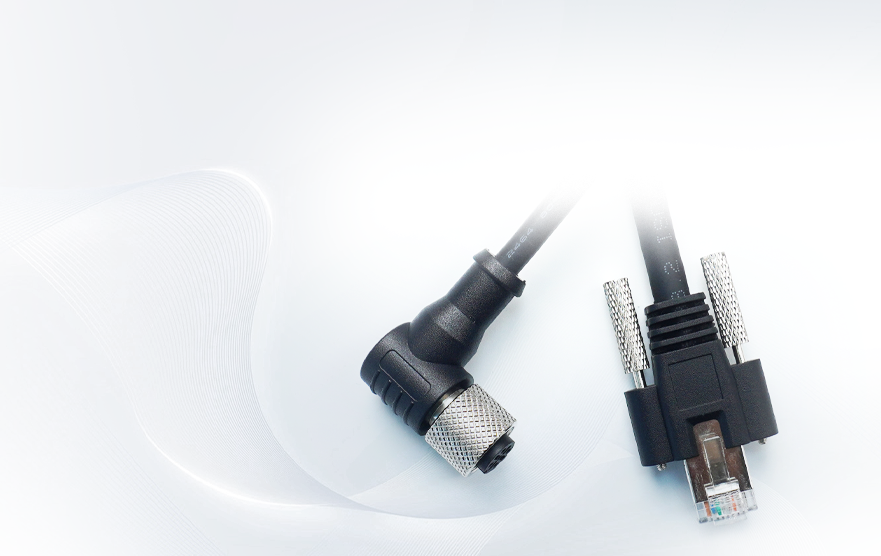
- Offer straight and right‑angle M5 plugs, panel‑mount receptacles and multiple core options so that harnesses can fit tight sensor spaces and test fixtures.
- Select cable jacket compounds such as PVC, PUR or TPU according to whether your application involves wash‑down water, oils, coolants, outdoor exposure or frequent motion.
- Supply both standard and custom lengths, enabling clean routing in cabinets, machines and field installations, and reducing strain on connectors and seals.
- Integrate waterproof M5 cables into broader harness solutions that may also include M8 and M12 sensor cables, RF coaxial cables, data bus cables and camera cables, giving OEMs a unified partner for multiple cable families.
6.Turning requirements into action
If you are planning or upgrading compact sensors, robots, test rigs or outdoor probes that will face dust, splashes or regular cleaning, start by writing down three things: the IP level you truly need (IP67 or IP68), the space available around each device for connector and cable routing, and whether the cable will be static or moving. With those answers, it becomes much easier to define the right M5 connector cable waterproof specification for your project, or to send a focused inquiry to Torven and get drawings and quotations that match your installation and environmental conditions.

Apply Here For A Custom Made Solution

Shenzhen Torvenics Electronic Co.,Ltd.
615 Block A, No.11 Tangkeng Road,Henggang Longgang Dist,Shenzhen China