

Purchase M12 Connector Cable for Industrial Automation
Time:Apr 09,2026
Source:
Start with the Right M12 Connector Cable Strategy
When you plan to purchase M12 connector cable for a new machine or an upgrade, it is crucial to think beyond a single part number. An M12 connector cable becomes part of a larger network of sensors, actuators, controllers, and data lines, so selecting a robust and compatible design affects uptime and long‑term maintenance costs. A well-planned procurement strategy integrates electrical performance, mechanical robustness, and supply stability from the beginning.
Torvenics provides M12 connector cables as part of a complete M‑series platform, covering data and signal transmission for many kinds of industrial sensors and nodes. This helps buyers and engineers choose configurations that can be standardized and reused across projects instead of starting from scratch each time.
What Is an M12 Connector Cable?
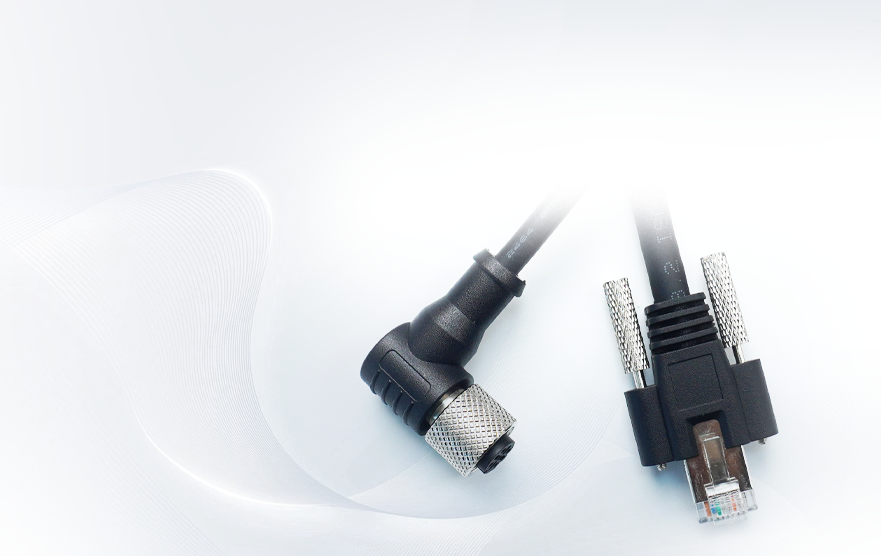
An M12 connector cable combines a circular M12 plug or socket with a pre-assembled cable and defined pin‑out. These cables are widely used for sensors, fieldbus modules, actuators, and I/O boxes in industrial automation, robotics, and logistics systems. They can carry both power and signals, depending on the pin count and conductor size.
Torvenics’ M-series M12 cables feature:
- Circular connectors with M12 threads and various coding options to avoid mis‑mating.
- Protection ratings up to IP67 and IP68 to resist dust and moisture in harsh environments.
- Straight, angled, and flange connector styles, as well as PCB versions, giving mechanical flexibility for panel and field wiring.
These characteristics make M12 connector cables a reliable choice for standardized sensor and data connections in modern factories.
Key Electrical Specifications to Check Before Purchase
Before you purchase M12 connector cable, you should verify several electrical parameters to ensure that the cable matches device and system requirements. Oversimplified selection can lead to overheating, noise, or communication errors.
Important specifications include:
- Rated voltage and current: Torvenics provides typical M12 assemblies at ratings such as 4 A at 250 V AC/DC for 3 or 4-pin versions, and 2 A at 30 V for higher pin counts.
- Conductor size: Typical conductor cross-sections are around 0.34 mm² for many sensor and I/O applications, with variants to match the required current.
- Pin count: 3, 4, 5, 8, 12, and 17-core versions support different combinations of power and signal lines.
- Insulation and jacket material: PVC and PUR options provide different balances of flexibility, chemical resistance, and cost.
By aligning these parameters with your equipment specifications, you ensure that the M12 cables perform reliably in daily operation.
Environmental and Mechanical Requirements
Industrial environments are rarely clean or static. When you purchase M12 connector cables, you must take into account the working environment and mechanical motion profile of the installation.
Torvenics M12 cables are designed with:
- Temperature resistance typically from about ‑40 to +80 °C depending on the cable series and jacket material.
- Protection ratings IP65, IP67, or IP68, supporting use in wet, dusty, or wash‑down zones.
- Durability for fixed, flexible, and drag-chain applications, with PUR options that withstand millions of bending cycles in motion systems such as robots and conveyors.
These factors are essential to consider when creating your purchase specifications to avoid premature cable failures and unscheduled downtime.
Choosing M12 Cables for Sensors and Data
M12 connector cables are heavily used to connect pressure, temperature, MEMS, electromagnetic, and smart sensors, as well as actuators in electric, pneumatic, and hydraulic systems. Matching the cable to the device is an important step before placing an order.
When selecting M12 cables for sensors and data, you should check:
- Signal type: Digital I/O, analog, or communication protocols may require specific pin assignments and, in some cases, shielding.
- Power needs: Decide whether power and signal share the M12 connector or are split into separate cables.
- Connector coding, gender, and orientation: To ensure physical compatibility and serviceability in the field.
Torvenics helps customers map these requirements to suitable M12 assemblies within its M-series platform so that purchases align with both actual device needs and long‑term product roadmaps.
Standard vs Custom M12 Connector Cables
Buyers often need to balance the convenience of standard products with the advantages of customized cable assemblies. Standard M12 cables are easier to purchase quickly and keep in stock, while custom versions can optimize cable length, labeling, and wiring for a specific machine layout.
Torvenics offers:
- Standard M12 cables in common lengths and pin counts, designed to cover typical sensor networks and I/O wiring.
- PCB and panel‑mount M12 connectors for integration into device housings and control panels.
- The option to combine M12 connectors with specific cable types, lengths, and assemblies for OEM or project‑based customization.
This flexibility lets you start with off‑the‑shelf M12 cables and later lock in optimized custom codes once your design stabilizes.
Integration with Other Connector Systems
Real industrial machines rarely rely on one connector type. M12 cables typically coexist with smaller M8 sensor cables, larger M23 power connectors, RF coaxial cables, and high-speed data or vision cables.
Torvenics supports this reality by offering:
- A full range of M-series connectors from M5, M8, M12, M16, to M23, covering signals and power in a unified family.
- RF coaxial connectors and cables for high‑frequency modules, wireless devices, and test instruments.
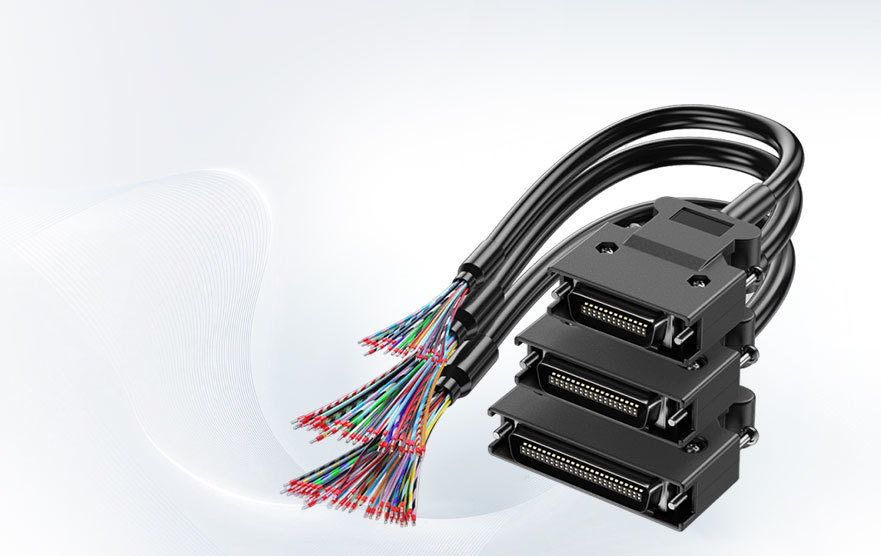
- D‑subminiature and SCSI connectors for control boards and high‑density data connections.
When you purchase M12 connector cables from Torvenics, you can align them with this broader connector ecosystem and simplify both design and purchasing workflows.
Practical Steps to Purchase M12 Connector Cable
To make your purchasing process efficient, it helps to prepare a clear requirement list before contacting suppliers. This reduces back‑and‑forth communication and speeds up quotation and delivery.
For Torvenics M12 connector cables, you should define:
- Connector type on each side (M12 male/female, straight/angled, panel‑mount or cable type).
- Pin count and required pin assignment.
- Cable length, jacket material (PVC or PUR), and color if relevant.
- Operating environment, including motion, temperature, and exposure to oil, chemicals, or cleaning agents.
- Quantity and anticipated annual demand, which support stocking and logistics planning.
With this information, Torvenics can quickly recommend suitable M12 cable part numbers or design a tailored configuration that can be produced and delivered with stable quality.
Why Purchase M12 Connector Cables from Torvenics
Torvenics specializes in precision connectors and cable assemblies, serving automation technology, industrial data transmission, and sensor applications worldwide. Its M12 connector cable offering benefits from this broad experience and from a strong foundation in circular connectors and industrial cables.
By purchasing M12 connector cables from Torvenics, you gain:
- Technically sound designs with appropriate voltage, current, and IP ratings for industrial environments.
- Options that cover both standard products and custom assemblies for OEM and system integrator needs.
A consistent connectivity platform that extends beyond M12 to other connector families, simplifying your overall strategy.
This approach helps you control risk and total cost of ownership across the life cycle of your machinery and equipment.

Apply Here For A Custom Made Solution

Shenzhen Torvenics Electronic Co.,Ltd.
615 Block A, No.11 Tangkeng Road,Henggang Longgang Dist,Shenzhen China