

Best Cable Assembly Manufacturers: How to Choose the Right Partner for Your Project
Time:Mar 30,2026
Source:
Finding the best cable assembly manufacturer is not simply a matter of price; it is about choosing a partner who can design, produce and support reliable interconnect solutions over the full life of your product. A strong manufacturer will understand connectors, cables and application environments and be able to combine them into robust assemblies that match your requirements.

What Does a Cable Assembly Manufacturer Actually Do?
A cable assembly manufacturer designs and builds ready‑to‑install cables that combine connectors, wires and protective elements into one product. Instead of purchasing loose components and assembling them yourself, you receive complete harnesses that have been tested and documented.

Typical capabilities include:
- Selecting appropriate cable families and connectors based on electrical, mechanical and environmental requirements.
- Crimping, soldering and overmolding connectors on cables.
- Adding shielding, strain relief, labeling and protective sleeves.
- Performing electrical and mechanical tests to verify performance.
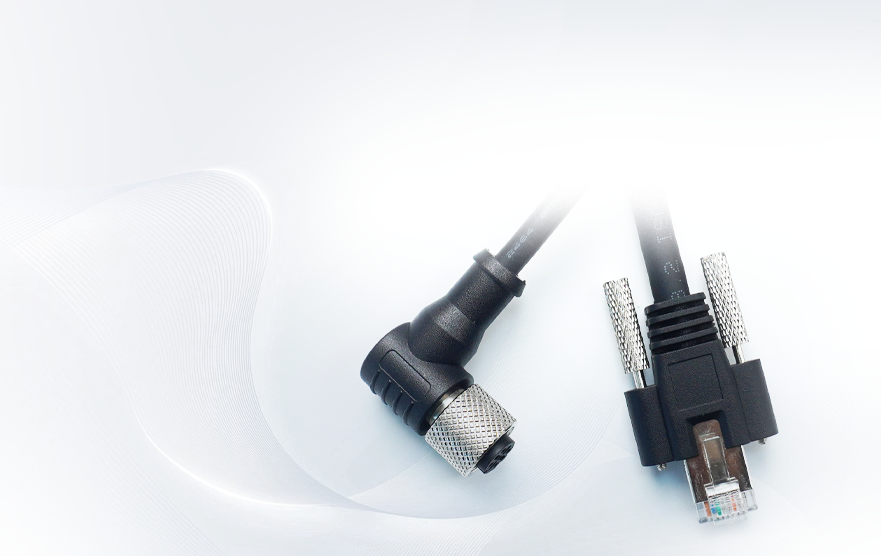
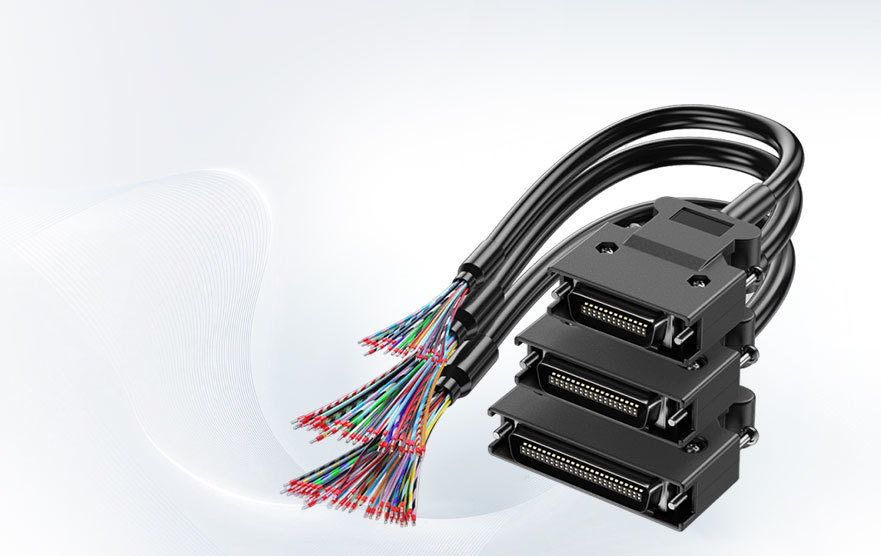
Manufacturers like Torven go further by also developing their own connector families, such as M‑series circular connectors, RF coaxial connectors, D‑sub, SCSI and push‑pull connectors, which allows them to optimize both ends of the cable assembly.

Key Criteria for Evaluating the Best Cable Assembly Manufacturers
When comparing cable assembly manufacturers, focus on capabilities that directly impact the reliability and cost of your system.
Breadth of product portfolio
Top manufacturers support a wide range of applications, from low‑voltage data lines to high‑power motor cables. For example, Torven’s portfolio covers:
- Sensor and data cables with M‑series connectors (M5, M8, M12, M16, M23) for industrial automation.
- Industrial vision cables capable of 1 Gbps, 5 Gbps, 12.5 Gbps and 50 Gbps over distances up to 100 m.
- Servo motor connector cables with high flexibility and bend resistance up to 5–10 million cycles.
- RF coaxial cables and connectors (BNC, SMA, N‑type, TNC, SMB, QMA, 7/16 DIN, MMCX, MCX, SMP, SSMA, SSMB) for wireless and test systems.
- Camera power and dummy battery cables using push‑pull, Weipu, D‑Tap, Anton and V‑type connectors.
A broad portfolio means you can standardize on one supplier for many parts of your system.
Industry and application experience
The best cable assembly manufacturers have experience across multiple industries, so they understand different environmental and regulatory requirements. Torven’s connectors and cables are widely used in testing equipment, computers and peripherals, industrial data transmission and sensors, commercial electronics, medical device equipment, automobiles and railways.
This cross‑industry experience enables them to:
- Reuse proven designs from harsh industrial environments in new applications.
- Anticipate common failure modes such as EMI, mechanical fatigue and contamination.
- Recommend materials and connector families that have already passed similar regulatory hurdles.
Compliance and certification
High‑quality cable assemblies must comply with relevant standards for safety and environmental performance. Torven’s sensor and data cable families, for instance, offer protection ratings from IP40 to IP68 and many variants hold UL and VDE certifications and comply with FDA standards.
When comparing manufacturers, check whether they can provide:
- UL‑recognized cables and components.
- VDE and other regional approvals where required.
- RoHS and similar environmental compliance documentation.
- Application‑specific support, such as using FDA‑compliant materials for certain medical applications.
Mechanical and environmental performance
Cables do not operate in ideal conditions; they must withstand bending, pulling, vibration, temperature changes and contamination. Best‑in‑class manufacturers design with these realities in mind.
Examples from Torven’s range include:
- Servo motor cables that deliver stable power and signals during frequent movements and can endure bending for 5–10 million cycles, with minimum bend radii typically 7.5–8 times the outer diameter.
- Industrial vision cables that tolerate oil, low temperatures and electromagnetic interference while providing reliable data transmission.
- Camera power cables with high flexibility and wear‑resistant outer sheaths, suitable for harsh production and broadcast environments.
These characteristics indicate a manufacturer’s ability to design assemblies that survive real‑world conditions.
Customization and engineering support
The best cable assembly manufacturers act as engineering partners, not just suppliers. They offer design assistance, prototyping and optimization services.
Strong partners can:
- Help you choose between different connector families (M‑series, push‑pull, RF, D‑sub, SCSI) and cable constructions.
- Design harnesses that combine power, data and control lines into compact assemblies.
- Adapt existing designs—such as high‑flex servo cables or industrial vision cables—for new applications like medical devices or camera systems.
- Provide samples quickly for evaluation and testing.
Torven’s experience in research, development, design and production of connectors and cable assemblies allows it to offer this level of support.
Quality control and testing
Reliable manufacturers maintain robust quality control processes, including electrical testing, visual inspection and documentation. While specific processes may vary, look for evidence of:
- 100% continuity testing on harnesses where required.
- Impedance, attenuation and VSWR testing for RF and high‑speed data cables.
- Mechanical pull and bend tests for assemblies used in motion or harsh environments.
Manufacturers that already supply to automotive, railway and medical device markets tend to have strong quality systems due to the high reliability demands in those sectors.
Comparing Cable Assembly Manufacturers: A Practical Checklist
When shortlisting cable assembly manufacturers, you can use a simple checklist of questions to quickly evaluate their fit.
Evaluation area | Questions to ask your supplier |
Product range | Do you offer sensor, vision, servo, RF, power and camera cables? |
Connector families | Do you produce M‑series, RF, D‑sub, SCSI and push‑pull connectors? |
Certifications | Which of your cable families are UL, VDE and FDA compliant? |
Environmental ratings | Can you provide IP40–IP68 assemblies for harsh or outdoor environments? |
Flexibility and motion | What bend life and minimum bend radius can you guarantee? |
Industry experience | Which markets do you already serve (e.g. medical, automotive, rail)? |
Customization | Can you design custom harnesses and provide quick prototypes? |
For OEMs and system integrators looking for a long‑term cable assembly partner rather than a single product supplier, these capabilities are exactly what define a “best in class” manufacturer.

Apply Here For A Custom Made Solution

Shenzhen Torvenics Electronic Co.,Ltd.
615 Block A, No.11 Tangkeng Road,Henggang Longgang Dist,Shenzhen China