

Circular Connectors Cables: Complete Solutions for Power, Signal and Data
Time:Mar 30,2026
Source:
Circular connectors cables—cables that are factory-terminated with round industrial connectors—are the backbone of modern automation, machine vision, servo systems and industrial cameras. They combine robust mechanical housings with flexible, application-specific cables to deliver power, control and high-speed data in harsh environments.
Instead of wiring and terminating connectors on site, engineers can deploy ready-to-use circular connector cables that are pre-tested, sealed and optimized for bend life, EMC performance and environmental resistance.
What Are Circular Connectors Cables?
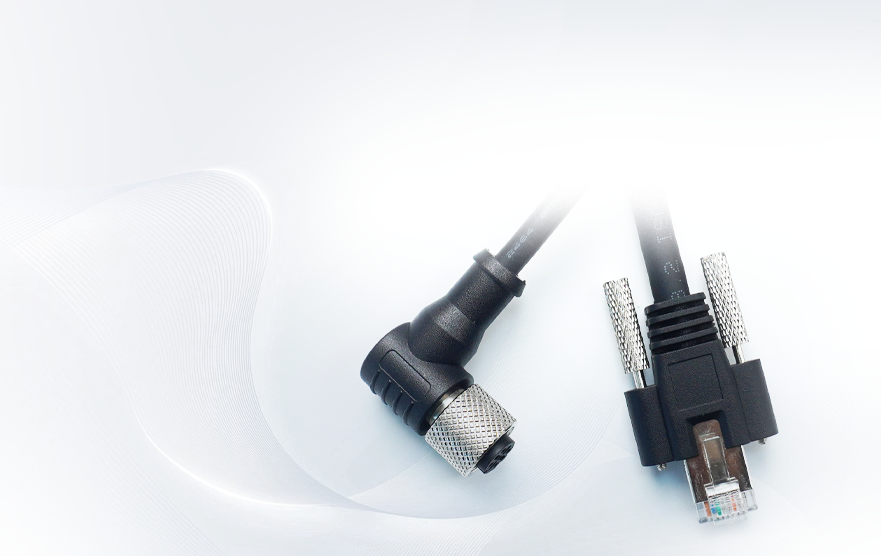
Circular connectors cables consist of a cable assembly with one or more circular connectors—such as M5, M8, M12, M16 or M23—installed at the factory. On the other end, they may use another circular connector, a different connector type or bare ends for panel or field termination.
Key characteristics include:
- Compact round connector interface with threaded, bayonet or push-pull locking.
- Multiple contacts (from 2 up to 24 pins) for power, signal or mixed configurations.

- Cable constructions tailored for sensors, actuators, data, servo motors, vision systems and camera power.
- Protection ratings up to IP68, depending on connector series and sealing design.
Torven’s M-series circular connector cables provide solutions for sensors and actuators in many industrial sectors and are available with UL/VDE and FDA-compliant cable families.
Common Circular Connector Cable Families
Different circular connector sizes and cable constructions target specific applications.
M5, M8 and M12 sensor and data cables
These M-series connector cables are widely used for sensors and actuators across industrial sectors, including pressure, temperature, MEMS, electromagnetic and smart sensors as well as electric, pneumatic and hydraulic actuators.
Typical features:

- Connector sizes: M5, M8, M12, M16 and M23, with threaded locking and variants in straight, angled and flange types.
- Pin counts: 2–24 pins depending on series and application.
- Protection: IP40–IP68 ratings depending on cable and connector configuration.
- Cable options: 2–12 cores for sensor and data lines, with PVC or PUR jackets and optional shielding.
Users can order connectors individually or receive fully assembled circular connector cables customized to length and core count.
Industrial vision circular connector cables
Industrial vision cables connect cameras to controllers and sensors, often using circular connectors at one or both ends for ruggedness. Torven’s vision cables are designed for stable image data and control signal transmission and support speeds of 1 Gbps, 5 Gbps, 12.5 Gbps and 50 Gbps, enabling distances up to 100 m.
They are suitable for:

- Machine vision cameras in automation and inspection systems.
- Industrial cameras in robots, drag chains and harsh environments.
- Camera systems that require both power and data in bundled harnesses.
These cables offer high flexibility and can withstand conditions such as oil contamination, low temperatures and electromagnetic interference while maintaining their IP40–IP68 protection levels.
Servo motor circular connector cables
Servo motor connector cables transmit power and control signals to motors while maintaining stability during frequent movement. They often use circular connectors such as M23 or other power-rated interfaces.

Key properties include:
- High flexibility and bend resistance up to 5–10 million cycles.
- Minimum bending radius typically 7.5–8 times the cable’s outer diameter.
- Resistance to electromagnetic interference.
- Suitability for drag chains, robots and continuous reciprocating motion scenarios.
These cables can also be combined with circular feedback connectors for encoder and sensor signals on the same motor assembly.
Camera power and dummy battery cables with circular connectors
Torven offers specialized camera cables that provide continuous, stable DC power to cameras, monitors, recorders and other external devices. These camera power cables feature:

- Low internal resistance and minimal voltage drop for interference-free current.
- High flexibility, resistance to bending and pulling, and wear-resistant outer sheaths.
- Typical configuration: one end with a push-pull self-locking or Weipu circular connector to the camera, and the other with a D-Tap, Anton or V-type battery connector.
When paired with a dummy battery in the camera battery compartment, these circular connector cables enable long-term operation in production, broadcasting and industrial video systems.
Technical Parameters and Protection Ratings
Circular connector cables must be specified not only by connector size but also by electrical and environmental ratings.
Important parameters include:
- Contact rating: current and voltage ratings per contact, for example 4 A at 250 V for certain M12 cable variants.
- Number of cores: from 2 to 24, depending on whether the cable carries only power, only signals or a mix.
- Cable construction: PVC or PUR jackets, shielding options, and conductor cross-sections tuned to application needs.
- Operating temperature: typical ranges like -40 to 80 °C for industrial-grade cables.
- Ingress protection: IP40–IP68, where higher values correspond to complete dust protection and resistance to water jets or immersion.
Torven’s M-series and related circular connector cables are available in multiple standard and custom configurations that meet UL and VDE certifications and comply with FDA standards for certain applications.
Where Circular Connector Cables Are Used
Circular connector cables are deployed anywhere reliability, quick installation and environmental resistance are required.
Typical application areas include:
- Automation technology: connecting sensors, actuators and distributed I/O modules on production lines.
- Machine vision: linking industrial cameras to controllers in inspection, sorting and measurement systems.
- Robotics and drag chains: providing power and data to moving axes and end effectors.
- Medical equipment: connecting sensors, modules and imaging devices in medical systems.

- Transportation: wiring for automotive, railway and mobile machinery.
- Security and surveillance: outdoor and industrial camera installations where vibration and weather are concerns.
Because circular connector cables are modular, they simplify installation and maintenance compared to on-site wiring, reducing downtime and wiring errors.
Circular Connectors Cables vs Other Interconnect Solutions
Circular connector cables are one of several interconnect options, each with its own strengths.
Solution type | Strengths | Typical use cases |
Circular connector cables | Rugged, IP-rated, quick field replacement | Sensors, actuators, vision, servo, cameras |
Rectangular/D-sub harnesses | Dense pin counts, PCB and panel integration | Control panels, PC interfaces, instrumentation |
RF coaxial cables | Controlled impedance, high-frequency performance | RF modules, antennas, test equipment |
Board-level connectors | Compact footprint, PCB mounting | Internal electronics modules |
Torven supplies all of these families—M-series circular, RF coaxial, D-sub, SCSI and push-pull connectors—allowing system designers to use the best format for each subsystem while keeping a unified supplier.
How Torven Supports Circular Connector Cable Projects
As a global supplier of highly precise connectors and cable assemblies, Torven specializes in research, development, design and production of circular connectors cables for data transmission and sensors. This includes M-series cables, industrial vision cables, servo motor cables, RF coaxial cables and specialized camera power cables.
With Torven you can:
- Select standard circular connector cables covering M5, M8, M12, M16 and M23 series.
- Customize length, core count, jacket material, shielding and connector combinations for specific projects.
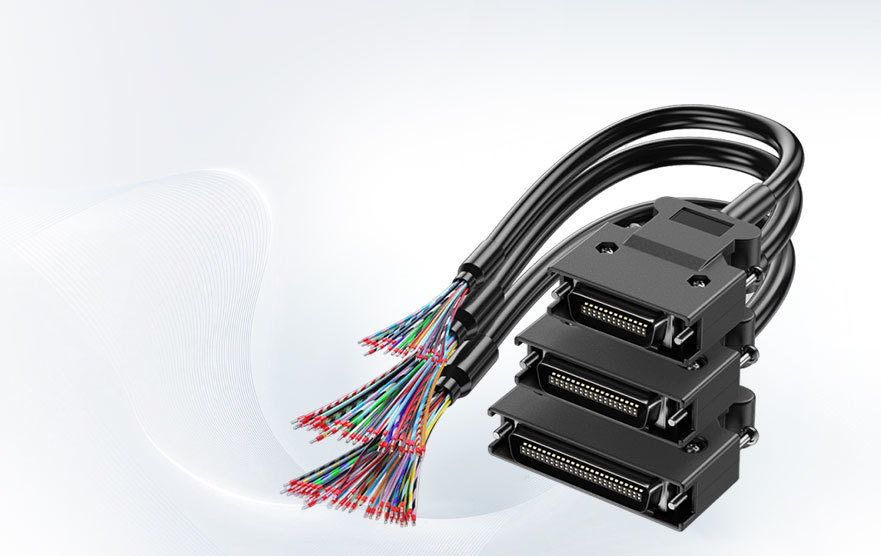
- Integrate circular connector cables into broader harnesses that include RF, D-sub, SCSI and push-pull connectors.
Choosing circular connector cables from a manufacturer that controls both connector and cable technology ensures better compatibility, higher reliability and a more straightforward path to compliance with UL, VDE and FDA-related standards.

Apply Here For A Custom Made Solution

Shenzhen Torvenics Electronic Co.,Ltd.
615 Block A, No.11 Tangkeng Road,Henggang Longgang Dist,Shenzhen China