

Types of Circular Connector Cables: A Practical Guide for Engineers and Buyers
Time:Mar 10,2026
Source:
Circular connector cables are a cornerstone of modern industrial, automotive, and automation systems, providing secure connections for power, signal, and data in a compact round form factor. Choosing the right type is essential for reliability, safety, and easy maintenance across different environments and applications.
In this article, we’ll cover the main types of circular connector cables, how they are classified, and how to select the best option for your project.
What Are Circular Connector Cables?
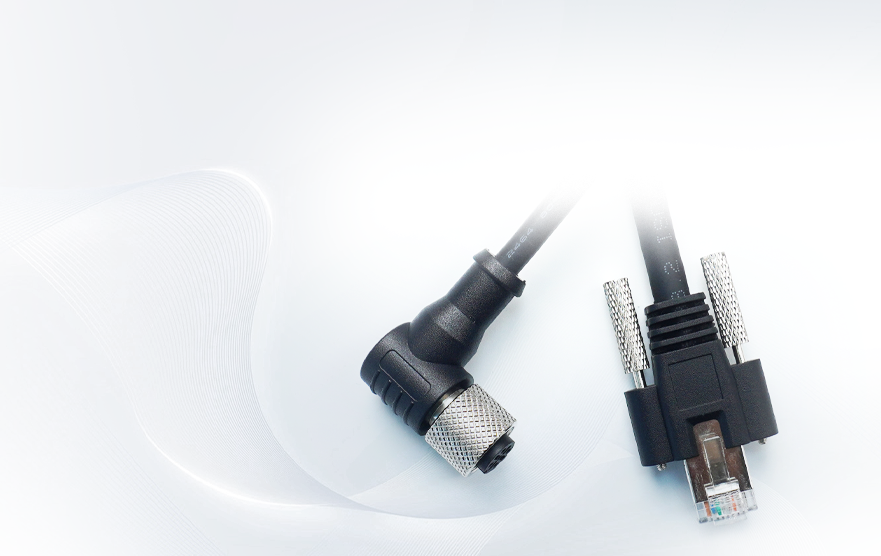
Circular connector cables combine a circular connector (plug or receptacle) with a cable assembly designed to transmit power, signals, or high‑speed data. The circular geometry offers robust mechanical strength, good sealing options, and easy mating and unmating compared to many rectangular connectors.
Typical use cases include:
- Industrial automation (sensors, actuators, robots).
- Transportation and automotive systems.
- Machine tools, packaging, and material handling equipment.
- Harsh environments requiring IP‑rated protection against dust and moisture.
Main Ways Circular Connectors Are Classified
Before looking at specific cable types, it helps to understand how circular connectors are categorized in catalogs and datasheets.
Key classification dimensions include:
- Application: Power, signal, or data circular connectors.
- Standards/families:
- Circular DIN connectors.
- Circular metric “M‑series” connectors (M5, M8, M12, M16, M23, 7/8").
- MIL‑Spec circular connectors for defense and aerospace.
- Push‑pull circular connectors.
- General‑purpose “standard” circular connectors.
- Coupling type: Bayonet, threaded, push‑pull, snap‑on, and screw‑in.
- Size: Connector shell size or metric thread size (for example, M8 vs. M12 vs. M23).
- Environment: Standard vs. ruggedized, and IP‑rated options (such as IP67) for dust‑tight and water‑resistant performance.
Types by Application: Power, Signal, and Data
Power Circular Connector Cables
Power circular connectors are designed to deliver electrical power to motors, drives, lighting, and other high‑current loads. They typically feature:
- Larger contact sizes and fewer pins for higher current per contact.
- Robust housings, often metal, for durability and EMC performance.
- Higher voltage and current ratings to support industrial power distribution.
These cables are common in machine tools, servo drives, and heavy industrial equipment where secure, lockable power connections are critical.
Signal Circular Connector Cables
Signal circular connector cables carry low‑level analog or digital signals, often between sensors, controllers, and I/O modules. They are optimized for:
- Multiple small contacts for multi‑channel sensor or control signals.
- Compact sizes (for example, M8 and smaller M12 variants) to save panel space.
- Shielded or unshielded cables depending on the EMI environment.
Signal circular cables are widely used for proximity sensors, encoders, limit switches, and field I/O in automation networks.
Data Circular Connector Cables
Data circular connector cables are designed for high‑speed digital communication, such as industrial Ethernet, fieldbus, and serial links. Typical features include:
- Controlled impedance twisted‑pair or multi‑pair cables.
- Shielding for reduced electromagnetic interference.
- Standardized pinouts and coding to prevent mismating between incompatible networks.
M12 connectors are especially popular for rugged industrial Ethernet and fieldbus cabling, supporting both data and, in some variants, power over the same connector.
Overview by Application
Types by Connector Family and Size
Circular Metric Connectors (M‑Series)
Circular metric connectors are defined by the diameter of the metric thread, creating a consistent family of sizes such as M5, M8, M12, M16, M23, and 7/8". They provide standardized, interoperable solutions for industrial wiring with a range of poles and coding options.
- M5: Very compact connectors for space‑constrained sensor and signal connections.
- M8: Common for sensors and actuators, combining small size with rugged performance.
- M12: One of the most widely used industrial circular connectors, supporting power, signal, and data variants.
- M16, M23, 7/8": Larger sizes used for higher power or multi‑pole connections.
Circular DIN Connectors
Circular DIN connectors follow DIN standards and are common in industrial control, audio, and legacy equipment. They offer:
- Standardized pin configurations and shell sizes.
- Moderate current ratings suitable for mixed signal and low‑power uses.
- Reliable circular geometry for panel‑mount and cable‑mount applications.
They remain a practical choice in retrofit or compatible systems where DIN layouts are already established.
MIL‑Spec Circular Connectors
MIL‑Spec circular connectors are built to military and aerospace standards, with emphasis on reliability in extreme conditions. Typical characteristics include:
- Rugged metal shells and advanced sealing, often beyond standard industrial requirements.
- Vibration resistance, shock resistance, and wide temperature ranges.
- Multiple key configurations to prevent cross‑mating between incompatible systems.
These connectors are used in defense electronics, aviation, and mission‑critical equipment where failure is unacceptable.
Push‑Pull Circular Connectors
Push‑pull circular connectors allow fast, tool‑free mating and unmating while maintaining secure retention. They are particularly useful in:
- Medical devices and test equipment where frequent re‑connections are common.
- Portable instruments where one‑handed operation is convenient.
The push‑pull mechanism combines speed with positive locking, balancing ease of use with connection security.
Standard General‑Purpose Circular Connectors
Standard circular connectors form a broad category covering many general‑purpose industrial and commercial designs. They are available in numerous sizes, pin counts, and configurations for a wide range of applications.
These products are often chosen when:
- No strict military or special standard is required.
- Cost, availability, and flexibility are key priorities.
- Systems need a robust, easy‑to‑handle connector without specialized coding.
Types by Coupling Mechanism
The coupling mechanism describes how the plug and receptacle lock together, which has a direct impact on installation speed and vibration resistance.
The main coupling types for circular connectors are:
- Threaded: Uses a screw‑on coupling nut for secure, vibration‑resistant connections; common in industrial and MIL‑Spec designs.
- Bayonet: Uses a quarter‑turn or similar twist‑lock; faster than threaded while still robust.
- Push‑pull: Locks automatically when pushed in and releases via a sleeve or latch; ideal for frequent connections.
- Snap‑on: Quick, simple engagement often used in lighter‑duty or low‑cost equipment.
- Screw‑in: A generalized term for connectors that secure via screws, often similar to threaded types but sometimes used for specialized housings.
Selecting the right coupling type depends on operating environment, vibration levels, and user access or skill level.
Key Selection Factors for Circular Connector Cables
When choosing circular connector cables, consider:
- Electrical requirements: Voltage, current per contact, number of poles, and signal or data speed.
- Environmental protection: IP rating, operating temperature, chemical exposure, and mechanical stress.
- Mechanical constraints: Connector size (for example, M8 vs. M12 vs. M23), panel space, and cable bend radius.
- Standards and interoperability: Need to match existing M‑series, DIN, MIL‑Spec, or fieldbus/Ethernet standards.
- Installation and maintenance: Preferred coupling type, ease of field termination, and color‑coding or keying requirements.
By aligning these factors with your power, signal, and data needs, you can select circular connector cables that deliver long‑term reliability and simplify system integration.

Apply Here For A Custom Made Solution

Shenzhen Torvenics Electronic Co.,Ltd.
615 Block A, No.11 Tangkeng Road,Henggang Longgang Dist,Shenzhen China