

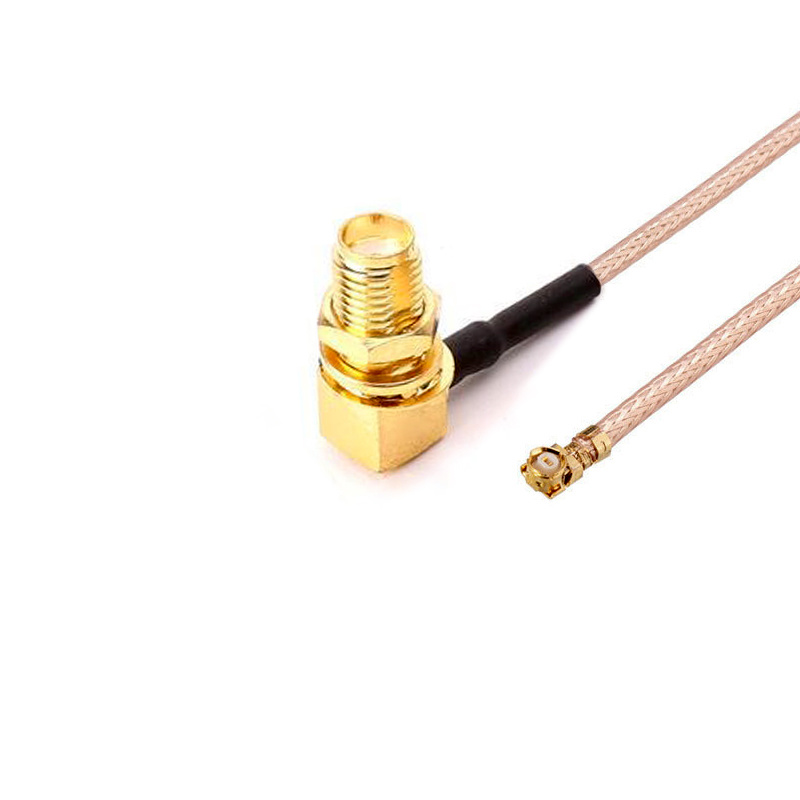
Discover key RF coaxial connector cable standards (RG military, JIS) & top connector specs (SMA, N Type, BNC). Learn how to choose by impedance, frequency, & environment for reliable telecom systems.
Time:Dec 12,2025
Source:
In industrial automation, manufacturing, and critical infrastructure, reliable data transmission isn’t just a convenience—it’s a necessity. Industrial Ethernet cables are engineered to thrive where standard office-grade cables fail, withstanding extreme temperatures, moisture, vibration, and electromagnetic interference (EMI). But with multiple types, categories, and configurations available, choosing the right one can be overwhelming. In this guide, we’ll break down the key types of Industrial Ethernet cables, their unique features, and how to select the perfect fit for your application.
Key Categories of Industrial Ethernet Cables (By Performance)
Industrial Ethernet cables share core categories with commercial Ethernet (e.g., Cat5e, Cat6), but they’re ruggedized for harsh conditions. Here’s how the most common categories stack up:
Cat5e Industrial Ethernet Cable
- Performance: Supports data speeds up to 1 Gbps and bandwidth of 250 MHz, with a maximum transmission distance of 100 meters.
- Key Features: Enhanced crosstalk prevention compared to older Cat5 cables, making it ideal for basic industrial automation needs. Industrial-grade versions include rugged jackets (e.g., PVC, PUR) and optional shielding for EMI protection.
- Best For: Factory floors, PLCs (Programmable Logic Controllers), sensors, and small-scale industrial networks where cost-effectiveness and reliability are priorities. It’s also compliant with PoE (Power over Ethernet) for powering low-energy devices like cameras or wireless access points.
Cat6 Industrial Ethernet Cable
- Performance: Delivers 1 Gbps over 100 meters or 10 Gbps over shorter distances (up to 55 meters) with a 250 MHz bandwidth. Tighter twists and optional shielding reduce interference.
- Key Features: Industrial variants feature durable jackets (PUR, TPE) resistant to oil, UV, and chemicals, plus improved mechanical strength for vibration and flexing.
- Best For: High-speed automation, gigabit LANs, robotics, and HD video streaming in industrial settings. It’s a popular choice for future-proofing networks that may scale to higher speeds.
Cat6a Industrial Ethernet Cable
- Performance: Supports 10 Gbps over the full 100-meter distance with a 500 MHz bandwidth—critical for high-density networks and data-intensive applications.
- Key Features: Augmented shielding (often S/FTP: individual pair shielding + overall braid) minimizes EMI/RFI, while rugged jackets (e.g., PUR, TPE) handle extreme temperatures (-50°C to 125°C). M12 X-coded Cat6a cables are common for high-speed industrial Ethernet.
- Best For: Data centers, enterprise industrial networks, oil and gas refineries, and transportation hubs (rail, aviation) where speed and reliability over long distances are non-negotiable.
Cat7 & Cat8 Industrial Ethernet Cables
- Cat7: Operates at 600 MHz, supporting 10 Gbps over 100 meters with full shielding (S/FTP) for maximum EMI protection. Ideal for server rooms and industrial environments with heavy electrical interference.
- Cat8: The highest-performance copper option, with 2000 MHz bandwidth and speeds up to 40 Gbps over 30 meters. Fully shielded (S/FTP) and designed for ultra-high-speed applications like data center server-to-server connections and high-frequency trading.
- Best For: Critical infrastructure, advanced robotics, and 25/40 Gbps industrial networks where latency and jitter must be minimized.
Specialized Types of Industrial Ethernet Cables (By Application)
Beyond performance categories, industrial Ethernet cables are tailored to specific environmental and functional needs:
Fiber Optic Industrial Ethernet Cables
- Performance: Supports speeds up to 100 Gbps (and beyond) over distances of kilometers, with complete immunity to EMI/RFI and spark hazards.
- Key Features: Lightweight, flexible, and resistant to corrosion, moisture, and extreme temperatures. Armored fiber optic cables add physical protection against crushing or abrasion.
- Best For: Long-distance transmissions (e.g., between factories or across oil rigs), environments with high EMI (near motors or welding equipment), and hazardous areas (mining, chemical plants) where spark safety is critical.
High-Flex Industrial Ethernet Cables
- Performance: Available in Cat5e to Cat6a, optimized for repetitive motion (robotics, conveyors, automated assembly lines).
- Key Features: Stranded conductors (19–60 strands per conductor, vs. 7 in standard cables) for flexibility, with TPE jackets that withstand millions of flex cycles (1–10 million vs. 50,000 for standard stranded cables).
- Best For: Robotics, pick-and-place machines, and any application where cables bend, twist, or move frequently.
Ruggedized/Harsh-Environment Cables
- Key Features: Reinforced jackets (PUR, TPE, or armored), IP67/IP68 ratings (waterproof/dustproof), and resistance to chemicals, oil, and UV light.
- Best For: Outdoor installations, marine environments, food and beverage facilities (washdown areas), and mining operations where cables face physical damage or exposure to corrosive substances.
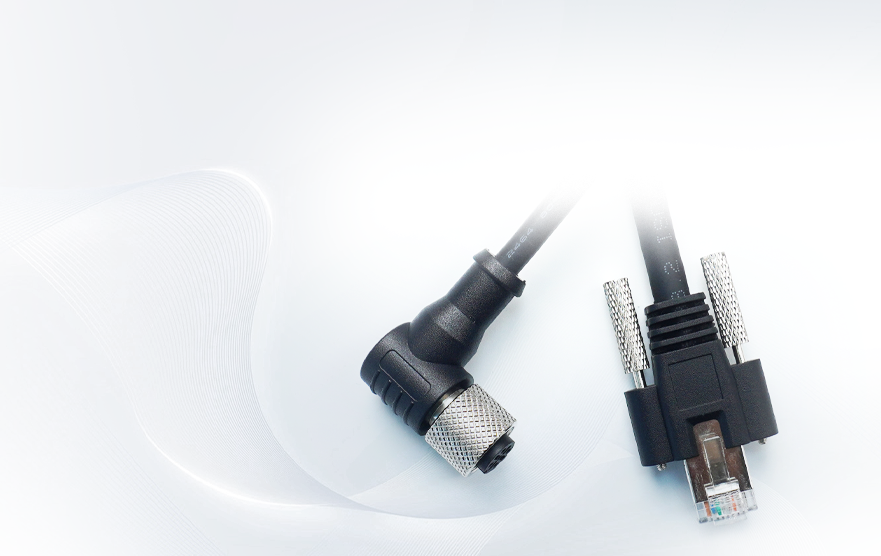
M12 Connector Industrial Ethernet Cables
- Design: Circular, screw-lock M12 connectors (coded A, D, X, etc.) for secure, vibration-resistant connections. X-coded M12 cables are for Cat6a/10 Gbps, while A/D-coded are for Cat5e/1 Gbps.
- Key Features: IP67/IP68 ratings, tinned copper conductors (corrosion resistance), and jackets rated for extreme temperatures (-40°C to 85°C+).
- Best For: Factory automation, sensors, actuators, and washdown environments (food processing, pharmaceuticals) where standard RJ45 connectors would fail.
Armored Industrial Ethernet Cables
- Key Features: Metal (steel or aluminum) armor surrounding the cable core, protecting against physical damage (crushing, cutting, rodent bites) in rugged settings.
- Best For: Underground installations, construction sites, and industrial areas with heavy machinery or foot traffic.
How to Choose the Right Type of Industrial Ethernet Cable
To select the best cable for your needs, focus on these critical factors (aligned with MICE standards: Mechanical, Ingress, Climatic, Electromagnetic):
Environmental Conditions: Use MICE ratings to match the cable to your environment:
- Mechanical (M): High flex? Choose stranded, high-flex cables. Vibration/shock? Opt for M12 connectors and armored jackets.
- Ingress (I): Moisture/dust? Select IP67/IP68-rated cables with PUR/TPE jackets.
- Climatic (C): Extreme temps? FEP/TPE jackets (-50°C to 125°C) over PVC (0°C to 75°C).
- Electromagnetic (E): EMI/RFI? Use shielded cables (F/UTP for moderate interference, S/FTP for severe).
Speed & Distance: Match the cable category to your required bandwidth:
- Basic automation: Cat5e/Cat6
- High-speed, long-distance: Cat6a/Fiber Optic
- Ultra-high-speed: Cat8/Fiber Optic
Connectors: Choose M12 (rugged, industrial) for harsh environments or RJ45 (standard) for controlled settings. X-coded M12 for Cat6a/10 Gbps, A/D-coded for lower speeds.
Future-Proofing: Select a cable with higher performance than your current needs (e.g., Cat6a instead of Cat6) to accommodate scaling and new technologies (5G, IoT sensors).
Final Thoughts
The right type of Industrial Ethernet cable depends on balancing performance, environment, and application. Whether you need a cost-effective Cat5e for basic sensors or a high-flex Cat6a for robotics, investing in ruggedized, application-specific cables reduces downtime, extends lifespan, and ensures reliable data transmission in even the harshest industrial settings.

Apply Here For A Custom Made Solution

Shenzhen Torvenics Electronic Co.,Ltd.
615 Block A, No.11 Tangkeng Road,Henggang Longgang Dist,Shenzhen China