

RF Coaxial Connector Cable Standards: A Comprehensive Guide for Telecom Professionals
Time:Dec 12,2025
Source:
In the fast-paced world of telecommunications, radio frequency (RF) coaxial cables and connectors are the unsung heroes that ensure seamless signal transmission. However, navigating the complex landscape of RF coaxial connector cable standards can be daunting—even for seasoned professionals. From military-grade specifications to industry-specific requirements, understanding these standards is critical for minimizing signal loss, maximizing compatibility, and ensuring system reliability. In this guide, we’ll break down the key standards, their technical nuances, and how to choose the right components for your application.
What Are RF Coaxial Connector Cable Standards?
RF coaxial connector cable standards are standardized guidelines that define the design, materials, performance, and compatibility of coaxial cables and their matching connectors. These standards ensure that components from different manufacturers work together seamlessly, reduce signal interference, and meet the unique demands of industries like telecommunications, military, broadcast, and test & measurement.
At their core, these standards address critical parameters:
- Impedance (typically 50Ω, 75Ω, or 93Ω)
- Frequency range capabilities
- Physical dimensions (conductor size, insulation thickness, sheath diameter)
- Material specifications (conductors, insulators, shielding, jackets)
- Environmental resistance (temperature, humidity, waterproofing)
- Connector mating mechanisms and durability
Key RF Coaxial Cable Standards: RG Military vs. JIS
Two primary standards dominate the RF coaxial cable market: the U.S. military’s RG (Radio Guide) standards and Japan’s JIS (Japanese Industrial Standards). Each serves distinct use cases and adheres to strict design criteria.
RG Military Standards (MIL-Spec Cables)
Developed for U.S. military applications, RG standards (officially part of MIL specifications) are globally recognized for their ruggedness, consistency, and high performance. These cables are identified by the “RG” prefix, followed by a type number, revision code, and “U” (Universal) designation for general use.
Breakdown of RG Cable Nomenclature (e.g., RG-58A/U):
- RG: Radio Guide (general-purpose RF coaxial cable)
- 58: Type number (assigned sequentially, not by thickness)
- A: Revision code (alphabetical, e.g., A-C, indicating design updates)
- U: Universal (suitable for general applications)
Common RG Cable Types & Their Standards:
RG-58A/U features a 50Ω impedance, operates within a DC–1 GHz frequency range, and is ideal for radio communications and test equipment. It includes a stranded tinned copper inner conductor, polyethylene (PE) insulation, and single-layer tin-plated copper shielding. RG-174/U, with a 50Ω impedance and DC–6 GHz frequency range, is designed for compact devices and internal wiring due to its thin profile. RG-11/U, a 75Ω cable working up to 1 GHz, is commonly used in TV broadcasting and video transmission. RG-62/U, with a 93Ω impedance and DC–100 MHz frequency range, serves industrial data links, while RG-316/U (50Ω, DC–18 GHz) excels in high-frequency applications and tight spaces.
RG cables are engineered for minimal signal loss and effective electromagnetic shielding. Thicker RG cables like RG-8/U or RG-14/U are designed for low-loss, long-distance external use, while thinner options like RG-178B/U are tailored for compact, high-frequency setups.
JIS Standards (Japanese Industrial Standards)
JIS standards (e.g., 5C-2V, 3D-2V, 5D-FB) are optimized for Japan’s domestic market but are also used in select global applications. Unlike RG standards, JIS type numbers correlate with cable thickness, making it easier to quickly identify physical dimensions. These cables prioritize specific construction and material standards tailored to Japanese industry needs, such as broadcast and consumer electronics.
Key Differences Between RG and JIS Standards:
RG military standards originate from the U.S. military, with sequential type numbers (not tied to thickness), a focus on ruggedness and global compatibility, and common impedances including 50Ω, 75Ω, and 93Ω. In contrast, JIS standards are rooted in Japanese industrial needs, with type numbers that correlate to cable thickness, a focus on domestic industry optimization, and common impedances of 75Ω (for broadcast) and 50Ω (for industrial use).
Critical Connector Standards for RF Coaxial Cables
Cables are only as effective as their connectors. RF coaxial connector standards define how connectors mate with cables and equipment, ensuring impedance matching and signal integrity. Below are the most widely used connector standards and their compatibility with RG/JIS cables:
SMA (Sub-Miniature Type A)
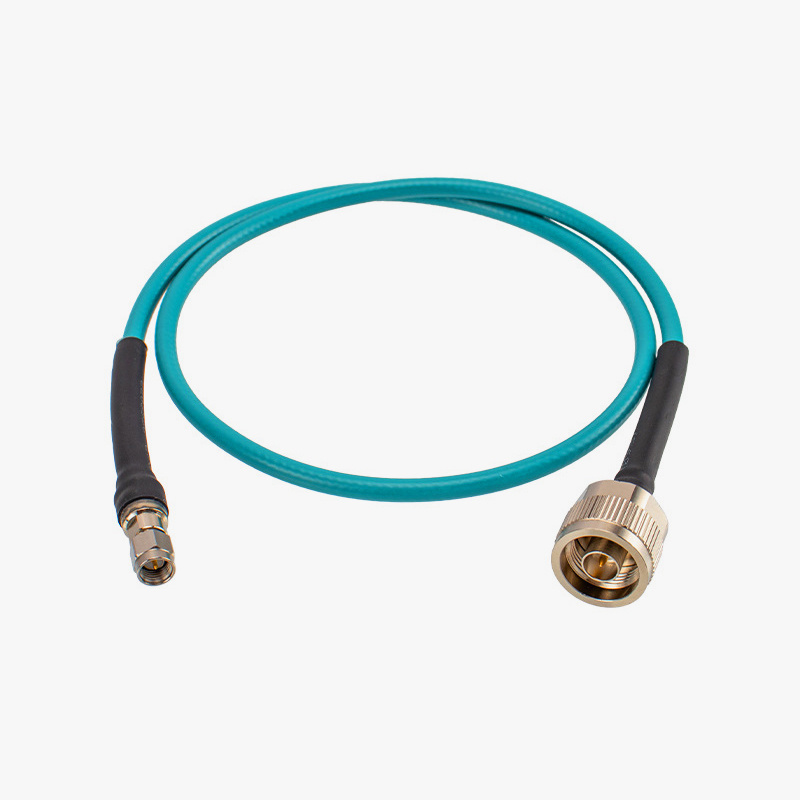
Following the MIL-STD-348 standard, SMA connectors are primarily 50Ω (with specialized 75Ω versions) and operate up to 18 GHz (26.5 GHz for precision models). They are compatible with cables like RG-174/U, RG-316/U, and RG-188A/U, making them ideal for test equipment, microwave filters, and high-frequency devices. Their threaded coupling ensures secure connections, and proper mating requires a torque wrench set to 5 in-lb.
N Type
Compliant with MIL-C-39012, N Type connectors are available in 50Ω and 75Ω (for CATV applications) and operate up to 11 GHz (18 GHz for precision variants). They pair well with RG-8/U, RG-11/U, and RG-223/U cables, and are commonly used in broadcast, base stations, and outdoor antennas. Their rugged, weatherproof design with internal gaskets makes them suitable for long-distance, high-power transmission.
BNC (Bayonet Neill-Concelman)
Also adhering to MIL-C-39012, BNC connectors come in 50Ω and 75Ω options and work up to 4 GHz (though rarely used above 500 MHz). They are compatible with RG-58/U and RG-59/U cables, and are favored for audio/video equipment, oscilloscopes, and low-power RF test gear. Their bayonet-style coupling allows for quick mate/de-mate action and prevents accidental disconnection.
TNC (Threaded Neill-Concelman)
A threaded variant of the BNC, TNC connectors follow MIL-C-39012, offer 50Ω impedance, and operate up to 18 GHz. They are compatible with RG-58A/U and RG-174/U cables, and are ideal for military communications and vibration-prone environments due to their enhanced stability at higher frequencies.
7-16 DIN
Based on DIN 47223, 7-16 DIN connectors have a 50Ω impedance and operate up to 7.5 GHz. They pair with RG-8/U and large-diameter EIA cables, and are used in base stations, SATCOM, and high-power applications. They are known for low inter-modulation and can handle up to 820 Watts of CW power.
How to Choose the Right RF Coaxial Connector Cable Standards
Selecting the correct standard depends on your application’s unique requirements. Follow these steps to make an informed decision:
Match Impedance to Your System
50Ω cables are ideal for radio power transmission, high-frequency circuits, and military applications (most RG cables fall into this category). 75Ω cables are preferred for video/audio signals, TV broadcasting, and CATV (e.g., RG-11/U, RG-59/U). 93Ω cables are specialized for industrial data links (e.g., RG-62/U). Impedance mismatching causes signal reflection and power loss—critical to avoid in high-frequency systems.
Consider Frequency Requirements
For low frequencies (below 1 GHz), BNC connectors, RG-58/U, or JIS 5C-2V cables work well. Medium frequencies (1–18 GHz) call for SMA, TNC connectors, RG-316/U, or RG-174/U cables. High frequencies (above 18 GHz) require precision SMA, 3.5mm, 2.92mm/K connectors, or RG-187A/U cables (with TFE insulation for stability).
Evaluate Environmental Conditions
Temperature resistance is determined by sheath material: PVC (used in most RG cables like RG-58/U) operates between -15°C and 60°C; PE (e.g., RG-55/U) works from -40°C to 75°C, making it suitable for outdoor use; TFE (Teflon, e.g., RG-178B/U) handles extreme heat from -70°C to 250°C. For waterproofing and humidity resistance, opt for rugged connectors (N Type, 7-16 DIN) and PE/TFE jackets for outdoor installations.
Prioritize Cable Thickness & Flexibility
Thick cables like RG-8/U and RG-14/U offer low loss and are designed for long-distance external wiring, though they are stiffer and less flexible. Thin cables such as RG-174/U and RG-316/U are flexible, making them ideal for compact devices and internal wiring in tight spaces.
Ensure Connector-Cable Compatibility
Always pair connectors with cables that match their impedance and frequency ratings. For example, RG-316/U (50Ω, 18 GHz) pairs well with SMA or 2.92mm connectors, while RG-11/U (75Ω, 1 GHz) is compatible with N Type or BNC connectors.
Common Mistakes to Avoid with RF Coaxial Standards
- Ignoring Impedance Matching: Using a 50Ω cable with a 75Ω connector causes signal distortion—always align impedance across cables, connectors, and devices.
- Overlooking Bending Radius: Coaxial cables have a minimum bend radius (typically 10x the outer diameter). Bending beyond this damages shielding and increases signal loss.
- Choosing the Wrong Sheath Material: Using PVC-jacketed cables in extreme temperatures (-20°C or 70°C+) leads to brittleness or melting—opt for TFE or PE instead.
- Mismatched Connector Grades: Pairing a precision connector (e.g., 3.5mm) with a commercial-grade cable degrades performance. Match grades for consistency.
Final Thoughts
RF coaxial connector cable standards are the backbone of reliable RF systems. Whether you’re designing a military communication setup, a broadcast network, or test equipment, understanding RG, JIS, and connector standards ensures compatibility, minimizes signal loss, and extends component lifespan. By prioritizing impedance, frequency, environmental resistance, and compatibility, you’ll select components that meet your application’s unique needs.
For more detailed specifications on specific RG cables, connectors, or custom solutions, refer to manufacturer data sheets or consult with a technical expert. With the right standards in place, your RF system will deliver consistent, high-performance results—today and in the future.

Apply Here For A Custom Made Solution

Shenzhen Torvenics Electronic Co.,Ltd.
615 Block A, No.11 Tangkeng Road,Henggang Longgang Dist,Shenzhen China