

What Is an Industrial Vision Cable? Types & How to Choose
Time:Oct 15,2026
Source:
Industrial cameras, sensors, controllers, and automation equipment need reliable connections to exchange images, data, control signals, and power. This is where industrial cables and connector assemblies become important.
Among them, Industrial Vision Cables are designed specifically for machine vision systems, while connector cables such as M5, M8, M12, and M16 are commonly used to connect sensors, actuators, cameras, and other industrial devices.
Understanding the basic cable types and connector categories can help you choose the right connection for your equipment.
What Is an Industrial Vision Cable?
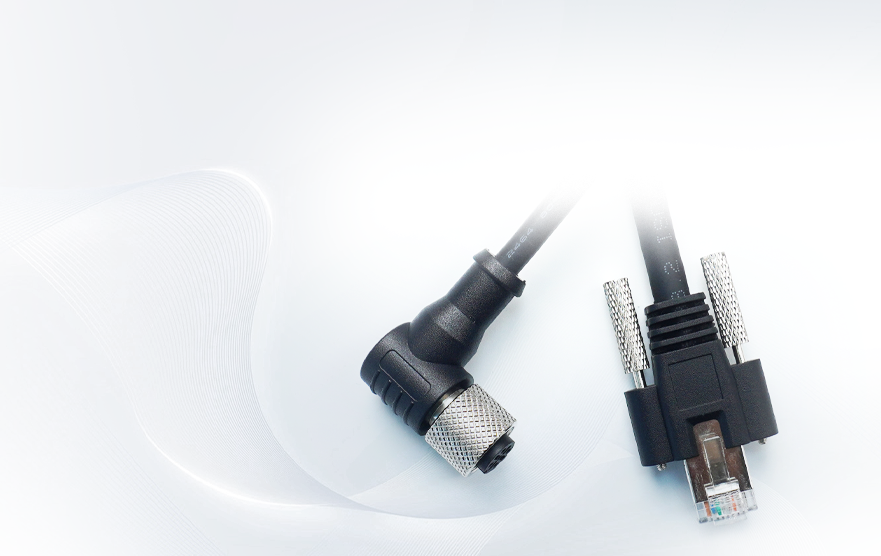
An Industrial Vision Cable is a cable assembly designed to connect industrial cameras with controllers, computers, sensors, or other components in a machine vision system.
Depending on its design, an industrial vision cable can carry image data, power, trigger signals, or control signals. Unlike standard consumer cables, industrial vision cables are designed for environments where vibration, electromagnetic interference, continuous movement, oil exposure, temperature changes, and long operating hours may affect connection reliability.
Typical applications include automated inspection, robotic vision, measurement systems, production-line monitoring, and other machine vision applications.
For example, Torven categorizes its Industrial Vision Cable products into industrial camera power/trigger cables and industrial camera Ethernet cables, providing solutions for image data and control signal transmission. Its product range includes options for transmission rates from 1 Gbps to 50 Gbps, different protection levels, and cables designed for continuous-motion applications.

What Are the Main Types of Industrial Vision Cable?
Industrial vision cables are generally classified according to the function they perform in a vision system.
Camera Power Cables
Camera power cables provide electrical power to industrial cameras. They are selected according to the camera's voltage, current, connector, and installation requirements.
Camera Trigger Cables
A trigger cable transmits a signal that tells a camera when to capture an image. This is important when image acquisition needs to be synchronized with sensors, conveyors, lighting systems, or other equipment.
Camera Data and Ethernet Cables
These cables transmit image data between an industrial camera and a computer, controller, or network device. High-speed applications require cables with suitable transmission performance, shielding, and connector design.
In some machine vision systems, separate cables may be used for power, triggering, and data. In other configurations, specialized cable assemblies can combine multiple functions.

What Are Circular Connector Cables?
A circular connector cable is a cable assembly equipped with a round connector designed to provide a secure electrical connection between industrial devices.
Circular connectors are widely used in automation because they can provide a compact and mechanically secure connection while supporting different numbers of contacts and environmental protection requirements.
The M-series is one common category of circular industrial connectors. Different M sizes are designed for different equipment and space requirements.
For example:
- M5: compact sensors and space-constrained devices
- M8: sensors, actuators, and automation equipment
- M12: industrial sensors, actuators, and data connections
- M16: applications requiring a larger connector interface
The connector size alone does not determine the cable's function. Pin count, electrical specifications, connector gender, cable construction, and environmental requirements are also important.
What Is an M5 Connector Cable?
An M5 connector cable is a cable assembly using an M5 circular connector. Its small connector size makes it suitable for compact sensors and equipment where installation space is limited.
Common types of M5 connector cable include male and female versions, straight and right-angle configurations, panel-mount designs, and pre-molded cable assemblies.
M5 cables can be configured for different pin counts and cable lengths depending on the equipment. They are particularly useful when a reliable connection is required without taking up the space of a larger connector.
Torven' M-series cable portfolio includes M5 products as well as other connector sizes, with different pin configurations and straight, angled, and flange options.
What Is an M16 Connector Cable?
An M16 connector cable uses an M16-size circular connector and is generally selected when a larger connector interface is required than smaller M-series connectors can provide.
Depending on the application, M16 connector cables may differ in pin count, connector configuration, cable type, shielding, locking mechanism, and environmental protection.
M16 is therefore not simply a larger version of an M5 cable. The appropriate connector size should be determined by the equipment interface, electrical requirements, available installation space, and environmental conditions.
How Do You Choose the Right Industrial Cable?
Choosing an industrial cable starts with the equipment rather than the cable itself.
Identify the Function
First determine whether the connection is required for power, image data, triggering, sensor signals, or multiple functions.
Check the Connector
Confirm the connector type and size, such as M5, M8, M12, M16, Ethernet, or a camera-specific interface.
Determine the Pin Count
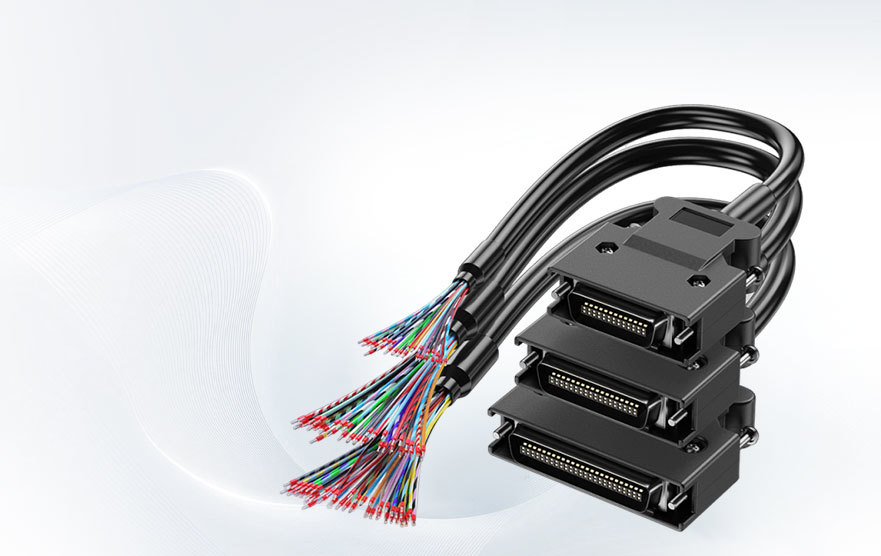
The number of contacts must match the device interface and required signals. Industrial connector cables can be available in configurations ranging from a few contacts to much higher pin counts.
Consider the Environment
For factory automation and machine vision equipment, consider IP rating, temperature, oil exposure, electromagnetic interference, vibration, and repeated bending.
Check Cable Movement
A cable used inside a drag chain or on a moving robot may require a more flexible construction than a cable installed permanently inside a control cabinet.
What Is a Dummy Battery?
A dummy battery is a battery-shaped power adapter that allows a compatible camera or device to receive power from an external source instead of relying on a standard rechargeable battery.
Unlike an Industrial Vision Cable, a dummy battery is primarily a camera power accessory rather than a data or signal transmission cable.
It can be useful for applications such as long-duration photography, video production, monitoring, testing, and other situations where continuously replacing batteries would be inconvenient.
Torven also provides Dummy Battery solutions as part of its photography accessory range, alongside power cables, shutter cables, and battery plate adapters.

Industrial Cable and Camera Connection Solutions from Torven
Selecting the right cable depends on the equipment interface, signal requirements, installation environment, and expected operating conditions.
Torven provides several related connection solutions, including Industrial Vision Cables for camera power, triggering, and data transmission, as well as M-series sensor and data cables. Its M-series range supports applications involving sensors and actuators and offers different connector sizes, pin configurations, and connector styles.
For camera power applications outside conventional machine vision cabling, Torven also offers Dummy Battery solutions for continuous external camera power.
Looking for the right cable for your equipment? Explore Torven's Industrial Vision Cable solutions for camera power, trigger, and data connections, or review its M8 Connector Cable solutions for industrial sensor and automation applications. For camera external-power requirements, Dummy Battery solutions are also available.

Apply Here For A Custom Made Solution

Shenzhen Torvenics Electronic Co.,Ltd.
615 Block A, No.11 Tangkeng Road,Henggang Longgang Dist,Shenzhen China