

M5 Connector Cable High Speed for Sensors and Data Links
Time:Jun 23,2026
Source:
M5 Connector Cable High Speed for Sensors and Data Links
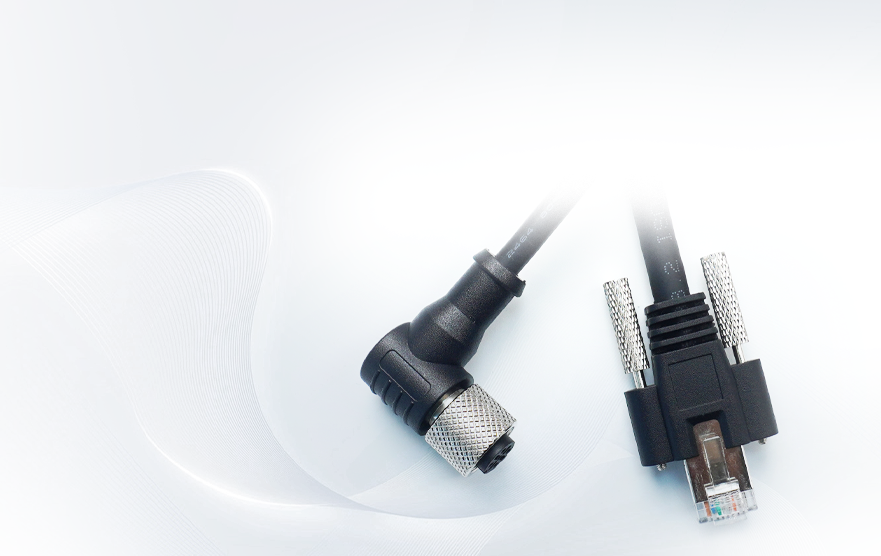
As industrial devices gain more intelligence, the demand for high‑speed data transmission in very small form factors keeps growing. M5 connector cable high speed assemblies combine the miniature M5 circular connector with carefully selected connector cables and shielding structures to carry fast signals in tight spaces, close to sources of noise and mechanical stress. For designers of sensors, measurement modules and compact controllers, M5 connector cable high speed is a practical way to move beyond simple on/off signals and support richer data in the same miniature footprint.
At Torven, we see M5 high‑speed connector cables as part of a larger connector cable ecosystem that spans M5, M8 and M12, as well as high‑speed vision and data cables in our Automation Technology Sensor and Data Cable portfolio. This allows us to design M5 solutions that fit naturally into your broader network.
Product: What defines an M5 connector cable high speed assembly?
An M5 connector cable high speed assembly builds on the mechanical foundation of the M5 threaded connector – 5 mm diameter with a 0.5 mm pitch – but uses connector cables and layouts optimized for signal integrity. This can include:
- Twisted pairs with controlled impedance for differential signaling over short distances.
- Overall and pair‑level shielding to reduce electromagnetic interference (EMI).
- Short, consistent cable lengths for predictable timing and skew.
- Overmolds that avoid sharp bends at the connector termination.
On our M5 Connector Cable product page, these connector cables are positioned for miniature sensors and narrow spaces, but in many cases the same physical platform can also be adapted to higher‑speed signaling when properly designed. The “M5 connector cables power next‑generation compact automation” article explains how M5 cables increasingly support both power and data in modern compact automation.
While M5 is not meant to replace M12‑X‑coded Ethernet connectors for long‑distance high‑speed links, it can support faster sensor interfaces, short‑reach digital buses, and trigger or synchronization signals that must be routed in small housings.

Test: How we test M5 connector cable high speed
For M5 connector cable high speed designs, the test object is the complete connector cable, evaluated under realistic electrical and mechanical conditions. Beyond basic continuity and insulation checks, we focus on signal integrity and EMC behavior.
Typical test items include:
Signal integrity checks
- Rise‑time and waveform measurements for digital signals at the target data rate.
- Eye diagram analysis for differential lines where applicable, to assess jitter and noise margins.
- Bit error rate (BER) measurements in actual or simulated data links, where higher‑level protocols are available.
EMC and shielding performance
- Coupling tests to see how much noise is induced into the connector cable from nearby interference sources.
- Shield connection and continuity checks between cable shield and M5 connector shell, ensuring 360‑degree shielding where required.
Mechanical and environmental tests
- Vibration, bending and twisting tests, with repeated verification of high‑speed behavior during and after stress.
- Temperature cycling to confirm that dielectric and conductor properties remain within design tolerances over the expected range.
For test and measurement devices, our M5 Connector Cable for Test and Measurement application page highlights that many connectors used here must satisfy demanding performance requirements for data transmission, power supply and protection levels. M5 high‑speed connector cables are designed in the same spirit: compact form factor with professional‑grade performance.
Application: Where M5 connector cable high speed fits best
High‑speed sensors and compact measurement modules
Sensors are no longer simple on/off switches; many now stream data at higher rates, from vibration signatures to multi‑axis measurements. M5 connector cable high speed assemblies allow you to place these sensors in confined spaces and still bring their data back to local controllers or measurement modules without excessive signal degradation.
Short‑reach digital buses and synchronization lines
Within a machine or instrument, there are many short‑distance connections between boards, modules and sub‑assemblies that need to carry fast digital signals, triggers and synchronization pulses. M5 connector cable high speed can handle these connections when panel space is limited and traditional rectangular connectors would be too large or mechanically exposed.
Compact test and measurement front‑ends
Handheld or portable test instruments, as well as distributed measurement nodes, often combine power and data in the same connector cables. M5 high‑speed connector cables can carry both low‑voltage power and data signals in a compact, robust package that suits front panels, small enclosures and field‑deployable equipment.
Miniaturized automation and robotics
In compact automation modules and robotic end‑effectors, M5 connector cable high speed can support fast status, diagnostic, or control signals for actuators and sensors located close to moving parts. Properly shielded designs help maintain signal integrity near motors, drives and switching power supplies.
Standards: How M5 high‑speed cables relate to IEC and IEEE
Mechanically, M5 connectors are part of the metric circular connector group covered by IEC 61076‑2, which defines common geometries and performance categories for industrial connectors such as M5, M8 and M12. This gives a standardized base for connector design and ensures interoperability on the mechanical level.
On the data side, M5 connector cable high speed designs need to support the signaling requirements of the protocols they carry:
- Many industrial networks and measurement systems are rooted in IEEE 802.3 (Ethernet) or similar frameworks, even when they use short internal links.
- Other systems rely on fast serial buses, proprietary differential links, or high‑speed trigger lines that must meet specific timing and integrity criteria.
While the M5 interface itself is not an Ethernet connector, the same high‑speed design principles apply: controlled impedance, low skew, proper shielding and short, consistent connector cable lengths. We design M5 high‑speed connector cables so that they support the physical‑layer needs of these systems without becoming the weak link.

How to design and use M5 connector cable high speed
Clarify your data rate and signaling mode
Start by defining the bit rate or analog bandwidth you must support, and whether your signals are single‑ended or differential. This will determine whether you need twisted pairs, characteristic impedance control, and shielding in your M5 connector cable.
Define cable length and topology
Because M5 high‑speed connector cables are typically used over short distances, you have more freedom than in long backplane or network runs. Still, you should set a maximum length and avoid unnecessary loops or tight bends that increase loss and distortion. For very high‑speed or sensitive signals, keep connector cables as short and direct as possible.
Pay attention to shielding and grounding
In noisy environments, choose M5 connector cable high speed assemblies with overall shields and, where needed, pair‑level shields. Make sure the shield connects properly to the connector shell and that your equipment provides a sensible grounding scheme. Poor shield termination can sometimes be worse than no shield at all.
Choose appropriate overmolds and strain relief
High‑speed performance depends on stable geometry at the termination. Overmolds and strain reliefs that prevent sharp bends or movement at the connector ensure that impedance remains consistent over time. Our M‑series and threaded circular connector know‑how, summarized in content like the threaded circular waterproof connector guide, carries over directly to M5 high‑speed designs.
Validate in your actual system
Lab measurements on simple test fixtures are useful, but the final proof is how the connector cable behaves in your real device. We recommend measuring BER, timing and noise margins with the connector cables routed and bent as they will be in production. Based on these results, we can adjust connector cable construction, length or shielding strategy if needed.
Why M5 connector cable high speed and why Torven?
M5 connector cable high speed brings richer data into the same miniature footprint that M5 power cables already occupy, letting you build smarter, more tightly integrated devices without redesigning your entire mechanical concept. It is particularly powerful when used alongside our other connector cable families – for example, M8 and M12 for heavier loads and longer links – within the same machine or system.
Torven is well positioned to support this shift because we specialize in precision connector cables and cable assemblies, not just loose connectors. Our “What is M5 connector cable?” content explains how we bring together M‑series design experience, high‑volume capacity and flexible customization to deliver M5 solutions at scale. By working with us on M5 connector cable high speed, you can combine strong electrical performance, robust mechanics and predictable lead times in one coherent connector cable strategy.
Meet Torven at EV India 2026 – Booths EVINDIA‑0000179666 & EVINDIA‑0000179655
From September 1–3, 2026, Torven will be present at EV India 2026 in the India Expo Centre, Greater Noida, to connect with EV OEMs, tier suppliers and engineers from all stages of the electric vehicle ecosystem. At our booths, we will present industrial circular waterproof connector solutions alongside customized cable assemblies dedicated to EV power routing, control signal transmission and charging interfaces, designed for robust performance on vehicles and in outdoor charging infrastructure.
EV India 2026 is India’s flagship EV exhibition, gathering stakeholders from passenger cars, two‑wheelers, commercial vehicles, battery packs and powertrain technologies, making it an ideal venue to discover new technologies and sourcing partners. Admission for trade visitors is free, but advance online registration is required; you can secure your pass here: EV India Expo visitor registration. Please visit us at booths EVINDIA‑0000179666 and EVINDIA‑0000179655 to explore how Torven’s interconnect solutions can support your EV projects.


Apply Here For A Custom Made Solution

Shenzhen Torvenics Electronic Co.,Ltd.
615 Block A, No.11 Tangkeng Road,Henggang Longgang Dist,Shenzhen China