

M5 Connector Cable Power for Compact Industrial Devices
Time:Jun 23,2026
Source:
M5 Connector Cable Power for Compact Industrial Devices
Industrial equipment is getting smaller, smarter and more densely packed, and that puts a lot of pressure on how you deliver power and signals into the device. M5 connector cable power assemblies answer this challenge by combining ultra‑compact circular connectors with slim, flexible cables tailored for low‑voltage power and small‑signal transmission in tight spaces. At Torven, we treat M5 connector cable power not as a generic accessory but as a core part of your connector cable strategy, designed to support miniaturized sensors, controllers, instruments and mobile devices over their full service life.
With more than 14 years of experience in connectors and cable assemblies, we focus on connector cables for automation technology, test and measurement, medical, transportation, and energy applications. Our goal is to give you M5 connector cable power solutions that are easy to integrate, easy to specify, and reliable under real industrial conditions.
Product: What is M5 connector cable power?
M5 connector cable power refers to connector cables built around the 5 mm threaded M5 circular interface, typically defined within the IEC 61076 M‑series framework for industrial circular connectors. The M5 interface uses a 5 mm × 0.5 metric thread and is the smallest member of the M‑series family, making it ideal for devices where every millimeter of front‑panel and enclosure space matters.
In practical terms, an M5 connector cable power assembly consists of:
- An M5 plug or receptacle (usually 2–5 pins) with a screw‑locking metal coupling.
- A matched connector cable with small outer diameter, optimized for low‑voltage power and signal.
- Optional overmolding around the connector backshell to provide strain relief and environmental sealing.
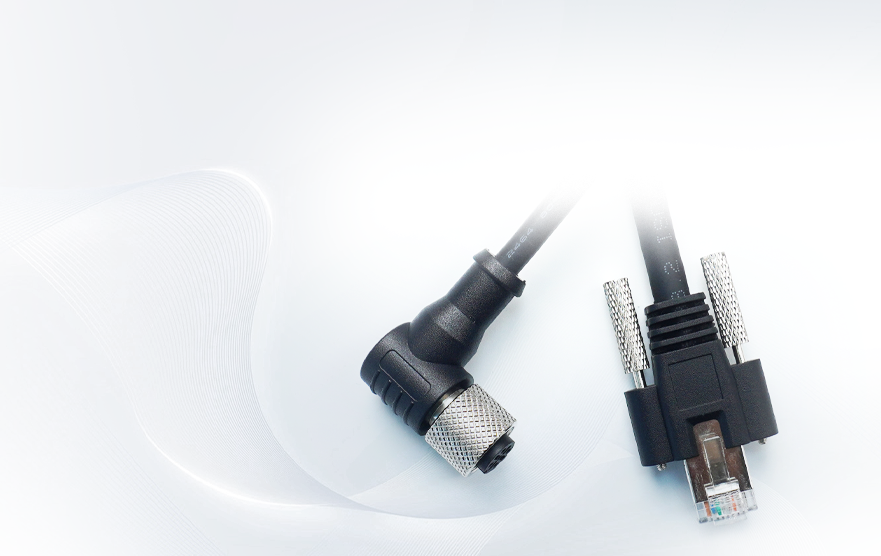
On our M5 Connector Cable product page, you can see that these connector cables are specially developed for miniature sensors and narrow operating spaces, where a conventional M8 or M12 connector simply will not fit. In the broader Automation Technology Sensor and Data Cable category, M5 connector cable power sits alongside M8, M12 and other connector cables, giving you a complete path from micro‑sensors to larger field devices.
Typical M5 connector cable power assemblies are designed for signal‑level power delivery in the tens of volts and ampere range, supporting simultaneous power and data at the sensor or module. That makes them especially attractive in distributed I/O, IO‑Link nodes, miniature actuators, LED beacons and other low‑power loads.

Test: How we validate M5 connector cable power
Because M5 connector cable power is used in safety‑relevant automation and measurement systems, we treat the complete connector cable as the test object – not just the connector or the raw cable. Our validation covers both one‑time design approval and ongoing production control.
Typical test items include:
Electrical tests
- Continuity and contact resistance per pin to ensure low loss and stable power delivery.
- Insulation resistance and dielectric withstand between contacts and between contacts and shell.
- Where power and signals share the same connector cable, we pay attention to leakage and coupling between conductors.
Mechanical tests
- Mating/unmating force and thread engagement for the M5 screw lock.
- Pull and retention tests on overmolded and field‑attachable terminations.
- Flex and bending tests for connector cables used in moving cables or drag‑chain applications.
Environmental and protection tests
- IP rating verification (IP67 and above when required), including immersion and spray tests.
- Temperature cycling for both cable and overmolded connector, aligned with typical industrial temperature ranges.
For test and measurement equipment, our M5 Connector Cable for Test and Measurement application page shows how small circular connectors are used where space is limited but performance expectations are high. Many of our connector solutions used in this sector fulfill UL, DIN, IEC, RoHS, REACH, ISO 9001 and ISO 14001 requirements, and we apply the same quality mindset to M5 connector cable power assemblies.
Application: Where M5 connector cable power makes sense
Compact sensors and distributed I/O
One of the strongest use cases for M5 connector cable power is miniaturized sensors and distributed I/O modules in automation lines. Here, connector cables must carry low‑voltage power and signals into very small housings or tightly packed DIN‑rail modules. By using M5 instead of larger M8/M12 interfaces, you can place more sensors or channels in the same footprint, keeping cabinet and machine sizes under control.
Test and measurement devices
In the test and measurement sector, many handheld instruments, data loggers and small probes need power and communication in one small connector cable. M5 connector cable power is ideal for these instruments because it delivers adequate power while preserving front‑panel space for displays and buttons. Our test‑and‑measurement connector solutions use small circular connectors with various mounting and termination options to meet these constraints.
Robotics and motion systems
On robotic arms and compact grippers, space is scarce and connector cables experience constant bending, twisting and vibration. M5 connector cable power assemblies can route power to joint‑mounted sensors, encoders or small actuators without interfering with mechanical motion. When needed, we combine M5 power cables with high‑flex connector cables from our automation portfolio to support long service life in drag chains.
Transportation and light electric vehicles
For e‑bikes, scooters and compact EV subsystems, M5 connector cable power offers a way to connect low‑power sensors, switches and LED indicators in tight spaces while maintaining robust locking and sealing. The same connector cable concepts also apply in compact control boxes and on‑board measurement devices inside vehicles.

Standards: How M5 connector cable power fits IEC/IEEE frameworks
From a standards point of view, M5 connector cable power belongs to the metric circular connector family defined in IEC 61076‑2, where M5, M8 and M12 connector styles are documented for industrial environments. This standardization ensures mechanical compatibility and defines performance classes that connector manufacturers like us build against.
At the system level, many devices wired with M5 connector cable power participate in networks and test systems that implement IEEE‑based communication technologies such as Ethernet (IEEE 802.3) or fieldbuses running over twisted pairs. While these protocols primarily reference M12 or RJ45 interfaces at higher power and speed, M5 connector cable power can carry auxiliary signals, trigger lines, and low‑power supply rails that complement these systems.
Our connectors used in test and measurement applications are typically designed to meet:
- DIN and IEC mechanical and electrical requirements.
- RoHS and REACH environmental regulations.
- ISO 9001 and ISO 14001 quality and environmental management frameworks.
We carry the same standards awareness over to our M5 connector cable power designs, to help your equipment pass its own product‑level testing.
How to choose M5 connector cable power for your device
Start with power and signal requirements
Define the voltage and current your device actually needs, and how many conductors are required for power and signals. For simple sensor power you may need only 2 pins; for devices that combine power, a digital signal and a diagnostic line, 3–4 pins are more appropriate. This will guide both connector pin count and connector cable conductor selection.
Consider environmental protection and IP rating
Clarify whether your connector cables will be inside a cabinet, in a dusty machine area, or exposed to washdown or outdoor conditions. If the environment is harsh, specify M5 connector cable power assemblies with IP67 or higher rating when mated. You can also use covers on unmated connectors to preserve sealing in the field.
Evaluate mechanical space and routing
Map your mechanical envelope and routing path. If space is extremely tight, M5 is the right choice; if you have more space and higher current demands, M8 or M12 may be more suitable. Use straight or right‑angle M5 connectors depending on the direction of your connector cables and mounting panel.
Decide on overmolded vs field‑attachable
Overmolded M5 connector cable power assemblies offer better sealing, strain relief and ease of installation, which is ideal for OEM equipment. Field‑attachable connectors give more flexibility in the field or during prototypes but require careful assembly. We can supply both styles, so you can mix approaches across your system.
Align with your standards and lead‑time needs
Finally, ensure that your chosen connector cable design aligns with your internal standards, certifications and time‑to‑market plans. Our “What is M5 connector cable” guide notes that our monthly capacity of 70 million pieces supports reliable delivery even in high‑volume M5 projects, and we support small‑batch customization as well.
Why M5 connector cable power and why Torven?
M5 connector cable power is a key enabler for compact devices that need reliable low‑voltage power and signal connections in very limited space. It combines space efficiency, mechanical robustness, and industrial‑grade sealing in a metric circular connector that is easy to standardize across product families.
Torven stands out because we are not only a connector supplier but a connector cable and cable assembly manufacturer with integrated design, tooling and production. Our About page describes how we focus on efficient customization, cost‑effectiveness, small‑quantity customization acceptance and stable supply to support global projects. When you work with us on M5 connector cable power, you get a partner who understands both the connector and the connector cable – and can help you turn miniaturization into a real product advantage.
Visit Torven’s Booths EVINDIA‑0000179666 & EVINDIA‑0000179655 at EV India 2026
Torven will exhibit at EV India 2026 at the India Expo Centre, Greater Noida, from September 1–3, 2026, meeting EV manufacturers, suppliers, and engineers from across the value chain. During the show, we will showcase our latest ranges of industrial circular waterproof connectors and customized cable assemblies for EV power distribution, control signal communication, and charging interfaces, all engineered for long‑term reliability in demanding on‑board and outdoor charging environments.
As one of India’s leading electric vehicle exhibitions, EV India 2026 brings together experts from passenger vehicles, two‑wheelers, commercial fleets, battery systems, and powertrain technologies, creating a strong platform for both technical exchange and sourcing new solutions. Visitor entry is free for trade professionals, but online pre‑registration is mandatory; you can complete your registration here: EV India Expo visitor registration. Our booth numbers are EVINDIA‑0000179666 and EVINDIA‑0000179655, and we warmly invite you to stop by and discuss your next‑generation EV interconnect needs with our team.


Apply Here For A Custom Made Solution

Shenzhen Torvenics Electronic Co.,Ltd.
615 Block A, No.11 Tangkeng Road,Henggang Longgang Dist,Shenzhen China