

Dummy Battery Application: Where Continuous DC Power Makes the Difference
Time:Mar 30,2026
Source:
A dummy battery turns the camera’s battery compartment into a stable DC input, enabling long‑term, interruption‑free operation. Instead of swapping batteries, you plug in an external power source through a cable assembly that combines a dummy battery housing, a flexible cable and the right connector for your system.

In real projects, dummy batteries are used far beyond simple vlogging kits. They now power industrial vision systems, medical imaging equipment, vehicle‑mounted cameras and 24/7 surveillance devices.
Live Streaming, Studio and Content Creation
One of the most common dummy battery applications is continuous shooting in studios and live streaming rooms. Creators need their cameras to run for hours without battery changes or overheating and without risking sudden power loss in the middle of a session.
Typical configurations include:
- Dummy battery to AC adapter power cable for indoor desks and fixed studio rigs.
- Dummy battery to D‑Tap or V‑mount battery plate for mobile streaming carts.
- Combined harnesses that power the camera, monitor and recorder from a single professional battery.
Using a dummy battery avoids repeated charging cycles and helps extend the life of the original camera batteries, which can then be reserved as backup.
Industrial Machine Vision and Smart Manufacturing
In modern factories, machine vision cameras run inside enclosures, on robots or on production lines that operate around the clock. Here, dummy batteries are not a consumer accessory but an integrated part of the automation power and signal infrastructure.
Key application scenarios:
- Fixed industrial cameras on inspection stations powered through an external 24 V or 12 V DC industrial power supply.
- Cameras mounted on robots or drag chains, where cables must withstand continuous bending, oil and low temperatures.
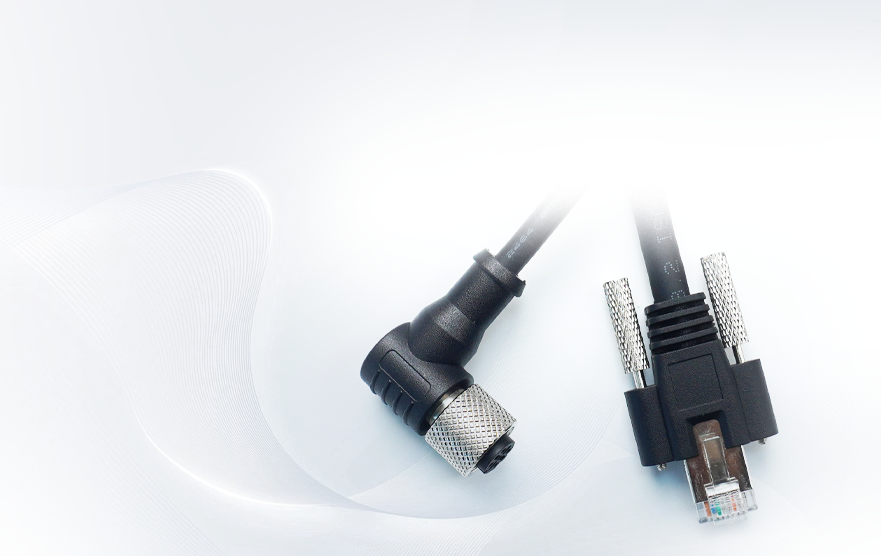
- Vision systems that share cabinet power with sensors, actuators and controllers via M‑series circular connector cables.
In these environments, the dummy battery cable is often combined with high‑flex industrial vision cables that can support long‑distance, high‑speed data transmission between camera and controller under harsh conditions. Torven’s industrial vision cables, for example, are designed for data rates up to 50 Gbps and lengths up to 100 m while resisting oil, low temperature and electromagnetic interference.
Medical Imaging and Operating Room Recording
Hospitals and medical equipment manufacturers increasingly use cameras for surgical recording, endoscopic visualization and diagnostic imaging. In such applications, power stability and safety are critical.
Dummy battery applications in the medical field include:
- Operating room recording systems where cameras must run continuously throughout long procedures.
- Mobile medical carts and trolleys that power cameras from central DC supplies or battery packs.
- Diagnostic or monitoring systems where cameras are installed inside housings that need regular cleaning and disinfection.
To integrate dummy batteries into medical devices, manufacturers often choose circular connectors and cables that offer IP40–IP68 protection, high flexibility and relevant certifications such as UL, VDE and FDA compliance. Torven’s sensor and data cables for automation already meet many of these requirements and can be adapted for medical camera power solutions.
24/7 Security, Surveillance and Traffic Monitoring
Another important dummy battery application is continuous surveillance in security and traffic systems. Cameras installed on poles, buildings or roadside cabinets must operate in all weather, and replacing internal batteries is simply not an option.
Common use cases:
- Outdoor CCTV and IP cameras powered from centralized DC power in roadside or building cabinets.
- Vehicle‑mounted cameras on police cars, buses and service vehicles using professional batteries and RF data links.
- Traffic monitoring systems where cameras are combined with RF modules for wireless communication.
In these projects, dummy battery cables often need:
- Waterproof and dustproof connectors with ratings up to IP67–IP68.
- Jackets resistant to UV, humidity and temperature extremes.
- Integration with RF coaxial cables that connect to GPS, Wi‑Fi or other RF modules using BNC, SMA, N‑type or similar interfaces.
Torven’s RF coaxial connector and cable families cover interfaces such as BNC, SMA, N‑type, TNC, SMB, QMA, 7/16 DIN, MMCX, MCX, SMP, SSMA and SSMB with impedance options of 50 and 75 ohms and frequency ranges up to 26 GHz. These can be combined with dummy battery harnesses to power and connect advanced camera and RF systems in one integrated assembly.
Automotive, Rail and Mobile Systems
Cameras are now widely used in vehicles, trains and mobile platforms for driver assistance, recording and remote monitoring. In these systems, the power source is the onboard electrical system rather than a small camera battery, making dummy battery assemblies a natural fit.
Typical applications include:
- Dash‑like cameras on special vehicles that record continuously from 12 V or 24 V vehicle power.
- Rail vehicle surveillance and passenger information systems.
- Mobile inspection systems on maintenance vehicles that combine cameras, sensors and communication equipment.
Here, dummy battery cables must tolerate vibration, temperature changes and long‑term mechanical stress. Using high‑flex servo motor cables and robust wiring harness techniques helps maintain power stability and signal integrity over time.
Laboratory, Test Benches and R&D
In R&D labs and test facilities, cameras and other electronic devices are constantly rearranged and reconfigured. Using dummy battery cables makes it easy to power cameras from adjustable DC supplies while measuring current, voltage and thermal performance.
Typical examples:
- Image quality testing setups where cameras run for many hours at different exposure and temperature conditions.
- EMC and reliability tests where engineers need to monitor the effect of supply voltage changes.
- Prototype systems where off‑the‑shelf cameras are integrated into new machines before a custom power interface is designed.
Because labs often use a variety of connectors and fixtures, dummy battery assemblies with modular connector options such as DC barrel plugs, M‑series connectors or quick‑lock circular interfaces are especially useful.
Combining Dummy Batteries with Professional Camera Power Cables
A dummy battery on its own is only part of the chain; the cable and connector determine how well it fits into your system. Torven’s catalog includes specialized camera power cables that already target exactly this type of application.
These camera power accessories are described as providing continuous, stable DC power to cameras, monitors, recorders and other external devices, with:
- Low internal resistance and minimal voltage drop for clean, interference‑free current.
- High flexibility and resistance to bending, pulling and wear.
- Options for coiled or straight cables and wear‑resistant outer sheaths.
Typically, one end uses a push‑pull self‑locking connector or a Weipu connector to attach to the camera or housing, while the other end features a standard B‑type D‑Tap, Anton connector or V‑type connector compatible with most broadcast‑grade batteries. The same structure can be adapted so that the push‑pull or Weipu side is connected to a dummy battery housing, not directly to the camera body.

Integration with M‑Series Circular Connectors and Industrial Cables
For integrators who build entire automation and vision systems, dummy batteries are often integrated into broader M‑series and harness architectures.
Possible integration patterns:
- Dummy battery to M8 or M12 circular connector, which then mates with standard sensor/data cables already present in the production line.
- Dummy battery sharing cable routes with M23 servo motor power and encoder cables in robotic cells.
- Dummy battery combined with industrial data or Ethernet cables to create unified harnesses between camera, controller and cabinet.
Torven’s M‑series connector cables are used in sensors and actuators across many industrial sectors and support IP40–IP68 protection, 2–24 pins and threaded locking in straight, angled and flange types. Leveraging these existing connector families for dummy battery power paths simplifies project design and stocking.
How Torven Supports Your Dummy Battery Application
As a global supplier of high‑precision connectors and cable assemblies, Torven has deep experience in industrial data transmission, sensor networks, medical devices, automotive and railway applications. This background translates directly into robust dummy battery solutions for professional and industrial camera systems.
Working with Torven, you can:
- Customize dummy battery cables, push‑pull, D‑Tap, Anton, V‑type and other industrial‑grade connectors.
- Select from high‑flex PVC or PUR jackets, IP40–IP68 protection levels and UL/VDE/FDA‑compliant cable families.
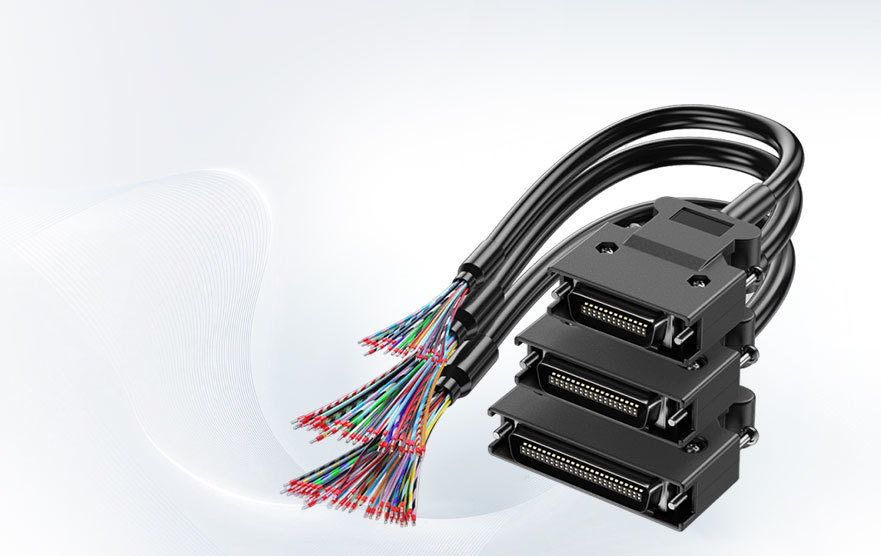
- Integrate dummy battery power into broader wiring harnesses that include M‑series circular connectors, RF coaxial connectors, D‑sub and SCSI interfaces.

By treating the dummy battery not as a standalone accessory but as a part of your overall connector and cable strategy, you can achieve higher system stability and lower lifetime cost across all your camera‑based applications.

Apply Here For A Custom Made Solution

Shenzhen Torvenics Electronic Co.,Ltd.
615 Block A, No.11 Tangkeng Road,Henggang Longgang Dist,Shenzhen China