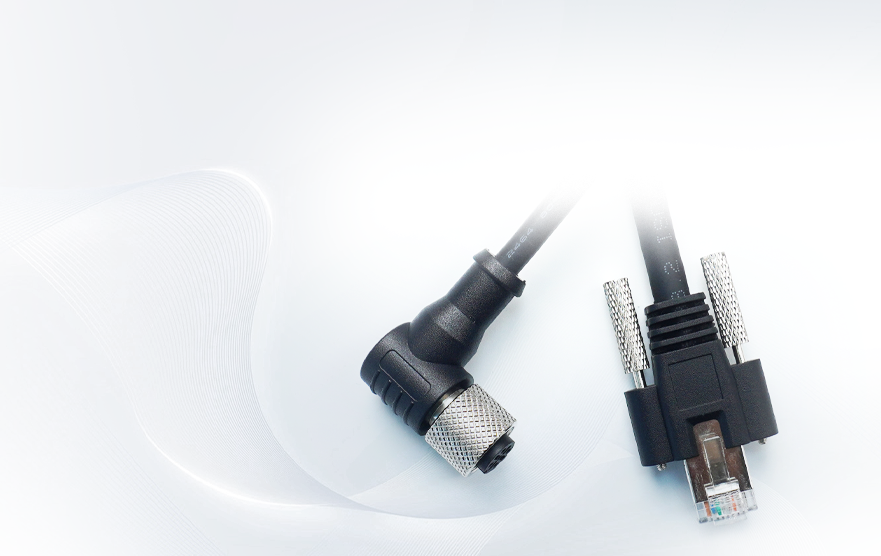
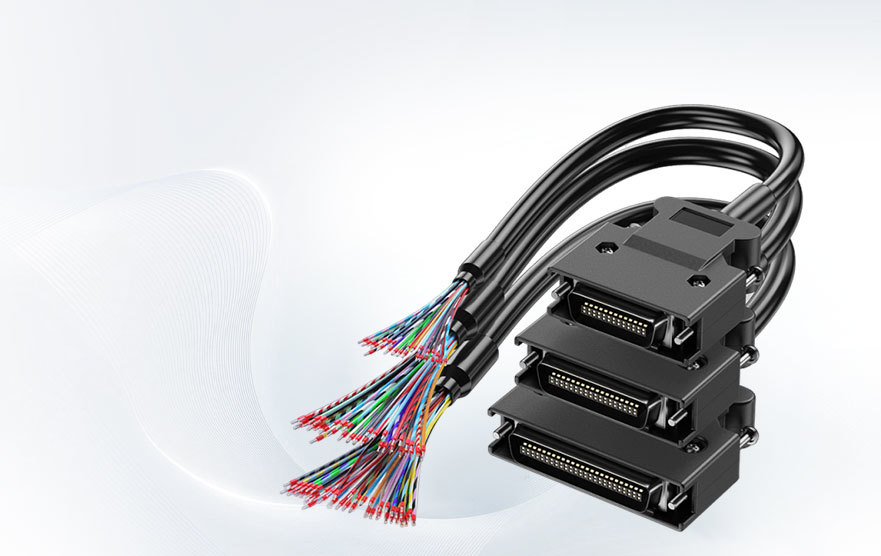
In industrial equipment, machine vision systems, communication networks, and automation applications, the quality of cable assemblies often determines the overall stability and lifespan of the entire system. Therefore, selecting the right supplier is not simply a matter of price comparison, but a systematic engineering evaluation process. Before making a selection, it is necessary to clarify a fundamental concept: what is a cable assembly. A cable assembly is a finished wiring system formed by integrating conductors, cable structures, shielding layers, and connectors through standardized processing and testing. Its core value is not the “wire itself,” but stable electrical performance, repeatable installation quality, and mass-production consistency achieved through engineered manufacturing.
This is also why industrial customers do not use loose wires directly, but rely on professional manufacturers. Torven focuses on industrial interconnect solutions, providing customized cable harness products for machine vision, automation, and high-speed signal transmission applications.
Do Not Choose the Supplier First—Define the Application Level First
The first step in selecting a cable assembly manufacturer is not evaluating factory size, but identifying the application level:
General signal transmission (low frequency, low interference)
High-speed data transmission (Gbps-level performance)
Precision vision systems (low latency + synchronized triggering)
RF high-frequency systems (strict impedance control)
Different levels require completely different design standards.
For example, in industrial communication systems, best industrial ethernet cable is required to ensure stable real-time data transmission. In machine vision systems, best industrial vision cable is essential to ensure synchronized triggering and accurate image transfer.
Evaluate Whether the Manufacturer Can Actually Design, Not Just Manufacture
Many suppliers only provide “build-to-print” manufacturing. However, industrial projects require true engineering capability, including:
Impedance matching design
EMI shielding structure design
High-speed signal integrity optimization
Mechanical strain relief design
Connector electrical consistency control
If a manufacturer cannot explain these design principles, it is usually limited to low-end cable assembly production.
High-Speed Capability Is the Key Differentiation Factor
A strong indicator of a manufacturer’s technical level is whether it has:
High-speed signal testing capability
Differential signal control capability
Complete shielding structure design capability
High-frequency attenuation control capability
In advanced applications such as machine vision and high-speed communication, cables are no longer simple conductors—they are part of the signal system itself.
RF Capability Defines the Upper Limit of Technology
If the application involves wireless systems, radar, or high-frequency equipment, RF capability becomes essential.
RF systems typically rely on RF Coaxial Cables, with key performance requirements including:
Consistent characteristic impedance (e.g., 50Ω)
Low insertion loss
High shielding effectiveness
Stable high-frequency performance
Many general cable manufacturers cannot consistently produce RF-grade products, making this a key distinction between industrial-grade and consumer-grade suppliers.
In procurement, the term best cable assembly does not mean the highest price or the highest specification on paper.
It means:
The optimal solution that ensures long-term stable operation in a specific application environment with controlled cost.
Evaluation criteria should include:
Service life
Failure rate
Mating cycles
EMI resistance
Maintenance cost
Not simply price or datasheet comparison.
Industrial-Grade Manufacturers Must Have Three Core Capabilities
A reliable cable assembly manufacturer must possess:
① Engineering Capability
Ability to design structures, not just produce drawings.
② Manufacturing Capability
Ability to ensure batch-to-batch consistency, not just sample quality.
③ Testing Capability
Including electrical, mechanical, and environmental testing.
All three are essential.
Delivery Capability Matters More Than Sample Quality
A common risk in industrial procurement is “good samples but unstable mass production.”
Key factors to verify include:
Batch consistency
Delivery lead-time stability
Raw material supply chain reliability
Long-term production scalability
Industry Experience Determines Problem-Solving Speed
Experienced manufacturers are not just production vendors—they provide engineering solutions such as:
How to reduce signal delay in machine vision systems
How to mitigate EMI in industrial Ethernet networks
How to optimize loss in RF systems
This capability comes from real-world application experience, not datasheets.
Torven provides customized engineering support in industrial connectivity and vision systems, focusing on solving stability challenges in complex applications.
Conclusion
Selecting a cable assembly manufacturer is ultimately about choosing a long-term technical partner capable of supporting stable system operation, rather than simply selecting a production supplier.
In real procurement decisions, it is more important to verify whether the supplier has the following combined capabilities:
Proven experience in high-speed and industrial applications (stable delivery of best industrial ethernet cable and best industrial vision cable)
Ability to reliably produce RF Coaxial Cables for high-frequency environments
Consistent capability from structural design to mass production control
Engineering-level customization rather than standard product delivery
Only when these capabilities are simultaneously present can a supplier truly deliver a reliable best cable assembly solution.
Torven integrates engineering design expertise with manufacturing systems to deliver reliable interconnect solutions for industrial automation, machine vision, and high-speed communication systems, supporting long-term operational stability and overall system performance optimization.