

High Speed M5 Connector Cable for Compact Industrial Systems
Time:Aug 14,2026
Source:
A high speed M5 connector cable is a relevant choice when industrial equipment must process fast sensor outputs or control signals without sacrificing installation space. As automation systems become smaller and more responsive, engineers need cable assemblies that fit miniature devices while supporting reliable signal transmission in electrically and mechanically demanding environments.
Torven provides precision connectors and cable assemblies for industrial automation, sensor networks, test equipment, machine vision, medical devices, and transportation applications. Its M-series portfolio is designed to help OEMs match connector size, cable construction, and environmental protection requirements to the actual needs of a compact system.
Before selecting an M5 cable for a high-speed application, engineers should first define what “high speed” means in their system. In many compact automation installations, it refers to fast switching signals, rapid sensor feedback, or reliable transmission between tightly integrated low-voltage devices. This differs from applications such as high-bandwidth industrial imaging or Gigabit Ethernet, which may require a dedicated data cable and interface designed for that protocol.
Why Signal Integrity Matters in Small Machines
Compact equipment leaves little room for poor cable routing or unsuitable connector choices. A short cable may run close to motors, solenoids, switching power supplies, or moving mechanical parts. These conditions can introduce electrical noise, strain, or intermittent connections that affect signal quality.
For a high speed M5 connector cable, stable performance depends on more than connector size. Cable length, conductor construction, shielding, grounding strategy, jacket material, termination quality, and installation path all affect the final result. A cable designed only for a static low-speed sensor may not be the right choice for a fast-response application operating close to potential sources of electromagnetic interference.
M5 circular connector cables are primarily intended for compact sensor and actuator connections. They are available in 2-, 3-, and 4-core options, with rated specifications such as 60 V and 1 A for the standard M5 product range. This makes them suitable for signal-level industrial applications where miniaturization and secure threaded coupling are important.
When a project requires more demanding transmission performance, engineers should validate the complete link—not just the connector. The device interface, cable type, pin assignment, operating frequency, length, and nearby electrical environment should all be reviewed during the design stage.
Fast Sensor Feedback in Automation Equipment
Many production machines depend on high-frequency operational feedback from compact sensors. Position sensors, pressure sensors, photoelectric sensors, proximity switches, and compact encoders can all send signals that help the controller make rapid decisions.
For instance, a packaging line may use a compact sensor to detect material position before a cutting, sealing, or labeling operation. If the connection is unreliable, the machine may receive delayed or inaccurate feedback, increasing the risk of rejected products or unplanned downtime.
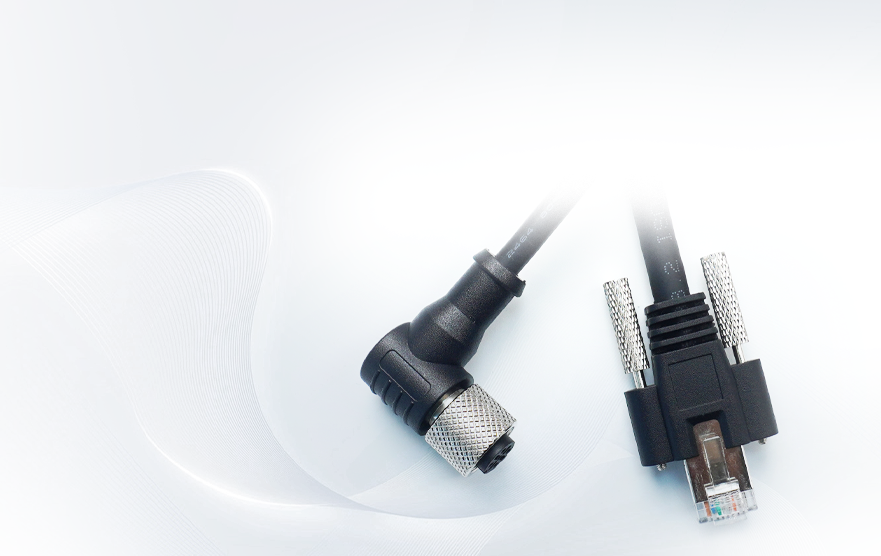
A properly specified M5 Connector Cable can help engineers create a compact and maintainable sensor connection. The Torven M5 range includes pre-molded PVC or PUR cable options, board-end and panel-mount formats, customizable cable lengths, and IP67-rated configurations for applicable mated installations.
For fast-response automation tasks, a shorter and properly routed cable assembly may help reduce unnecessary exposure to interference sources. Where movement, oil, moisture, or repeated flexing are present, engineers should also assess the cable jacket and mechanical requirements instead of treating all M5 assemblies as interchangeable.

High-Speed Design Considerations for Robotics
Robotic equipment often combines compact sensors, motion-control components, end-of-arm tools, and electrical cabling in a confined moving assembly. A high speed M5 connector cable can be relevant in these environments when it is used for sensor-level feedback or low-voltage control signals.
Examples include:
- Gripper-position feedback
- Part-presence detection
- Compact force or pressure sensors
- Tool-status signals
- Fixture-position monitoring
- Small actuator-control connections
In these installations, connector orientation can be as important as electrical performance. A right-angle M5 connector may reduce the mechanical profile behind a sensor, while a panel-mount configuration can simplify replacement during maintenance. The threaded coupling structure also helps maintain a secure connection in applications exposed to vibration.
However, a connector should not be selected solely because it is compact. Engineers should confirm that the cable’s core count, shielding requirement, flex performance, environmental rating, and mating connector all suit the application. This verification is particularly important for robotic equipment, where cable failures may interrupt an entire automated cell.
When to Use a Dedicated Data Cable
A high speed M5 connector cable can support fast sensor and control signals in compact industrial equipment, but it is not automatically the optimal solution for high-bandwidth image or Ethernet transmission. Industrial cameras, image-processing systems, and data-intensive inspection equipment often require cable assemblies designed around specific communication protocols and bandwidth targets.
For these requirements, Industrial Vision Cable solutions are more appropriate. Torven industrial vision cables are designed to transmit image data and control signals between cameras, controllers, and sensors, supporting applications that require 1 Gbps, 5 Gbps, 12.5 Gbps, or 50 Gbps transmission rates. The product range also addresses demanding conditions such as continuous movement, oil exposure, low temperatures, and electromagnetic interference.
This distinction enables a better system design. An OEM can use M5 cables for compact sensor-level connections while selecting a dedicated industrial vision cable for high-bandwidth camera data. Using the right interface for each signal type helps avoid unnecessary performance compromises.
A Practical Validation Process
The most reliable way to specify a high speed M5 connector cable is to validate the assembly against the actual equipment environment. A strong engineering review should consider the signal requirement, cable route, mechanical movement, nearby noise sources, connector mating arrangement, and environmental conditions.
Prototype testing is particularly valuable when cable assemblies will operate in compact machines, moving modules, or electrically noisy production environments. It allows engineers to evaluate whether the selected cable length, connector angle, shielding approach, and jacket material support consistent operation before full-scale production begins.
For OEMs, a customized M5 cable assembly can offer a practical balance between compact size, secure connectivity, and application-specific configuration. The key is to use M5 connectivity for the sensor and control tasks it is suited to, while selecting dedicated high-speed data solutions whenever the system requires protocol-specific bandwidth performance.
By aligning connector selection with the true electrical and mechanical requirements of the application, equipment manufacturers can build compact automation systems that remain responsive, maintainable, and ready for long-term industrial use.

Apply Here For A Custom Made Solution

Shenzhen Torvenics Electronic Co.,Ltd.
615 Block A, No.11 Tangkeng Road,Henggang Longgang Dist,Shenzhen China